

Hanoi considers easing pickup truck restrictions to support businesses

 |
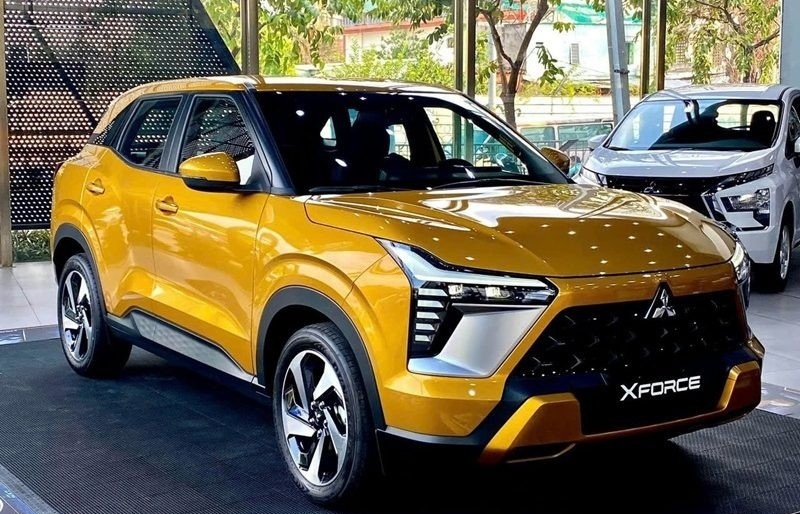
| Hanoi is reviewing rules on pickup trucks. Photo: Le Toan |
The proposal was outlined in Report No 6787 dated April 1 by Hanoi Department of Construction, submitted to Hanoi People’s Committee regarding implementation of Decision No.01/2026 on road traffic management across the capital.
Under current regulations, pickup trucks classified as freight vehicles are subject to strict operating hours. They are only permitted to circulate within areas along Ring Roads 3 and 3.5 between 9pm and 6am, similar to conventional trucks.
However, authorities acknowledge that this classification has created unintended challenges. The policy has affected user sentiment and imposed constraints on automotive businesses, as well as related service sectors.
Hanoi Department of Construction, in coordination with Hanoi Police, has engaged in consultations with a wide range of stakeholders, including representatives from the Vietnam Automobile Manufacturers’ Association (VAMA), and the European Chamber of Commerce in Vietnam.
Data from VAMA shows that between 2021 and 2025, a total of 14,704 pickup trucks were sold in Hanoi, including both passenger-classified and freight-classified models.
Based on field assessments, the department concluded that freight-classified pickup trucks have similar size and weight characteristics to passenger cars, while their numbers remain relatively modest. As such, their contribution to peak-hour congestion is considered limited.
On this basis, Hanoi Department of Construction and Hanoi Police have jointly proposed reclassifying pickup trucks to allow them to circulate under the same conditions as passenger vehicles within the city.
For investors, the proposed adjustment could benefit carmakers and distributors with strong pickup portfolios, particularly international brands such as Ford and Japanese manufacturers, as well as domestic players like VinFast if product offerings expand in this segment.
Logistics operators and small business owners are also likely to gain from greater operational flexibility, as pickup trucks are widely used for both commercial and personal purposes in urban areas.
Beyond pickup vehicles, the report also highlights broader constraints affecting passenger transport and tourism following the enforcement of Decision 01.
Currently, contract vehicles with 28 seats or more are restricted from entering the inner city during peak hours without prior approval. This has forced many tour operators to either wait outside restricted zones or split journeys into smaller vehicles, increasing costs and reducing efficiency.
To address these issues, authorities have proposed allowing contract passenger vehicles with fewer than 28 seats to operate around the clock. Similarly, feeder shuttle services – which connect passengers to public transport networks – may also be permitted to run 24/7.
Officials believe these adjustments could help boost public transport usage and reduce reliance on private vehicles, thereby contributing to congestion mitigation over the longer term.
Decision 01, introduced at the beginning of the year, was designed to curb traffic congestion in inner-city areas, particularly by restricting truck movements during peak hours.
After more than two months of implementation, traffic volumes during peak periods have reportedly declined, with improved travel speeds. Logistics firms have also adapted by shifting delivery operations to nighttime hours.
Nevertheless, local authorities now recognise the need for more nuanced regulation to balance traffic management objectives with economic activity.
Based on feedback from businesses and practical assessments, Hanoi Department of Construction has recommended that the city revise and supplement certain provisions of Decision 01 under an expedited process, with completion targeted for April.
If approved, the proposed changes could mark a shift towards more flexible and market-aligned urban transport policies, offering both operational relief for businesses and new opportunities for stakeholders across the automotive and mobility ecosystem.
What the stars mean:
★ Poor ★ ★ Promising ★★★ Good ★★★★ Very good ★★★★★ Exceptional
 Tag:
Tag:
Related Contents




Latest News



More News
- HER2+ breast cancer carries $3.71 billion productivity burden in Vietnam (July 30, 2026 | 14:32)
- Party Resolution charts Vietnam’s development model through 2045 and beyond (July 30, 2026 | 12:29)
- STEM education evolves for AI era (July 21, 2026 | 09:38)
- Vietnam’s workforce ready for AI era (June 26, 2026 | 16:04)
- Why child online safety is now a business imperative (June 24, 2026 | 11:00)
- Hybrid work is reshaping Vietnam’s labour market (June 17, 2026 | 16:24)
- World's children exposed to at least three overlapping climate threats (June 17, 2026 | 15:54)
- Thai Nguyen event promotes safer food systems for World Food Safety Day (June 11, 2026 | 14:08)
- Vietnam emerges as rising hub for wealth creation (June 02, 2026 | 18:31)
- Danang launches DIFF 2026 with world-class performances (May 31, 2026 | 08:00)


Latest News




 Mobile Version