
Female leadership to steer Vietnam's future

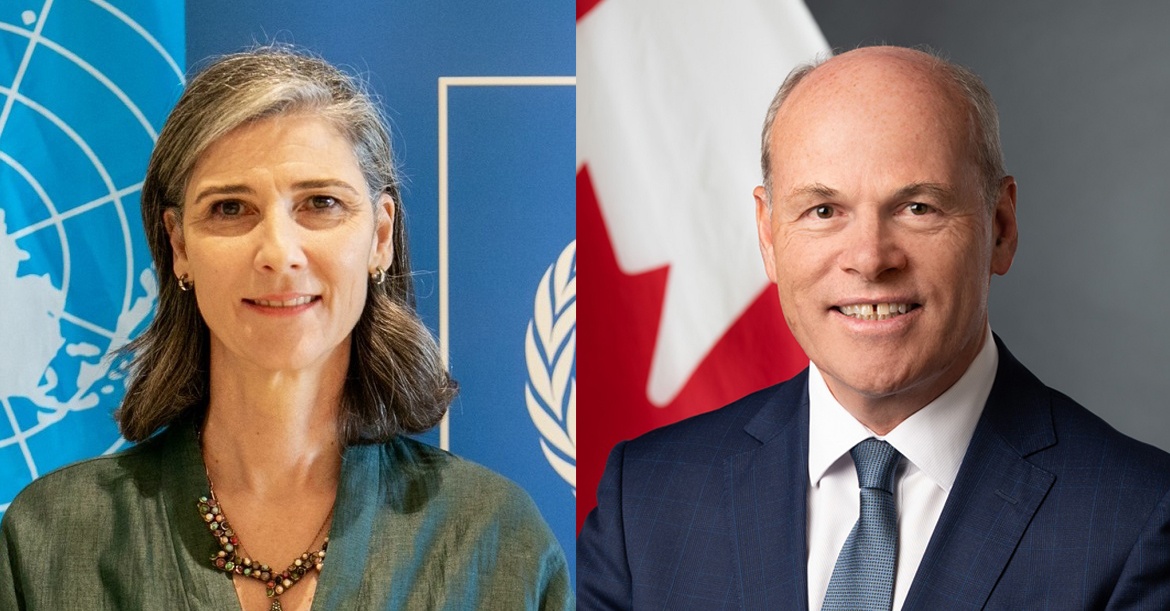 |
| Ramla Khalidi, the UN Development Programme's resident representative, and Jim Nickel, Ambassador of Canada to Vietnam |
In March, more than 76 million voters across Vietnam cast their votes to elect deputies to the 16th National Assembly (NA) and people’s councils at all levels for the next five years.
The results point to measurable gains in advancing women’s political participation. Women accounted for 45 per cent of candidates and ultimately constituted 30 per cent of elected deputies in the NA, maintaining the ratio of women representatives in the legislative body across the last two electoral terms.
Beyond the central level, a second notable milestone has also been reached, as women will, for the first time, hold 30 per cent of seats in provincial people’s councils nationwide.
In some provinces, progress has gone even further. In Quang Ninh, Tuyen Quang, and Cao Bang, women now make up more than 40 per cent of provincial council members, offering a glimpse of what more ambitious gender parity goals can look like in practice. Taken together, these outcomes indicate continued progress in the representation of women among elected officials.
As the NA convenes in its first session this week to appoint a new government, a new cohort of leaders steps into office with the responsibility to turn the aspirations of the country into concrete results. Their tenure commences at a moment when Vietnam’s ambitions are rising, and so are the demands on its institutions.
The 2026-2031 term begins at a critical juncture in Vietnam’s development trajectory. The country lays the groundwork to achieve its vision of becoming a developed, high-income economy by 2045.
As articulated widely, the country aims to achieve double-digit economic growth in the years ahead, driven by a structural transformation towards a more innovation-driven, digitally enabled and higher value-added economy.
Achieving this target will place significant demands on public institutions to become more future-responsive, efficient, and innovative, and on the incoming leadership to unlock the potential of the country’s human capital.
Women-led growth
Inclusive leadership in today's Vietnam is not simply a matter of representation. It is central to how policies are shaped, what priorities are set, and ultimately how growth is sustained.
Globally, no country has yet achieved full gender equality in the labour market. Women continue to face legal barriers that limit their access to economic opportunities, and the fulfilment of their aspirations.
This persists despite the fact that, according to the 2025 World Bank report, closing gender gaps in employment and entrepreneurship could increase global GDP by more than 20 per cent.
Evidence shows that women’s representation in politics positively shapes transformative economic outcomes. In countries such as Canada, greater representation of women in politics is associated with stronger legislation and more effective policy frameworks that address discrimination and expand economic opportunities for all.
Canada’s universal childcare initiative, launched in 2021, provides a compelling example. The national system builds on the successful Quebec model, which had already demonstrated how affordable childcare can dramatically increase women’s labour force participation.
This progress was driven by sustained advocacy by women’s movements and women leaders, who elevated childcare to a central place in the policy agenda. The expansion of high‑quality, affordable childcare has strengthened household economic security, and contributed to overall productivity and growth.
The lesson from Canada is clear: when women are meaningfully represented in political and decision-making processes, they shape policy priorities, advance enabling legislative frameworks and influence public investments that lead to economic growth.
Sharing responsibility
For Vietnam, these global experiences carry particular relevance.
Vietnam already has one of the highest female labour force participation rates in the region, at around 69 per cent. However, many women remain in informal or low-productivity employment, with limited access to opportunities in higher-value sectors.
Persistent gender gaps, particularly the unequal burden of unpaid care work, continue to constrain women’s ability to enter, remain in, and advance within the labour market. Evidence from Vietnam shows that addressing these constraints can deliver tangible economic and social gains.
For example, in northern provinces such as Tuyen Quang and Lai Chau, initiatives supported by Canada are tackling the root causes of gender inequality by reshaping care systems and social norms. Investments in upgraded kindergartens have enabled semi‑boarding services, reducing mothers’ childcare time by up to three hours per day, while community‑based engagement has encouraged more equitable sharing of care responsibilities.
Together, these efforts have strengthened women’s participation in income‑generating activities, improved household savings and enhanced communities’ resilience to economic and climate risks.
Addressing these constraints is not only a social priority; it is an economic imperative. In an era of global uncertainty, technological disruption and geopolitical tensions, removing barriers in both the legal framework and its implementation to enable the full participation of women in the workforce could significantly strengthen the country’s outlook.
This is where women’s representation in politics becomes a strategic lever. Women experience different socioeconomic conditions than men, therefore women legislators are more likely to prioritise policies that level the playing field: childcare investments, legal protections governing property rights, contracts and access to credit, anti-discrimination initiatives that directly shape women’s access to higher-value economic opportunities.
Such policies, in turn, make labour markets more inclusive, and economies more productive and performing.
The recent election positions Vietnam among the higher-ranking countries in the Asia-Pacific region in terms of women’s representation in parliament. Yet, representation alone is not the end goal.
The question for Vietnam is no longer whether women are represented, but whether that representation shapes policy outcomes. It means ensuring that women leaders have the opportunity to fully steer policy priorities, influence legislative agendas, and drive national development strategies.
Fully harnessing the potential of women is not only a matter of inclusion, but also a strategic investment in building a more dynamic, resilient, and competitive economy.
UNDP Vietnam and the Embassy of Canada to Vietnam look forward to working with the Vietnamese government in its new term and the new elected deputies to advance women’s meaningful participation in decision-making. Inclusive leadership can translate progress in representation into tangible results for all.
What the stars mean:
★ Poor ★ ★ Promising ★★★ Good ★★★★ Very good ★★★★★ Exceptional
 Tag:
Tag:Related Contents


Latest News



More News
- HER2+ breast cancer carries $3.71 billion productivity burden in Vietnam (July 30, 2026 | 14:32)
- Party Resolution charts Vietnam’s development model through 2045 and beyond (July 30, 2026 | 12:29)
- STEM education evolves for AI era (July 21, 2026 | 09:38)
- Vietnam’s workforce ready for AI era (June 26, 2026 | 16:04)
- Why child online safety is now a business imperative (June 24, 2026 | 11:00)
- Hybrid work is reshaping Vietnam’s labour market (June 17, 2026 | 16:24)
- World's children exposed to at least three overlapping climate threats (June 17, 2026 | 15:54)
- Thai Nguyen event promotes safer food systems for World Food Safety Day (June 11, 2026 | 14:08)
- Vietnam emerges as rising hub for wealth creation (June 02, 2026 | 18:31)
- Danang launches DIFF 2026 with world-class performances (May 31, 2026 | 08:00)


Latest News




 Mobile Version