
Hanoi hosts the First Festival of Global Craft Village Conservation and Development

The event honours the master artisans and skilled workers who have kept Vietnam's crafts alive for centuries, and shows that, with the support government and the partnership of the international community, Vietnamese craft villages are ready to stand among the world's great centres of craftsmanship.
For six days in November, the world's craft community has turned its eyes to Hanoi. The First Global Craft Village Conservation and Development Festival 2026, held under the theme ‘Converging Craft Village Identity – Connecting Global Excellence’, opened on the evening of November 13 at Thang Long Imperial Citadel, a UNESCO World Heritage Site, with its main programme running until November 16 and other side events organised throughout from November 12-17.
Organised by Hanoi People's Committee in coordination with the Ministry of Agriculture and Environment, the festival is the first event of its kind and scale in Vietnam.
It brings together leaders of the World Craft Council (WCC), ambassadors, international organisations, and around 200 artisans and designers. Its message is simple: Vietnam's craft villages are no longer only a heritage to be protected, but a creative force that forms part of the state’s global outreach.
Heritage in the hands of the people
Few places in the world hold as much living craft heritage as Hanoi. The capital counts around 1,350 villages practising crafts, of which 337 are officially recognised as craft villages and traditional craft villages, preserving 47 of Vietnam's national traditional crafts. Hanoi's handicrafts already reach markets in 89 countries and territories.
This heritage is now earning international recognition. Four Hanoi villages – Bat Trang ceramics, Van Phuc silk, Son Dong sculpture and lacquer, and Chuyen My mother-of-pearl inlay – are members of the WCC's World Craft Cities network, with Son Dong and Chuyen My admitted earlier this year.
Vietnam now ranks second in the world by number of members in the network, and Hanoi has set itself the goal of nominating further villages.
The festival journey began on November 12 at Hanoi Department of Agriculture and Environment, where the department's leaders received the WCC delegations together with representatives of Bat Trang, Ha Dong, Son Dong and Chuyen My.
The working session reviewed what the four villages have achieved since joining the network, prepared for the Council's upcoming periodic assessments, and discussed the content of an MoU to place cooperation between Hanoi and the WCC on a long-term footing.
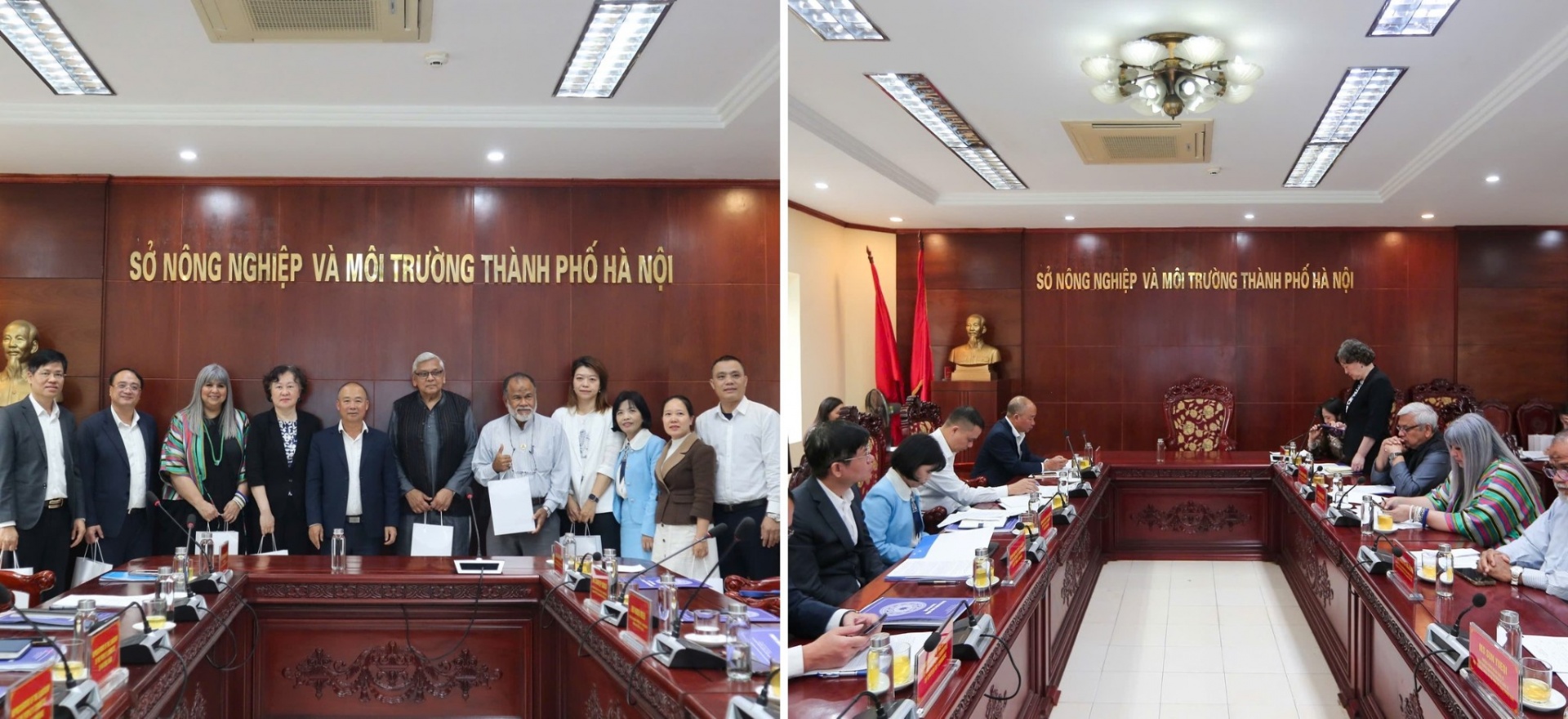 |
| Hanoi Department of Agriculture and Environment receives the World Craft Council delegation and representatives of Hanoi's four World Craft Cities villages on November 12. Photo: WCC |
On November 13, the Ministry of Agriculture and Environment and Hanoi People's Committee formally welcomed the international delegations. The exchange of greetings and gifts between Vietnamese leaders and guests from across the world reflected the spirit of the festival: craft as a language of friendship between nations.
That evening, beneath the Doan Mon Gate of Thang Long Imperial Citadel, the festival officially opened.
In attendance were Vu Dai Thang, Deputy Secretary of Hanoi Party Committee and Chairman of Hanoi People's Committee; Vo Van Hung, Deputy Minister of Agriculture and Environment; Bui Duy Cuong, Vice Chairman of Hanoi People's Committee; and Sundeep Kumar - WCC's vice president for Asia-Pacific Region and co-chair of World Craft Cities Subcommittee, alongside WCC representatives, ambassadors, international organisations, experts, and craft associations.
The presence of leaders from the government and the capital side by side with the world's craft community underlined the strong commitment for Vietnam's craft villages.
In his opening speech, Vice Chairman of Hanoi People's Committee Bui Duy Cuong described craft villages as a source of jobs, livelihoods, and Thang Long-Hanoi's cultural identity.
“Conservation means more than keeping products: it means safeguarding knowledge, skills and cultural spaces, and making sure young people can carry them forward,” he said.
He set out the city's priority of developing craft villages together with the green and circular economy, tourism and the cultural industries; called for better design, higher quality, and stronger environmental protection; and expressed hope for international cooperation in training, design, and technology to help export Vietnamese products.
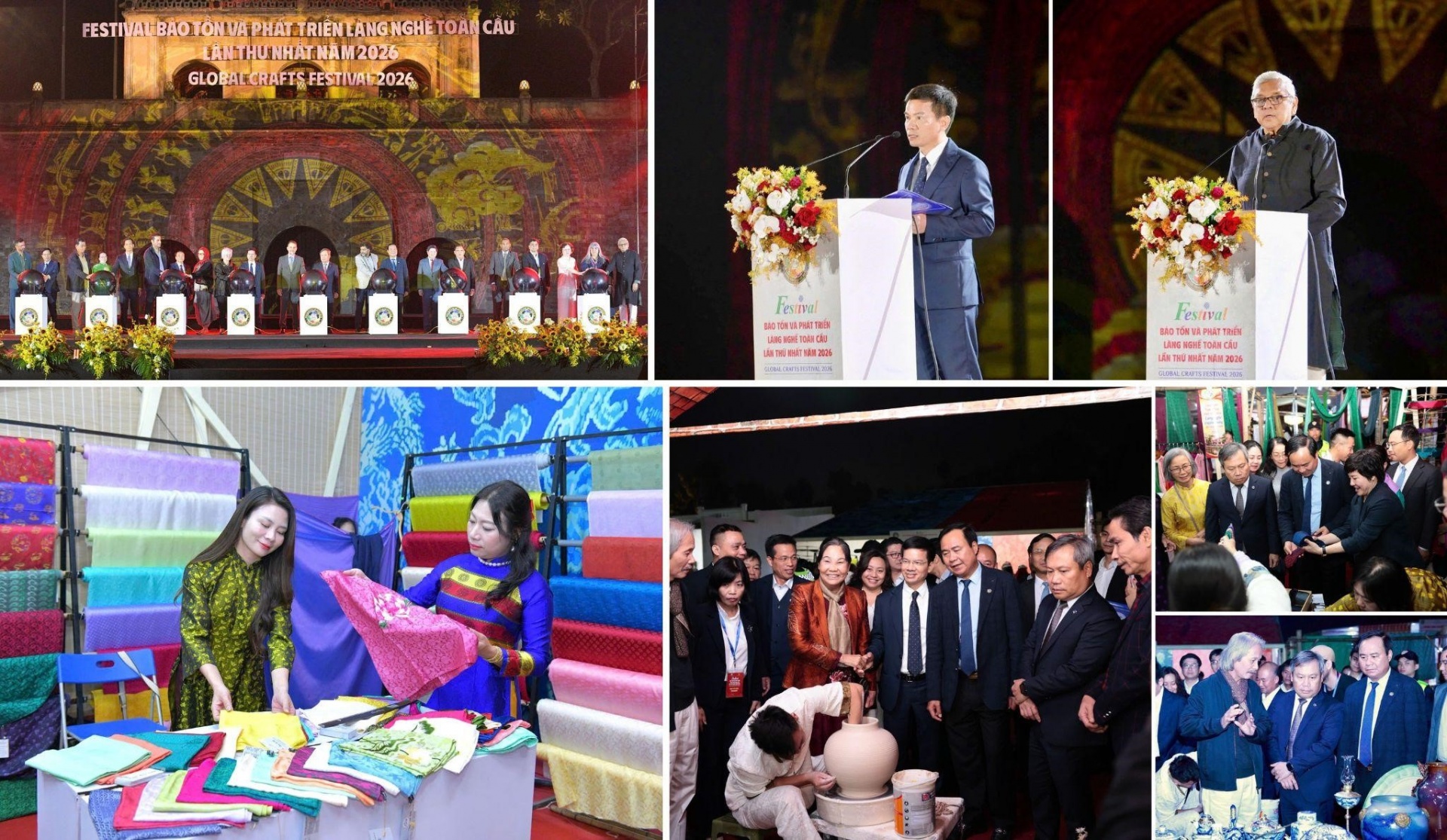 |
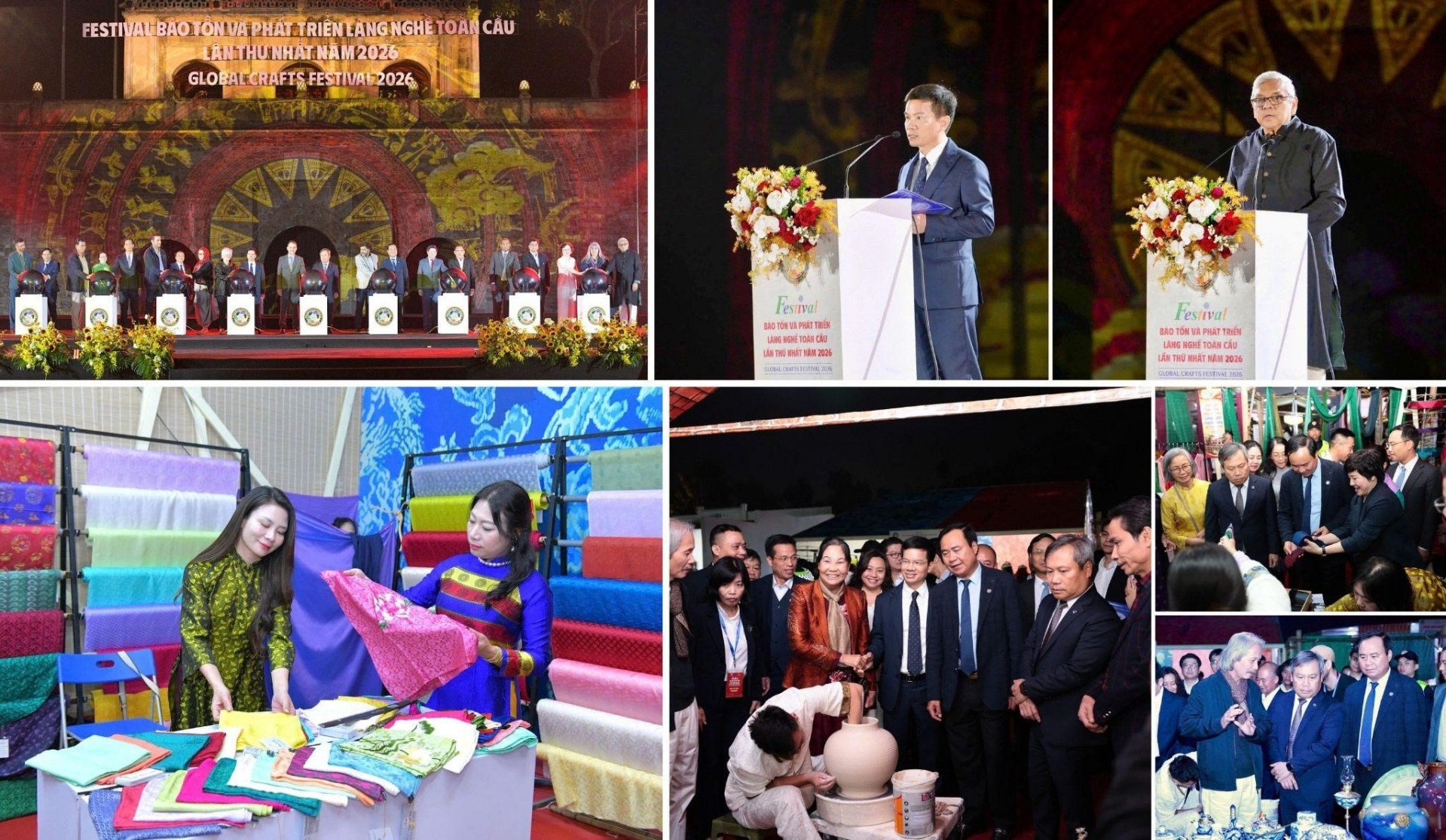
| Clockwise from top left: Vietnamese leaders and international delegates on the Festival's opening night; Vice Chairman of Hanoi People’s Committee Bui Duy Cuong and World Craft Council's vice president for Asia-Pacific Region Sundeep Kumar deliver their opening speeches; leaders tour the exhibition and artisans |
The World Craft Council responded with a strong vote of confidence. Vice president of WCC Asia-Pacific Region Sundeep Kumar called Hanoi a key strategic partner of the council and proposed signing an MoU with the city.
He put forward two initiatives that would place Hanoi at the centre of the global craft network: a World Craft Centre in Hanoi, connecting artisans, designers, researchers, and businesses internationally, and a World Craft Academy, bringing master artisans into universities and design schools as teachers.
A national priority, a global ambition
After the opening ceremony, leaders toured the exhibition, watching young potters at the wheel, meeting artisans, and exploring Van Phuc silk – a direct show of support for the people who keep these crafts alive.
The festival reflects a clear direction from the central government to the capital: craft villages are to be preserved as part of the nation's cultural identity and, at the same time, developed into a modern economic sector.
For Vietnam, this means linking craft villages with the green and circular economy, sustainable rural livelihoods, tourism and the cultural industries. For Hanoi, which aims to grow the production value of its craft villages by around 10 per cent a year in 2025-2030, it means building brands, training a new generation of artisans, and strengthening the competitiveness of Hanoi products on world markets.
The First Global Craft Village Conservation and Development Festival 2026 is both a celebration and a commitment. It honours the master artisans and skilled workers who have kept Vietnam's crafts alive for centuries.
 | Festival bringing exposure to Hanoi’s distinct food and crafts The Hanoi Centre for Investment, Trade and Tourism Promotion held the official launching ceremony of the Hanoi Cuisine and Craft Village Tourism Festival 2022 on the evening of May 20. |
 | Hanoi Cuisine Festival opens The Hanoi Cuisine and Handicraft Villages Tourism Festival has opened to visitors in Le Quang Dao Street in Nam Tu Liem district to entertain SEA Games visitors. |
 | Hanoi to host festival of craft villages, streets next month Hanoi will host a festival of craft villages and streets at the Imperial Citadel of Thang Long from October 13 – 16, aiming to promote and preserve local traditional handicrafts, according to Vice Chairman of the municipal People’s Committee Nguyen Manh Quyen. |
 | Hanoi to unlock tourism potential of craft villages In order to boost Hanoi's tourism sector, industry leaders should leverage the cultural heritage of the city and harness the potential of its craft villages to enhance the experience of visitors to the capital. |
What the stars mean:
★ Poor ★ ★ Promising ★★★ Good ★★★★ Very good ★★★★★ Exceptional
 Tag:
Related Contents





Latest News
More News
- Ho Chi Minh City launches programme to promote cultural diversity (November 15, 2026 | 20:56)
- Idemitsu Vietnam marks third year of classical concerts (November 13, 2026 | 11:36)
- Vietnam attracts 17.7m international visitors in nine months (October 06, 2026 | 17:56)
- Singapore Festival 2026 brings Peranakan heritage to Hanoi Centre (October 03, 2026 | 09:00)
- Beaches drive Vietnam’s domestic tourism boom (August 20, 2026 | 12:07)
- SABECO deepens consumer engagement at Khanh Hoa Sea Festival 2026 (August 18, 2026 | 14:32)
- Vietnam seeks for cuisine to give tourism a competitive edge (July 16, 2026 | 10:46)
- Plan approved for $420 million horse racing complex in Soc Son, Hanoi (July 08, 2026 | 13:37)
- Keeping heritage authentic in a digital world (June 15, 2026 | 17:57)
- Vietjet's cabin crew: ambassadors of hospitality and pioneering spirit (June 01, 2026 | 10:38)



Latest News


 Mobile Version