
'Green passport' key for Vietnamese food to reach global markets

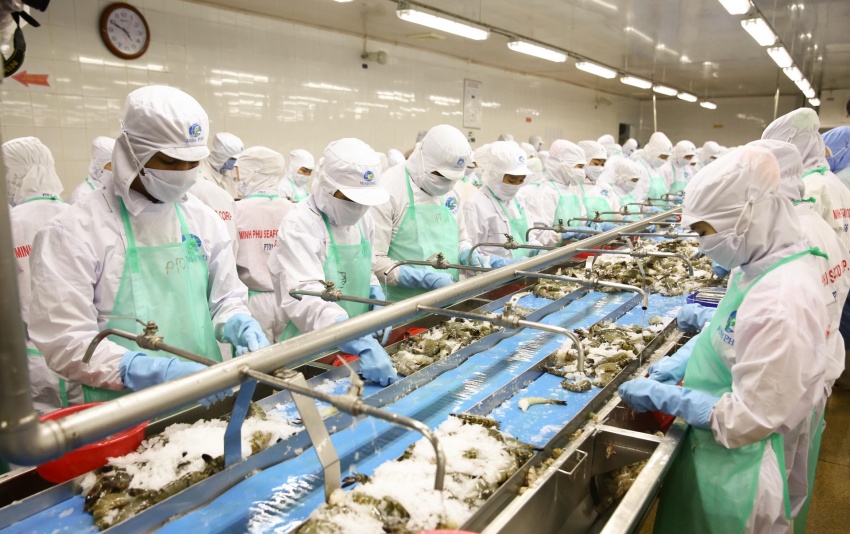 |
| Fishery manufacturing in Minh Phu Seafood Corp. Photo: Le Toan |
According to Liney Weishappel, CEO and co-founder of AllMadeViet, to meet green requirements in food production, businesses need to build their production systems around four key pillars: ensuring quality and safety, maintaining transparent traceability, managing environmental impact, and adhering to social ethics.
At the same time, enterprises should adopt a six-step roadmap, including identifying target markets, standardising requirements, assessing current conditions, prioritising resources, implementing cost-optimised solutions, and strengthening collaboration with specialised organisations.
“If implemented systematically, the green transition will not significantly increase costs; on the contrary, it can help businesses optimise operations and improve overall efficiency,” she said.
Beyond technical factors, Weishappel also emphasised the critical role of leadership mindset.
“Green transformation cannot succeed if businesses continue to take a short-term approach focused solely on pricing. Instead, they need to move towards building long-term strategic partnerships based on real value and trust,” she said.
In addition, international trade promotion activities should be carried out in a coordinated manner rather than on an individual basis. Enterprises should engage in broader ecosystems, leveraging support from government agencies, trade promotion organisations, and industry associations to enhance market access opportunities.
According to international reports, the global healthy food market is projected to exceed $860 billion in 2026, with an annual growth rate of over 10 per cent.
At the same time, major markets such as the EU, the United States, and Japan are continuously tightening regulations related to food safety, traceability, packaging, and emissions control across supply chains. These requirements are compelling businesses to shift towards more sustainable production and business models if they aim to maintain and expand their market share.
Ho Thi Quyen, deputy director of Investment and Trade Promotion Centre of Ho Chi Minh City, emphasised that 2026 marks a turning point, as green standards and transparency are becoming mandatory conditions for entering international markets.
“This presents a strategic opportunity for Vietnamese enterprises to reposition their role in the global value chain, moving away from cost-based competition towards competing on quality, value, and credibility, ultimately working towards establishing a ‘green passport’ for their products,” she said.
F&B businesses are currently facing three major pressures. First is the shift in consumer behaviour, with more than 70 per cent of customers willing to pay a premium for environmentally friendly products. Second is the increasingly stringent sustainability criteria imposed by international distribution systems. Third is the growing body of mandatory regulations related to traceability and emissions control.
“However, the sector’s value-added remains largely concentrated in the mid-range segment, with limited deep processing. This means many businesses have yet to fully unlock their potential to enhance product value. Therefore, investing in standards, improving quality, and building strong brands is not only an immediate requirement but also a long-term strategy,” Quyen said.
“Notably, international partners today are no longer seeking the lowest-cost suppliers, but instead prioritising those with stable operations, transparency, and a willingness to improve. This is the time for Vietnamese enterprises to shift from price-based competition to competing on quality, value, and credibility, the core foundation for establishing a ‘green passport’ for their products,” she added.
Vietnam’s agro-forestry-fishery exports earned $70 billion in 2025, surpassing the $65-billion target, heard a conference held on December 31 reviewing the performance of the agriculture and environment sector in 2025 and outlining tasks for 2026. The sector recorded a trade surplus of over $20 billion.
Hoang Van Viet, chairman of the Global Intellectual Business Association, said that the biggest limitation at present is that the share of value-added remains disproportionate to the sector’s potential.
“The core issue does not lie in product quality, but in transparency and governance systems. Businesses need to shift from a ‘good product’ mindset to a ‘good system’ approach, meaning not only creating high-quality products, but also building operational systems that meet international standards,” Viet said.
He also emphasised that there is no single ‘best’ certification, only those that align with each enterprise’s development strategy. Certification should not be viewed merely as an administrative procedure, but as a system of trust that validates products and enhances their value in international markets.
 | F&B could witness year of transition The food and beverage market in Vietnam is predicted to experience a strong wave of innovation. Nguyen Thai Duong, marketing director at iPOS.vn spoke with VIR’s Oanh Do about the prominent trends in the industry and new prospects for businesses. |
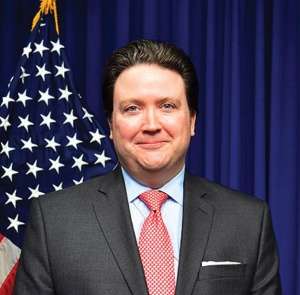 | US investors see potential in Vietnam’s F&B market For investors, Vietnam’s food processing and food/beverage industries offer wide prospects for American companies. US Ambassador to Vietnam Marc Knapper spoke with VIR’s Duc Hanh about potential cooperation between suppliers and investors on both sides. |
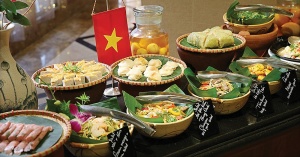 | Vibrant Vietnamese cuisine fit for global tastes As more and more people search high and low for new experiences when it comes to Vietnamese food, luxurious hotels and resorts around the country have highlighted some traditional dishes from their signature menus to serve high-end guests. International hoteliers shared with VIR’s Nhat Ha their insights and priority to support the local art of cuisine. |
What the stars mean:
★ Poor ★ ★ Promising ★★★ Good ★★★★ Very good ★★★★★ Exceptional
 Tag:
Tag:Related Contents
Latest News



More News
- Expanding education partnerships to drive mutual growth (October 06, 2026 | 16:04)
- VTG 2026 to showcase textile and footwear innovation in Ho Chi Minh City (October 06, 2026 | 16:00)
- Infineon boosts Vietnam footprint with Ho Chi Minh City office (October 06, 2026 | 10:02)
- Vietnam Customs expands priority enterprise scheme to 74 firms (October 03, 2026 | 08:00)
- ASL Law opens Danang office (October 02, 2026 | 22:12)
- Project ACTIVE 2.0 launches in Vietnam to boost cervical cancer care (October 02, 2026 | 22:02)
- Vietnam launches first embodied AI conference to advance robotics ecosystem (October 02, 2026 | 17:00)
- DKSH Performance Materials – A trusted partner in Vietnam’s evolving personal care landscape (October 02, 2026 | 14:28)
- Ghanaian delegation reviews PSL Machinery’s cashew factory-management and implementation roadmap (October 02, 2026 | 10:18)
- People living with chronic kidney disease and diabetes should be aware of infectious disease risks (September 30, 2026 | 18:00)


Latest News



 Mobile Version