
Eastern Ho Chi Minh City: infrastructure, green capital and wellness shape new benchmark for real estate value

As capital shifts towards sustainability
The story begins with capital flows. Following its commitment to achieve net-zero emissions by 2050, Vietnam has translated its green growth ambitions into regulations that classify credit according to environmental criteria, paving the way for banks to increase lending to projects that meet the required standards. The cost of capital is now closely tied to sustainability criteria: projects that comply with green standards are better positioned to access financing.
This capital is increasingly flowing into wellness real estate as one of its clearest destinations. The Global Wellness Institute estimates that the global market reached $584 billion in 2024, expanding by nearly 20 per cent annually between 2019 and 2024 – four times the overall growth rate of the construction industry – and could exceed $1.1 trillion by 2029.
Vietnam stands out within this landscape: in 2024, the country entered the world's 20 largest wellness real estate markets for the first time, reaching $2.13 billion, up nearly 43 per cent from the previous year. Across the 2019-2024 period, average annual growth of more than 22 per cent placed Vietnam among the world's fastest-growing markets.
Eastern Ho Chi Minh City: where timing and location converge
Against this backdrop, eastern Ho Chi Minh City is drawing significant attention from both capital and end-users as multiple advantages converge. On the infrastructure front, several key projects are approaching completion. Nguyen Thi Dinh street – which carries much of the cargo traffic to and from Cat Lai Port, Vietnam's largest container port – is being widened more than fourfold, from approximately 7m to 30m, with completion expected in the third quarter of 2026.
At the same time, work on Ring Road No.3 continues to accelerate; Ho Chi Minh City - Long Thanh - Dau Giay Expressway remains a vital interregional corridor; an extension of Metro Line 1 is under consideration; and the Saigon Hi-Tech Park is expected to expand by nearly 200 hectares towards Long Phuoc Islet.
Together, these developments are gradually shaping a new growth area for the city's knowledge economy. The metro will also enable a new way of living, allowing younger residents to choose homes farther from the city centre while retaining convenient mobility, thereby reinforcing genuine population movement towards the east.
Wellness: from an add-on amenity to a planning principle
It is precisely at the intersection of infrastructure and demographic change that the wellness real estate philosophy finds the right conditions to take shape. Vo Huynh Tuan Kiet, director of CBRE Vietnam's Residential Division, said, "The value of a wellness real estate project should be assessed across four dimensions: how green space is integrated into design standards; the level of investment in therapeutic landscape infrastructure; the extent of ecological green coverage; and the presence of a professionally operated health management system. A genuine wellness real estate project must treat health as a guiding criterion throughout every planning decision, rather than as a final add-on. From building placement and the organisation of greenery and water features to day-to-day operations, every component must serve the same objective."
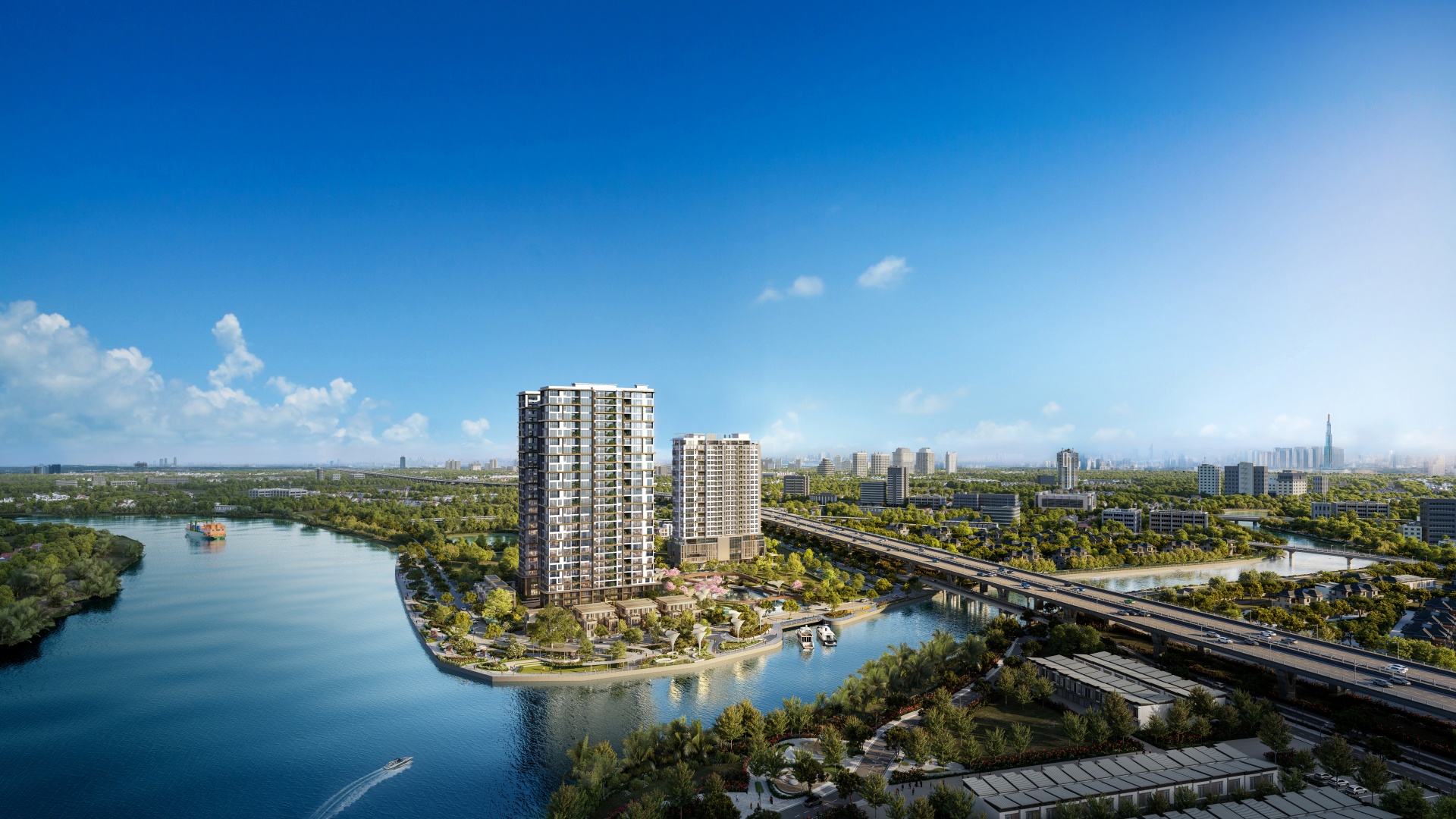 |
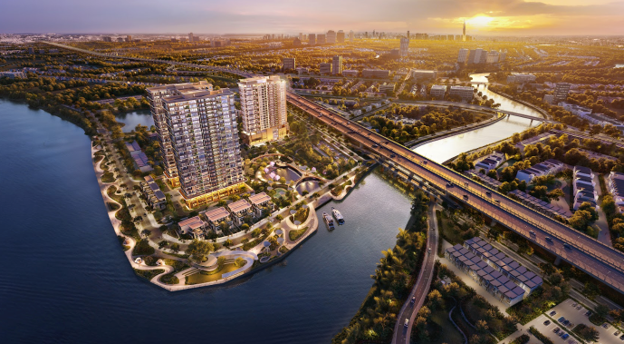
| IKI Village has two waterfront frontages and is located near the Go Cong interchange, which connects to Ring Road 3 |
IKI Village, a new premium real estate development in eastern Ho Chi Minh City, illustrates this approach clearly. The project occupies an approximately 5-ha site fronting the extended Lo Lu street in Long Phuoc ward. It is not far from the Go Cong interchange, a gateway to Ring Road No.3, and has two sides facing the Tac River and Trau Trau Creek.
The location recalls the traditional Vietnamese principle that proximity to markets comes first, followed by waterways and roads, but in a form more suited to contemporary life: it shortens travel time to employment and service hubs while preserving a tranquil riverside environment for rest and relaxation.
Nagecco, the project's master planning and architectural consultant, said, "The design direction began with the ambition to place residents' quality of life above purely financial calculations. Belt Collins International, a globally recognised landscape consultant, has leveraged the site's waterways, greenery and low building density to transform the landscape from a decorative layer surrounding the buildings into a vital link connecting exercise, relaxation, health and wellbeing, and family bonding in residents' everyday lives."
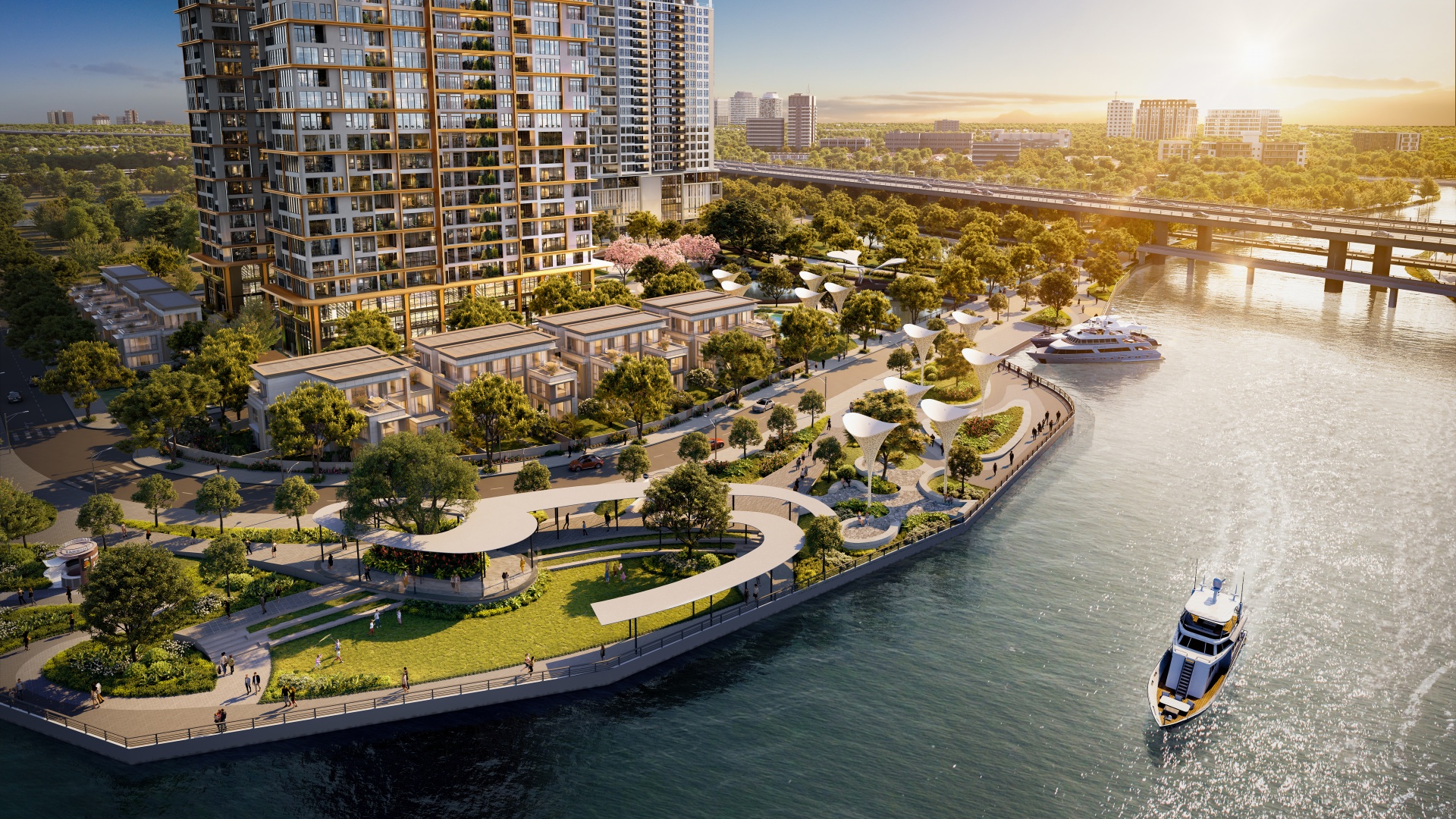 |
| The riverside area is planned as an integrated landscape for relaxation, physical activity and family connection |
Real value: proven through long-term use
The final point of convergence between the broader market picture and individual developments lies in a redefinition of value. As buyers increasingly prioritise verifiable attributes over bets on future potential, and as capital is no longer cheap enough to sustain short-term speculation, the "Value for Money" of a property is no longer determined by the lowest price at launch.
Instead, it is measured by the total value owners receive throughout the property's life cycle: reduced travel time, enduring access to nature, while amenities and shared spaces continue to function well after many years rather than deteriorating or diverging from the original commitments.
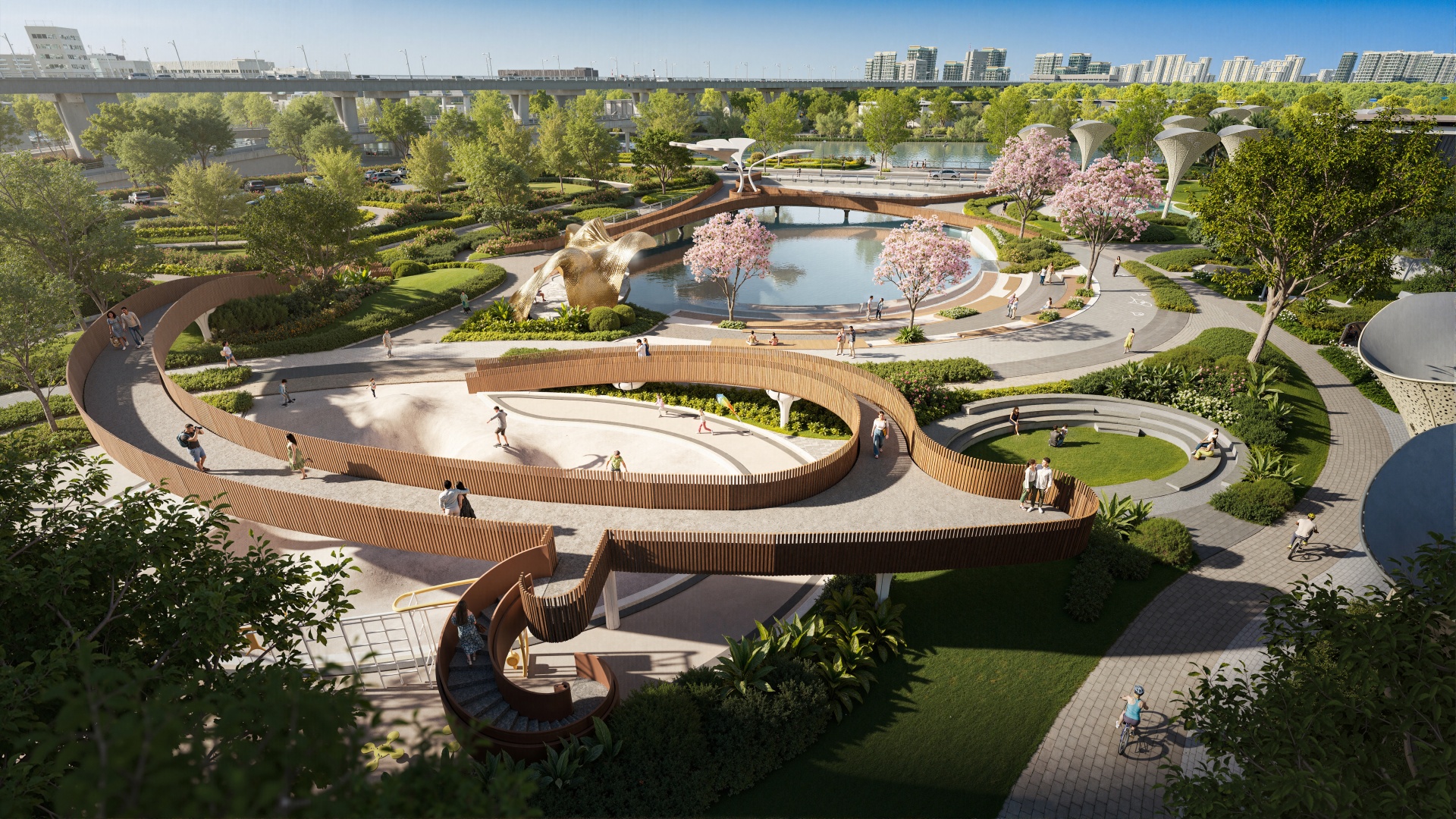 |
| The landscape and amenities designed by Belt Collins make nature and wellness part of everyday life |
Architect Nguyen Hoang Manh, co-founder and CEO of MIA Design Studio, said, "Vietnam is entering a period of rapid population ageing, making healthy living, green spaces and healthcare amenities sources of genuine value – compelling enough for buyers to accept a premium. This is also why projects such as IKI Village, where infrastructure, landscape and operations are planned as an integrated whole, are viewed by many experts as a model for the new value benchmark in eastern Ho Chi Minh City's next real estate cycle: they not only meet everyday living needs, but also preserve sustainable value over many years of ownership."
 | An Khai Hung launches IKI Village residential project in Ho Chi Minh City An Khai Hung Investment has broken ground on a residential project in Ho Chi Minh City, featuring private green gardens and direct access to Ring Road 3. |
 | Eastern Ho Chi Minh City enters new development phase After more than a decade of strategic planning, eastern Ho Chi Minh City is entering a new phase of development, driven by maturing transport infrastructure, a growing knowledge-based economy, and end-user demand from high-income residents gradually replacing speculative expectations, laying the groundwork for more sustainable real estate value in the long term. |
 | Ho Chi Minh City calls for investment in 38 new industrial parks Ho Chi Minh City is preparing to seek for developers for 38 new industrial parks covering a total area of more than 23,000 hectares under its master plan through 2030, with a vision to 2050. |
What the stars mean:
★ Poor ★ ★ Promising ★★★ Good ★★★★ Very good ★★★★★ Exceptional
 Tag:
Tag:Related Contents


Latest News
More News
- Khanh Hoa unveils international advanced green building plaque (July 06, 2026 | 16:34)
- Hubexo Asia Awards honour Vietnam's top architecture and construction firms (June 07, 2026 | 08:00)
- Lotte Properties and Phat Dat develop Thu Thiem Eco Smart City (May 27, 2026 | 22:18)
- Greening construction material market: the time is now (May 22, 2026 | 09:37)
- Last opportunity to own real estate in heart of Thao Dien (May 06, 2026 | 09:35)
- IOM and partners launch new SMEs guidance for construction and materials industry in Vietnam (April 24, 2026 | 17:25)
- Workshop guides construction firms on carbon rules (April 24, 2026 | 12:28)
- Malaysian tycoon SkyWorld brings sustainable homes to Vietnam (April 23, 2026 | 08:00)
- Green real estate labels mask deeper capital market divides (April 20, 2026 | 08:00)
- Ministry of Construction drafts criteria to assess urban climate resilience (April 14, 2026 | 17:05)







 Mobile Version