
Danang symposium puts spotlight on infectious disease prevention

The scientific symposium, held on August 16–17 and co-organised by Pfizer Vietnam and the Ho Chi Minh Society of Asthma, Allergy & Clinical Immunology, focused on the latest epidemiological trends and prevention strategies.
Discussions centred on the burden of infectious respiratory pathogens and diseases such as pneumococcus, respiratory syncytial virus (RSV), and meningococcus, with particular attention to vulnerable groups including children, the elderly, and patients with chronic conditions.
The current rainy season, with high humidity and fluctuating temperatures, has created optimal conditions for these pathogens to thrive, making prevention efforts even more urgent.
 |
| Photo: Pfizer |
Lower respiratory tract infections remain one of the world’s most serious health burdens, particularly among young children and older adults. In 2021, they accounted for 344 million cases and 2.18 million deaths globally, including more than 500,000 fatalities in children under five.
Dr. Phan Huu Phuc, deputy director of Vietnam National Children’s Hospital, said, "No one wants to see a child struggle with severe illness. Yet, lower respiratory tract infections remain a leading cause of morbidity and mortality among young children. Among these, pneumococcus accounts for more than half of the fatalities, especially in the 1–4 age group."
"In addition, RSV and meningococcus are also serious threats that can lead to death or severe complications. Each pneumococcal serotype has its own invasive and drug-resistant characteristics, making treatment challenging. Therefore, proactive prevention from the earliest months of life – even from the time in the womb – is the most practical action we can take to protect a healthy future for the next generation and reduce the healthcare burden in Vietnam," he added.
In contrast, older adults bear the highest mortality burden from lower respiratory tract infections. Pneumococcus remains the most common pathogen, often causing pneumonia and pneumonia complicated by sepsis.
According to the US CDC, there are approximately 150,000 hospitalisations each year due to pneumococcal pneumonia, with a 15–20 per cent risk of death within 30 days. Adults over 50, especially those with underlying conditions such as cardiovascular disease, diabetes, or chronic obstructive pulmonary disease, are six times more likely to be hospitalised than younger adults aged 18-49. Even after treatment, many patients experience long-term complications such as cognitive decline, increased cardiovascular risk, and reduced life expectancy.
At the symposium, experts noted that pneumococcal epidemiology is changing due to the impact of vaccination and antibiotic resistance. As common serotypes are brought under control, other serotypes not covered by current vaccines are increasing – a phenomenon known as serotype replacement. This calls for close monitoring and timely adjustments to prevention strategies.
Continuing the discussion on pneumococcal prevention in this new context, Prof. Antoni Torres, Department of Pulmonology, Hospital de Clínic, University of Barcelona, remarked, "Pneumococcal disease prevention is entering a new phase, with adults, particularly older adults, now considered a priority group for protection alongside children. Proactive prevention broadens protection while supporting effective chronic disease management, helping improve quality of life."
Economic analyses have also shown that pneumococcal vaccination is cost-effective, helping reduce hospitalisations, antibiotic use, and outpatient visits, while contributing to herd immunity.
In addition, experts emphasised the need for a comprehensive approach, including maintaining proper nutrition, practicing good personal hygiene, exercising regularly, avoiding risk factors such as tobacco and alcohol, and effectively managing chronic conditions. Combining immunisation with chronic disease control and immune system strengthening can significantly reduce the risk of pneumococcal infection, complications, and mortality.
The symposium concluded with consensus among experts that prevention should be a cornerstone of lifelong healthcare policy. Sustaining protection against pathogens from childhood through older age benefits individuals while also driving lasting improvements in community health and quality of life.
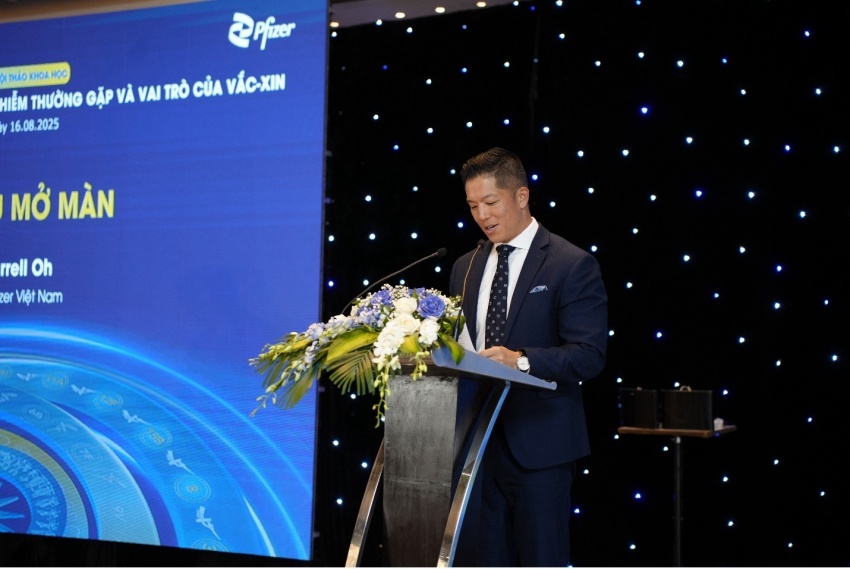 |
| Darrell Oh, general director, Pfizer Vietnam. Photo: Pfizer |
"Sharing updated scientific data, practical experience, and innovative initiatives is key to helping the healthcare sector develop more effective strategies for preventing infectious respiratory diseases in line with current epidemiological realities," said Darrell Oh, general director of Pfizer Vietnam.
"As a trusted partner, Pfizer is committed to working alongside Vietnam to build a sustainable healthcare system, prepared to meet both present and future public health challenges," he added.
 | Pfizer takes big steps with new vaccines Biopharmaceutical company Pfizer has announced that its two-in-one flu and COVID-19 jab will be moving into a final-stage trial in the coming months, along with the finalisation of the phase-three trials for its mRNA vaccine against influenza for adults. |
 | Preventive measures for pneumococcal disease in adults Pfizer Vietnam, in collaboration with the Vietnam Association of Preventive Medicine, organised on June 3 and June 5 a series of scientific symposia in Ho Chi Minh City and Hanoi to discuss pneumococcal disease in adults and preventive measures. |
 | Pfizer Romania Named Best Place to Work for 2025 A culture of care and performance excellence earns global recognition in the pharma sector. |
What the stars mean:
★ Poor ★ ★ Promising ★★★ Good ★★★★ Very good ★★★★★ Exceptional
 Tag:
Tag:Themes: Healthcare Platform
- Ho Chi Minh City Oncology Hospital signs MoU with Novartis Vietnam
- Driving early detection and integrated liver disease management
- GSK supports medical community in raising awareness of severe asthma in Vietnam
- Vaccinology training programme launched to boost preventive care capacity
- Opella and Hoan My Academy partner to advance medical education
Related Contents







Latest News





More News
- Vietnam-Australia forum boosts AI and digital technology cooperation (October 13, 2026 | 11:30)
- Digital transformation shifts focus to added value (October 09, 2026 | 18:00)
- Melatec Dental Clinic - accompanying international clients on their smile care journey (October 09, 2026 | 17:25)
- 12 localities achieve double-digit growth in first nine months (October 09, 2026 | 17:00)
- CYE 2026 announces top 5 finalists (October 09, 2026 | 16:55)
- Robotics inspires Vietnam’s next generation of engineers (October 08, 2026 | 15:18)
- Vietnam among fastest AI adopters, Pearson-AWS study finds (October 07, 2026 | 12:26)
- Ho Chi Minh City Oncology Hospital signs MoU with Novartis Vietnam (October 07, 2026 | 10:36)
- Expanding education partnerships to drive mutual growth (October 06, 2026 | 16:04)
- VTG 2026 to showcase textile and footwear innovation in Ho Chi Minh City (October 06, 2026 | 16:00)







 Mobile Version