

Customs reform to prioritise high-tech and innovative businesses

Could you elaborate on the reasons behind this amendment to the Customs Law?
 |
The Department of Vietnam Customs has conducted a comprehensive review of legal documents to identify bottlenecks and design mechanisms to foster breakthroughs in science, technology, and innovation.
As a result, we have determined the need to amend several provisions, particularly those related to preferential customs procedures for high-tech, semiconductor, and innovative enterprises.
Some of the current conditions, such as requiring two consecutive years of legal compliance and a minimum import-export turnover, are not suitable for newly established businesses, especially startups in these sectors.
Therefore, we propose amending the conditions for recognising priority businesses, particularly those in science and technology, innovation, and enterprises formed from high-tech research and development projects or in areas such as AI. Most of these companies are newly established.
In addition, in response to feedback from businesses and directives from the Prime Minister, semiconductor companies have been facing difficulties with on-the-spot import and export. Thus, the Customs Law needs to be revised to provide a clearer legal framework to support effective implementation.
How many businesses are expected to benefit from the expanded preferential treatment for innovative and semiconductor-related enterprises?
For companies operating in high-tech, semiconductor, and innovation fields, the number of businesses eligible for preferential treatment will significantly increase once the new regulations are in place.
Under the current Customs Law, a company must have been operating continuously for two years and be evaluated positively by customs bodies, or meet a minimum import-export turnover threshold to qualify for preferential treatment.
With the proposed mechanism, newly established companies could be recognised from the outset, provided they meet conditions such as having a robust internal control system, utilising electronic customs and tax procedures, and demonstrating sound financial capacity.
This will not only expand the number of enterprises eligible for incentives, but also help reduce costs, save time, and simplify procedures for companies importing or exporting goods directly serving high-tech industries, the semiconductor industry, and other innovation-driven activities.
How will including on-the-spot import and export regulations in the amended Customs Law help resolve the current challenges faced by businesses?
Currently, regulations for on-the-spot import and export exist only in some decrees, and not at the law level. Amending the law will ensure that businesses are no longer subject to requirements regarding whether a foreign trader has a commercial presence in Vietnam.
Instead, they will only need to demonstrate that goods are delivered within Vietnam at the instruction of a foreign trader to be eligible for procedures.
This change will resolve many current obstacles faced by thousands of enterprises.
In particular, in the high-tech and semiconductor sectors, companies such as Foxconn, Samsung, Intel, and other major electronics firms have significant demand for on-the-spot export and import.
However, under the current legal framework, only cases where the foreign trader does not have a commercial presence in Vietnam are eligible for this mechanism.
The new regulation will remove this restriction and provide a favourable legal basis to support the formation of a seamless supply chain within Vietnam-, from component manufacturing to final product assembly and export.
With more semiconductor and high-tech enterprises expected to benefit from the new cost-related provisions, how are customs authorities preparing to manage this growth and ensure compliance with the law’s specific requirements?
According to the amended law, once an enterprise is recognised, it must continue to meet and maintain various conditions. For instance, a solid internal control system is required to ensure oversight of the entire import-export and production process, from raw material intake to finished product export.
Recognised businesses must also continue using electronic customs and tax systems and comply with regulations related to auditing, accounting, and other legal obligations.
In the two to three years following recognition, the customs authority will continue to review and evaluate the enterprise’s compliance with customs and tax laws.
Although the amended regulation does not require two consecutive years of prior compliance for recognition, continued eligibility will depend on a comprehensive assessment within a defined timeframe.
At the same time, the customs authority will also develop support mechanisms to help businesses better understand and adhere to customs regulations, thereby avoiding violations that could result in revocation of preferential status.
| On June 25, during its ninth session, the 15th National Assembly passed a comprehensive legislative act amending and supplementing several provisions of eight major laws, including the Customs Law. Besides preferential treatment for innovative enterprises and revisions to on-the-spot import and export regulations, the Department of Vietnam Customs, under the Ministry of Finance, is currently compiling proposals for a comprehensive revision of the Customs Law, expected to be submitted to the National Assembly in its forthcoming October session. |
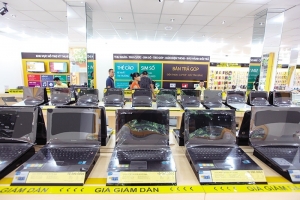 | Tech giants aim high with focused strategies for 2025 Major players in the information communication technology and consumer electronics (ICT and CE) market are aiming high in 2025 by building on the back of their 2024 performances with distinct growth strategies. |
 | Vietnam Customs strengthens private sector ties Vietnam Customs has reaffirmed its commitment to strengthening cooperation with the private sector, particularly in areas such as e-commerce, express delivery, and regulatory reform. |
 | Mobile app drives customs modernisation and transparency The newly launched Vietnam Customs Data mobile app marks a significant step in digitalising import-export reports, providing real-time, visualised data to support more efficient decision-making and customs modernisation. |
What the stars mean:
★ Poor ★ ★ Promising ★★★ Good ★★★★ Very good ★★★★★ Exceptional
 Tag:
Tag:
Related Contents








Latest News


More News
- Talentnet Academy and SMU ExD launch NextGen for Vietnamese family business leaders (October 02, 2026 | 18:15)
- Temenos Awards celebrate banking innovation and success in Asia Pacific (October 02, 2026 | 18:00)
- Implement partnership to improve diabetic eye care (October 02, 2026 | 10:32)
- Vietnam climbs Global Innovation Index (October 01, 2026 | 08:00)
- Expanding cross-border e-commerce opportunities in major markets (September 30, 2026 | 17:23)
- Tien Phong Plastics highlights sharing resources for industrial symbiosis (September 30, 2026 | 14:11)
- The 2026 export equation: optimising profits in the processing and packaging industry (September 30, 2026 | 08:00)
- Vietnamese retailers make strong debut in Asia's Top 100 ranking (September 29, 2026 | 12:10)
- Ford appoints Annaliese Atina as managing director of Ford Vietnam (September 28, 2026 | 11:35)
- VIR’s content quality and its evolution over the years (September 26, 2026 | 08:00)






 Mobile Version