
Comprehensive management for diabetic retinopathy and diabetic macular edema

The scientific symposium titled "Towards Building a Comprehensive Management Model for Patients with Diabetic Retinopathy and Diabetic Macular Edema at Hospitals" was organized by the Medical Service Administration under the Ministry of Health in collaboration with the Vietnam Medical Association and Roche Pharma Vietnam . The event brought together leading experts in ophthalmology and endocrinology to address the urgent challenges in managing diabetic eye complications, a leading cause of blindness among the working-age population in Vietnam.
 |
Diabetic retinopathy (DR) and diabetic macular oedema (DME) represent a severe healthcare burden. According to 2020 survey data in Vietnam, there are approximately 7 million people with diabetes, but over 50 per cent remain undiagnosed, creating a massive iceberg of potential complications. Notably, 39.5 per cent are complications related to the eyes and nerves. Other reports show that 6 out of 10 diabetic patients have eye complications, yet only a small fraction are screened and diagnosed early. There were an estimated 320,527 patients with diabetic macular oedema in Vietnam as of 2016.
One of the greatest challenges today is the low rate of management and treatment for patients with diabetic eye complications. A prime example is in Ba Ria-Vung Tau province, where out of an estimated 18,000 patients with DR and DME, only 600 are managed and receive outpatient treatment at the provincial eye hospital. Key includes limited public awareness barriers, difficulties in accessing healthcare services, and the burden of costs, preventing many patients from receiving early intervention. This leads to severe consequences such as irreversible vision loss and blindness, posing an urgent need for synchronized solutions to improve screening and treatment effectiveness.
Given this situation, building a comprehensive, multidisciplinary coordination model is critically important. Speaking at the symposium, Nguyen Trong Khoa, Deputy director of the Medical Service Administration under the Ministry of Health, emphasized, “We highly value the importance of developing a comprehensive management model for patients with diabetic retinopathy and macular oedema at hospitals. This helps improve the quality of treatment for patients and contributes significantly to the development of ophthalmology departments, especially at a provincial level. The application of new technologies like AI in early screening is also a positive direction that we encourage.”
 |
The 2025-2027 phase will focus on developing and piloting a comprehensive management model in several key hospitals. Based on the pilot results, a national guideline will be issued in 2027, serving as a foundation for national expansion during the 2028-2030 period. The ultimate goal is to help increase the rate of diabetic patients being screened and monitored for eye diseases to over 75 per cent by 2030, in line with the national strategy for blindness prevention.
Lennor Carrillo, general manager of Roche Pharma Vietnam, shared, “Roche is proud to have partnered with the Vietnamese healthcare sector over the past 30 years. We are honoured to continue joining forces with the Ministry of Health and the medical community on such a meaningful programme, supporting diabetic patients in gaining access to early screening for eye complications. This is a necessary effort, especially as Vietnam faces challenges from rising diabetes prevalence and an ageing population.”
Strong commitment from leading institutions
Pham Ngoc Dong, director of the National Eye Hospital, said, “The National Eye Hospital is ready to join hands in building a comprehensive management model, especially in developing and refining professional guidelines and policies related to the management of diabetic retinopathy and macular oedema. Our goal is to support diabetic patients in getting early diagnosis and treatment for eye complications, helping to preserve their vision and improve their quality of life, especially for those of working age.”
In parallel with the efforts in the North, healthcare units in the southern region also play a pivotal role in implementing the model. Nguyen Chi Trung The Truyen, deputy director of the Ho Chi Minh City Eye Hospital, shared, “We are committed to participate in training, technology transfer, and capacity building for ophthalmology healthcare professionals in the southern region. Through this, we aim to establish a screening and early detection system for retinopathy for a large number of diabetic patients, who are currently managed at general hospitals and lower-level medical centres, thereby reducing the burden on central-level hospitals and helping patients receive timely care, monitoring, and treatment.”
The symposium concluded with a high consensus on the need to establish a multidisciplinary expert group and a clear coordination mechanism among all parties. The outcome of the event will be a crucial foundation for implementing subsequent activities, promising to bring about positive changes in the management of patients with DR and DME, thereby reducing the burden of blindness and improving the quality of life for Vietnamese people.
 |
 | Cancer immunotherapy offers hope for lung cancer treatment On April 13, K Hospital in collaboration withRoche Pharma Vietnamheld a scientific conference themed "Cancer Immunotherapy - Lighting up hope for cure in early-stage lung cancer treatment" with the participation of more than 150 oncology experts from Vietnam and abroad. |
 | Roche Pharma Vietnam celebrates 30th anniversary A ceremony to celebrate the 30-year anniversary of Roche Pharma Vietnam was held at the Swiss Ambassador's Residence on September 26. |
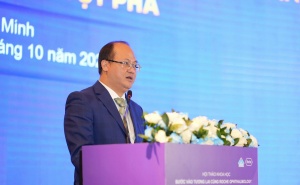 | New hope for patients with vision impairment A seminar held in Ho Chi Minh City on October 12 heard how Ho Chi Minh Eye Hospital, in collaboration with Roche Pharma Vietnam, is exploring cutting-edge solutions for patients suffering from retina diseases. |
What the stars mean:
★ Poor ★ ★ Promising ★★★ Good ★★★★ Very good ★★★★★ Exceptional
 Tag:
Tag:Related Contents





Latest News




More News
- Expanding education partnerships to drive mutual growth (October 06, 2026 | 16:04)
- VTG 2026 to showcase textile and footwear innovation in Ho Chi Minh City (October 06, 2026 | 16:00)
- Infineon boosts Vietnam footprint with Ho Chi Minh City office (October 06, 2026 | 10:02)
- Vietnam Customs expands priority enterprise scheme to 74 firms (October 03, 2026 | 08:00)
- ASL Law opens Danang office (October 02, 2026 | 22:12)
- Project ACTIVE 2.0 launches in Vietnam to boost cervical cancer care (October 02, 2026 | 22:02)
- Vietnam launches first embodied AI conference to advance robotics ecosystem (October 02, 2026 | 17:00)
- DKSH Performance Materials – A trusted partner in Vietnam’s evolving personal care landscape (October 02, 2026 | 14:28)
- Ghanaian delegation reviews PSL Machinery’s cashew factory-management and implementation roadmap (October 02, 2026 | 10:18)
- People living with chronic kidney disease and diabetes should be aware of infectious disease risks (September 30, 2026 | 18:00)


Latest News




 Mobile Version