
Banks face rising bad debts amid push for debt market development

The third-quarter 2026 financial statements of banks show a sharp increase in bad debts. Not only non-performing loans (NPLs) but also special-mention loans (Group 2 debts) have expanded significantly at many lenders.
Accordingly, PGBank's third-quarter 2026 financial statements show that, as of the end of September, its on-balance-sheet non-performing loans totalled nearly $77.9 million, up 78.4 per cent from the end of 2025.
The bank's NPL ratio surged to 3.93 per cent, exceeding the warning threshold set by the State Bank of Vietnam (SBV) and significantly higher than the 2.36 per cent recorded at the end of last year. Notably, its Group 3 (substandard) and Group 4 (doubtful) loans both nearly tripled.
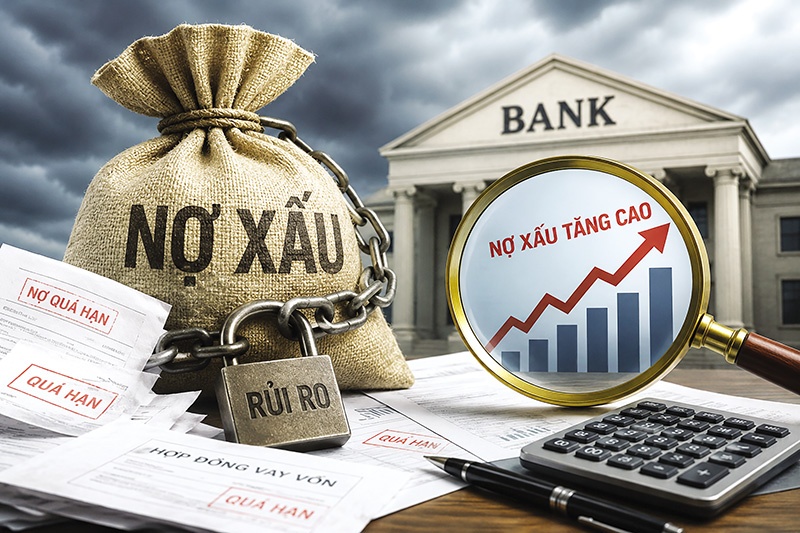 |
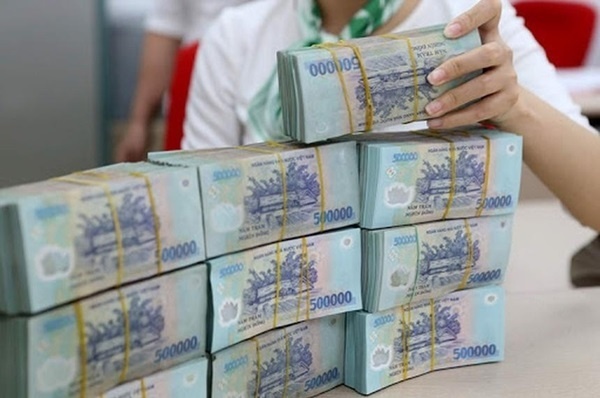
| Rising bad debts have prompted the State Bank of Vietnam to require banks to strictly maintain credit standards. Photo: baodautu.vn |
While bad debts have risen rapidly, the bank's NPL coverage ratio has declined, standing at just 30.5 per cent at the end of September, placing PGBank among the banks with the lowest NPL coverage ratios in the system.
At Techcombank, the NPL ratio has not fluctuated significantly, rising to 1.36 per cent from 1.13 per cent at the end of last year. Notably, Group 2 loans have also doubled, indicating a substantial volume of debts at risk of deteriorating into non-performing loans.
Although Techcombank is among the few banks with an NPL coverage ratio exceeding 100 per cent, the ratio has also been declining. As of September 30, its NPL coverage ratio stood at just 107 per cent, down from 128 per cent at the end of last year.
At LPBank, the volume of bad debts also increased by approximately 36.5 per cent from the end of 2025, lifting its NPL ratio to 1.87 per cent from 1.68 per cent as of December 31, 2025.
In addition to rising bad debts, the bank's special-mention loans (Group 2) increased by more than 72 per cent from the outset of the year. If borrowers fail to recover their repayment capacity, the risk of these loans migrating into worse debt categories is substantial. The NPL coverage ratio fell to 62.8 per cent from 73.9 per cent at the end of last year.
The rise in bad debts has prompted greater caution from regulators. In Official Letter No.9608/NHNN-CSTT dated October 18, the SBV called on credit institutions to lower lending rates while strictly prohibiting any relaxation of credit standards or sacrificing credit quality to expand lending.
“Particular attention should be paid to certain credit institutions with large-scale and rapidly increasing bad debts. These institutions must closely monitor and manage their credit exposures, proactively review and assess the causes of rising bad debts, and promptly implement appropriate solutions to control risks and ensure safe operations,” the letter warned.
Against a backdrop of eroding provisioning buffers across the banking system, with the system-wide NPL coverage ratio now below 80 per cent and some banks reporting ratios of just 20-30 per cent, the SBV has also called on banks to review and fully comply with legal requirements and internal regulations governing loan classification and provisioning, while improving their NPL coverage ratios.
In previous years, banks primarily dealt with bad debts by foreclosing on collateral and using risk provisions. However, the property market is now unfavourable, with poor liquidity slowing the disposal of collateral.
As a result, bad debt resolution has become increasingly reliant on risk provisions. The SBV is therefore encouraging banks to diversify their debt resolution methods, including through the debt trading market.
Vietnam's debt trading market has yet to develop in line with its potential in recent years. Although a debt trading exchange has been established, banks have not yet been able to put their debts up for sale.
Encouragingly, Decree No. 359/2026/ND-CP on the establishment, organisation, operations and financial mechanism of state-owned Vietnam Asset Management Company (VAMC), which takes effect on November 6, will place VAMC under a new legal framework, with an expanded role in resolving bad debts and developing the debt trading market.
Tran Trung Dung, chairman of VAMC's Members' Council, noted that compared with the previous framework, Decree 359 updates regulations governing VAMC's organisation, governance, rights and obligations, while expanding mechanisms to support credit institutions in recovering and resolving debts and collateral.
“VAMC is being steered towards a major shift from primarily resolving individual debt cases to developing the debt trading market. The focus of this process is on establishing and operating a debt trading exchange that connects investors with specialised service providers," he said
"Alongside connecting market participants, the exchange is expected to develop intermediary services such as consulting, valuation, auction and risk control. Through these efforts, VAMC aims to increase the number and value of transactions while improving the market's transaction success rate.”
VAMC is currently working with South Korean agencies and partners to develop the technology platform for the debt trading exchange. The exchange is expected to become operational in late 2027 or early 2028.
 | Banks post strong H1 performances on credit growth and cost cuts Banks have reported strong first-half results, fuelled by double-digit credit growth, improved asset quality, and operating efficiency, pointing to a positive outlook for the rest of the year. |
 | From provision buffers to bad debt insights Financial statements from the second quarter show a continued decline in the non-performing loan coverage ratio, dropping to 79.82 from 80.40 per cent a year earlier. |
 | Banks build bigger buffers as bad debt pressure returns Banks are sharply increasing loan-loss provisions as rising bad debts, weaker cash flows and mounting property market risks force lenders to prioritise financial resilience over short-term profit. |
 | Experts offer solutions on more substantive lending cuts As banks face mounting funding costs, liquidity pressures and bad debts, experts have offered solutions to make lending rate cuts more substantive while ensuring credit reaches key growth sectors. |
What the stars mean:
★ Poor ★ ★ Promising ★★★ Good ★★★★ Very good ★★★★★ Exceptional
 Tag:
Related Contents









Latest News
More News
- Fintech growth puts financial stability and resilience in focus (November 03, 2026 | 15:52)
- Real estate and retail drive Q3 profit surge (November 03, 2026 | 14:06)
- Techcombank announces core banking upgrade to enhance customer experience (November 02, 2026 | 18:04)
- Banks unlock foreign ownership headroom to attract strategic investors (November 02, 2026 | 17:07)
- VBSP loans help Bat Trang farmers expand high-value agriculture (November 02, 2026 | 13:48)
- SeABank unveils Sustainable Finance Framework (October 30, 2026 | 18:30)
- Implementation key to Vietnam’s post-upgrade capital inflows (October 30, 2026 | 18:26)
- Experts outline ways to sustain interest rate cuts (October 29, 2026 | 17:10)
- VIB reports nearly $294 million pre-tax profit in first nine months (October 28, 2026 | 14:09)
- Vietnam's stock market upgrade puts focus on corporate governance (October 28, 2026 | 12:37)








 Mobile Version