
SBV opens new lending room as infrastructure and property financing gets major boost

Accordingly, the central bank (SBV) has approved a special mechanism for 18 infrastructure projects developed by major developers Vingroup, Sun Group and Masterise, allowing outstanding loans related to these projects to be excluded from annual credit growth calculations, commonly known as credit room limits.
On June 22, the SBV issued Official Dispatch No.5386/NHNN-TD providing guidance on lending activities for several key projects.
According to the SBV, it received requests from three companies – Vingroup, Masterise Aviation Infrastructure and Sun Group – seeking permission to exclude credit balances associated with certain projects from annual regulatory credit growth calculations.
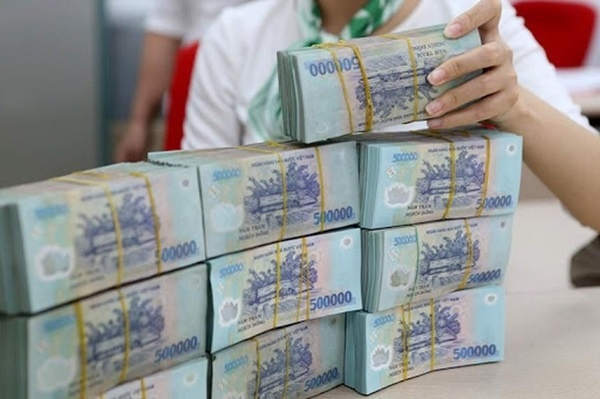 |
| The move follows a series of recent decisions by the SBV that have effectively unlocked billions of dollars in funding |
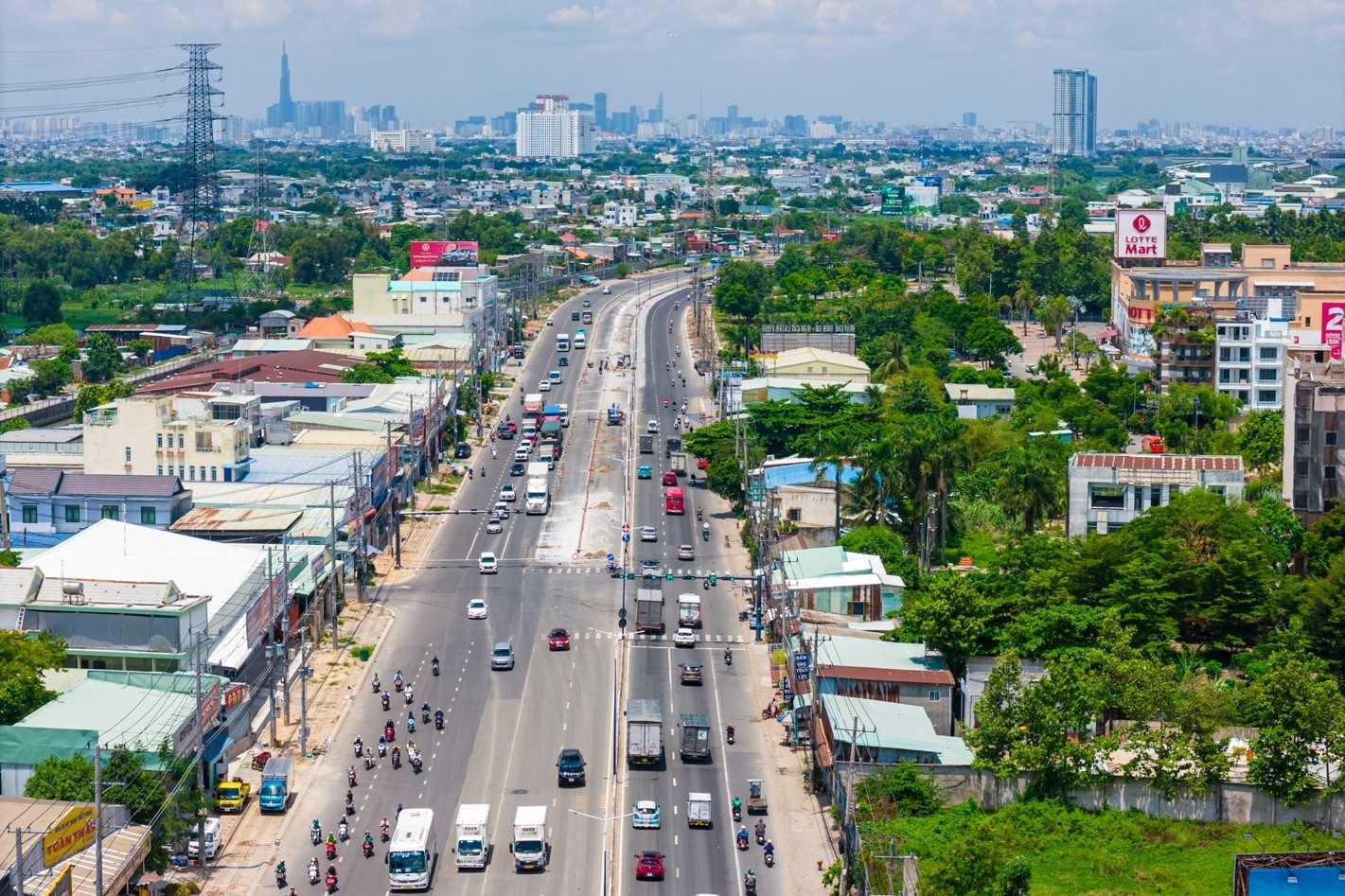
The projects proposed for exclusion include those serving the APEC Summit, public-private partnership projects, high-speed railway developments including the Ben Thanh-Can Gio and Hanoi-Quang Ninh routes, as well as projects associated with Gia Binh International Airport.
The total capital requirement for these projects is estimated at $28 billion, with most of the funding demand concentrated in 2026-2028.
The regulator noted that these are strategic national projects with significant spillover effects, regional connectivity benefits and strong government support due to their importance to reaching socioeconomic development goals. To facilitate proactive appraisal and financing by commercial banks, the SBV has issued specific guidance.
Under the new framework, commercial banks that provide financing for these projects will be allowed to exclude newly generated credit balances and annual loan disbursements related to these projects when calculating their annual credit growth limits.
However, participating banks must separately monitor project-related lending and report it to the SBV to ensure that the total credit exposure to project developers, contractors and suppliers involved in implementation does not exceed overall borrowing requirements at any given time.
These banks are also responsible for requiring the three developers to closely manage the credit demand for each venture previously reported and to provide confirmation and commitments that the loans will be used exclusively for project execution, while monitoring total outstanding credit balances for each project.
Regarding lending limits applicable to individual borrowers and groups of relevant borrowers, the SBV acknowledged that financing requirements for these projects are exceptionally large and encouraged commercial banks to arrange syndicated loans.
If the lending amount of an individual bank exceeds regulatory lending limits for a single customer or a related customer group, the bank must report the case to the SBV, which will submit it to the Prime Minister for consideration and approval.
Credit institutions are required to separately track outstanding balances associated with these projects and submit periodic reports to the SBV.
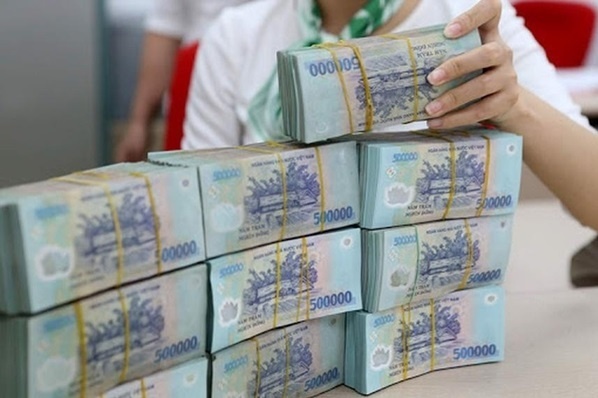
The move follows a series of recent decisions by the SBV that have effectively unlocked billions of dollars in lending capacity, particularly for infrastructure and real estate projects.
On June 22, the SBV issued Circular No.25/2026/TT-NHNN, increasing the maximum proportion of short-term funding sources that can be used for medium- and long-term lending to 40 per cent from July 1, up from the current 30 per cent.
At present, short-term deposits account for 80-90 per cent of total banking system funding, equivalent to about $520-$600 billion. With the higher ceiling under Circular 25, the additional capacity for medium- and long-term lending is estimated at $52-$60 billion.
Earlier, in May, the SBV issued a directive allowing 25 credit institutions to exclude additional lending for social housing, industrial parks and export processing zones from real estate credit growth limits.
It also approved Circular No.08/2026/TT-NHNN, permitting banks to exclude only 80 per cent of State Treasury term deposits from funding sources when calculating the loan-to-deposit ratio, instead of excluding 100 per cent as required under previous regulations.
Commenting on the recent easing of credit growth restrictions, experts believe the SBV is making substantial efforts to support economic growth, although the measures could also increase financial risks.
“With the current objective of achieving double-digit economic growth, existing ‘barriers’ would prevent the banking sector from supplying sufficient resources to support expansion. Loosening risk management requirements can have positive effects by supporting growth, but it also increases the possibility of more severe systemic risks, particularly as the gap between lending and deposit mobilisation continues to widen,” a senior economist said.
 | Infrastructure stocks poised for growth as Vietnam advances PPP bond framework Vietnam’s planned public-private partnership bond framework is expected to ease long-term funding constraints for infrastructure projects, creating fresh growth momentum for listed infrastructure companies. |
 | Banks face growing constraints on loan rate reductions Although banks have trimmed lending rates following the State Bank of Vietnam’s call for lower borrowing costs, rising funding expenses and stronger competition for deposits are expected to limit further reductions. |
 | SBV proposes raising short-term lending cap to 40 per cent The State Bank of Vietnam has proposed raising the cap on short-term funding used for medium- and long-term lending from 30 per cent to 40 per cent. |
What the stars mean:
★ Poor ★ ★ Promising ★★★ Good ★★★★ Very good ★★★★★ Exceptional
 Tag:
Tag:
Related Contents








Latest News




More News
- Banks face three-way test as AI reshapes digital finance (October 22, 2026 | 16:21)
- Techcombank posts strongest quarter on record (October 22, 2026 | 12:10)
- Digital asset exchange awaits completion of operational requirements (October 21, 2026 | 14:57)
- TPBank secures $50 million from DEG for green and SME lending (October 21, 2026 | 14:43)
- Citi set for record year across ASEAN Investment Banking (October 19, 2026 | 17:49)
- Vietnam and Switzerland to deepen financial cooperation (October 19, 2026 | 13:24)
- Carbon finance hinges on viable ventures (October 19, 2026 | 09:59)
- AI to transform the future of finance (October 19, 2026 | 09:04)
- Government proposes relaxing IPO conditions (October 19, 2026 | 08:00)
- Citi warns of intensifying competition for capital amid higher rates (October 16, 2026 | 16:54)



Latest News





 Mobile Version