

Banks build bigger buffers as bad debt pressure returns

Total loan-loss provisioning expenses at 28 listed commercial banks that have released their first-quarter 2026 financial statements reached $1.58 billion, up 28 per cent on-year.
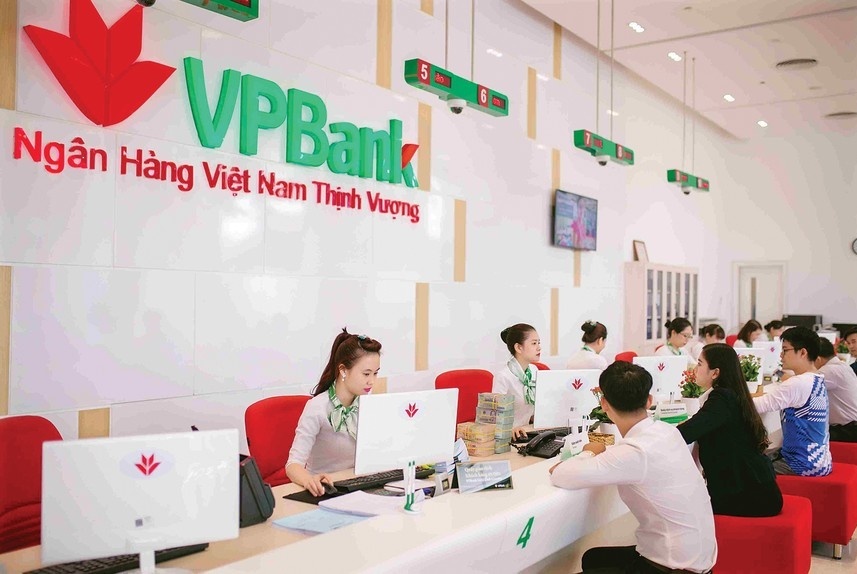
VPBank CEO Nguyen Duc Vinh said the bank set aside around $196 million in provisions in the first quarter of 2026. As of the end of March, the bank’s total non-performing loan (NPL) balance stood at $1.49 billion, up 18.5 per cent compared to the end of 2025.
Although the scale of bad debts remains among the largest in the banking system, the bank’s NPL ratio has been kept under control and remained stable thanks to total outstanding loans surpassing $40 billion.
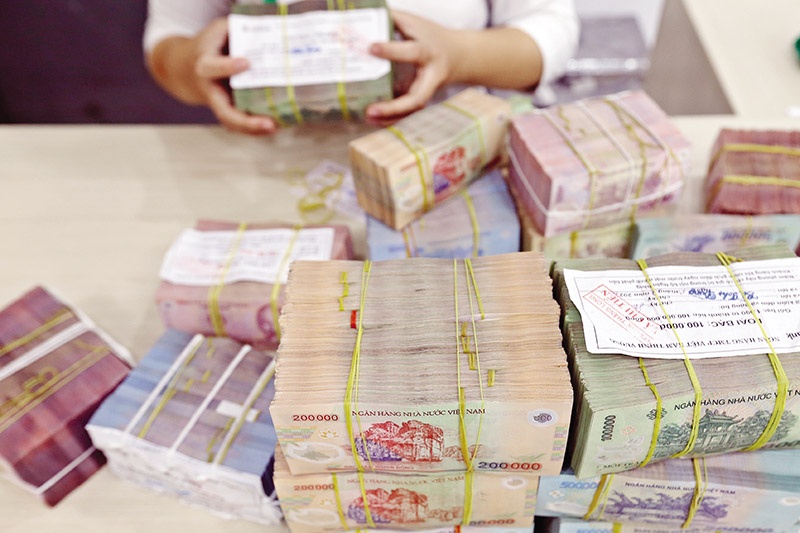 |
| Higher interest rates since late 2025 have further bolstered debt repayment pressure |
This year, VPBank targets an NPL ratio below 2.5 per cent and consolidated pre-tax profit of $1.65 billion, up 35 per cent. Of this, the parent bank aims for pre-tax profit of $1.37 billion, an increase of 30 per cent.
In Q1, Sacombank raised provisions to more than $883 million, up 109 per cent on-year, making it the bank with the highest loan-loss provisioning expenses in the system. This caused the lender’s profit to plunge 42.7 per cent from a year earlier.
Phan Dinh Tue, member of the Board of Directors at Sacombank, said the bank would maintain a high provisioning level in the near term in line with its prudent risk management strategy, while strengthening financial buffers to ensure safety and defend against unpredictable market fluctuations.
Alongside increased provisioning, Sacombank is also focusing on bettering asset quality.
“When asset quality improves further, we can confidently reduce provisioning levels gradually. At that point, the bank will be more optimistic about profit growth prospects,” Tue said.
During the first quarter of 2026, Eximbank increased provisioning expenses to $12.8 million, 2.5 times higher than the same period last year, causing pre-tax profit to fall by as much as 60 per cent.
Eximbank’s 2026 pre-tax profit target was set at $60.6 million, equivalent to last year’s result but significantly lower than previously announced plans. According to the bank’s leadership, the higher provisioning is a necessary step to reinforce the financial foundation for its long-term development strategy for 2026-2030.
Meanwhile, LPBank recorded provisioning expenses nearly four times higher on-year at $31 million, contributing to an 11 per cent decline in its Q1 profit. OCB increased provisions by nearly 67 per cent, HDBank by nearly 39 per cent, while MB and VietABank also posted increases of more than 30 per cent.
Similarly, SHB sharply raised provisioning expenses to $65.6 million, nearly doubling the level recorded one year ago. The trend reflects a broader shift in banking strategies from prioritising growth to adopting a more defensive stance.
Banks have aggressively increased provisioning, mainly because bad debt pressure is resurfacing after a period of stability.
Statistics show that non-performing loans (group 3-5 debts) at 28 listed banks increased in Q1.
Accordingly, their total bad debts rose to more than $11.68 billion, accounting for 1.99 per cent of total outstanding loans, compared to 1.85 per cent at the end of 2025.
In absolute terms, BIDV currently leads the industry in bad debt volume, with more than $1.71 billion in non-performing loans, an increase of nearly $308 million during the first quarter. It is followed by Sacombank with more than $1.66 billion and VPBank with more than $1.49 billion.
Vietcombank continues to maintain the strongest asset quality in the banking system, with the lowest NPL ratio at 0.62 per cent. In 2026, the bank targets keeping bad debts below 1.5 per cent.
Financial analysts said the trend comes as businesses and households continue to face severe cash-flow pressure after years of economic uncertainties, including the COVID-19 pandemic, supply chain disruptions, geopolitical tensions, rising interest rates and declining liquidity in the property market.
At the same time, higher interest rates since late 2025 have further bolstered debt repayment pressure.
According to Sacombank executives, new reciprocal tariff policies imposed by the United States have directly affected production and export activities of Vietnamese firms, causing many borrowers to experience cash-flow difficulties and overdue debts.
Although most of Sacombank’s non-performing loans are secured by collateral, mainly real estate assets, the bad debt resolution process remains prolonged due to legal obstacles related to collateral handling procedures and dependence on property market conditions.
Many other banks are facing similar pressure, as the rapid growth of property lending in previous years now brings the need for asset quality testing.
The rise in provisioning at this stage is not merely a reaction to mounting bad debt pressure, but also preparation for potential risks in the credit market.
However, amid persistent market difficulties in 2026, weak real estate and investment channels, and rising borrowing costs reducing debt repayment capacity, experts forecast that provisioning ratios across the banking sector will continue surging in the coming period, while loan loss coverage ratios may decline but are still expected to remain above 80 per cent in 2026.
 | Profit divide widens among securities firms in Q1 The securities industry posted a stark split in the first quarter of 2026, with bank-backed brokerages delivering strong profit growth while smaller firms struggled with losses amid rising competition and risky proprietary bets. |
 | Moody's Ratings upgrades outlook of six Vietnamese banks to positive Moody's Ratings on May 5 stated the ratings of six Vietnamese banks and changed their outlook to positive from stable. |
 | Tough 2026 looms for Vietnamese banks Vietnam’s banking sector is facing mounting pressure and a more challenging operating environment amid tight liquidity and rising risks. |
What the stars mean:
★ Poor ★ ★ Promising ★★★ Good ★★★★ Very good ★★★★★ Exceptional
 Tag:
Tag:
Related Contents





Latest News



More News
- From loans to women’s economic empowerment (October 06, 2026 | 17:58)
- VIB named Outstanding Retail Bank 2026, targets transaction banking (October 06, 2026 | 10:52)
- FTSE upgrade paves way for stronger stock market development (October 05, 2026 | 18:44)
- coLoan to empower women through inclusive green finance (October 05, 2026 | 18:42)
- Techcombank CEO: AI no longer a tool but a new operating foundation (October 05, 2026 | 18:11)
- Banks sustain profit growth as funding costs squeeze margins (October 02, 2026 | 22:22)
- Nam A Bank delivers strong breakthrough in 2026 (October 02, 2026 | 19:00)
- Policy credit builds sustainable livelihoods from the grassroots (September 29, 2026 | 07:48)
- VIB deploys Front Arena treasury and foreign exchange trading system on AWS (September 28, 2026 | 16:46)
- Nam A Bank receives $60 million loan from FMO (September 28, 2026 | 12:37)


Latest News







 Mobile Version