
Experts offer solutions on more substantive lending cuts

At a meeting with the State Bank of Vietnam and credit institutions on August 13, Prime Minister Le Minh Hung called on banks to make substantive reductions in lending rates.
Following the PM’s directive, banks have moved to cut lending rates. Agribank, for example, has launched a $2.8 billion credit package, with lending rates under the programme reduced by 1-2 per cent, per year from the average lending rates for loans of the same maturity.
The programme is available to small and medium-sized enterprises (SMEs), as well as businesses and individual businesses operating in priority sectors.
 |
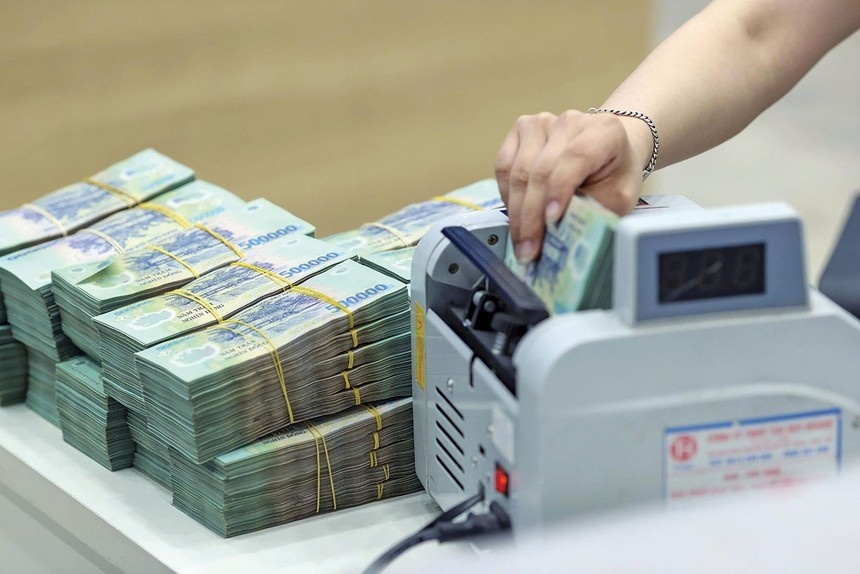
| Current deposit rates remains relatively high as banks compete for funding. Photo: baodautu.vn |
Vietcombank has launched a $2 billion credit package offering preferential lending rates at least 1 per cent, per year below the average lending rates for loans of the same maturity.
The package is aimed at businesses and individuals engaged in production and business activities in priority areas, including agriculture, rural development, supporting industries, high technology, exports, the digital economy, AI, the semiconductor industry, among others.
VietinBank has rolled out a $2 billion credit package with lending rates 1 per cent, per year below its regular lending rates, focusing on SMEs and businesses and individuals operating in priority sectors such as agriculture, rural development, supporting industries, high technology, exports and the digital economy.
Nguyen Minh Tuan, CEO of AFA Capital, said demand for capital was currently very high as the country seeks to achieve an 11.9 per cent growth target in the final two quarters of the year.
“Reducing lending rates will then provide positive support for business activities. However, there is a gap between the interest rate reduction orientation and its actual implementation. Banks are applying various screening criteria and credit conditions in a bid to offer softer lending rates,” he said.
According to Tuan, for banks, reducing lending rates in the current period is challenging, given significant pressure from funding costs and rising bad debt threats.
In terms of funding costs, as of the end of July, credit growth had reached nearly 9 per cent, while deposit growth stood at only 5.75 per cent, significantly increasing liquidity pressures across the banking system.
This has forced banks to maintain relatively high deposit rates to attract funds. As a result, if lending rates are reduced, banks’ net interest margins (NIMs) will inevitably come under pressure.
Meanwhile, total bad debts across the banking system currently stand at around $12 billion, up 17 per cent from the end of 2025, pushing the sector-wide average bad-debt ratio above 2 per cent. Non-performing loans are also trending upwards, requiring banks to make higher provisions and strengthen their capital buffers to guard against risks.
Dr Chau Dinh Linh, a lecturer at Ho Chi Minh City University of Banking, said the requirement to reduce lending rates is an urgent step as the economy needs additional momentum to achieve its growth target.
“Nevertheless, under current conditions, the task of achieving ‘substantive reductions in lending rates’ is facing considerable obstacles from banks’ input costs,” Linh said.
Higher funding costs, combined with increasingly narrow NIMs at banks, are creating significant financial pressure. If deposit rates remain high while lending rates are low, banks could incur an imbalance in their financial position.
In addition, applying a uniform lending-rate reduction target across the entire banking system is not feasible. Medium-sized and smaller banks face liquidity pressures while also incurring higher funding costs than the market average. Having them to make deep cuts in lending rates could undermine their financial health.
According to Linh, state-owned banks and large banks often have advantages in terms of lower funding costs thanks to high proportions of current account savings account deposits, while their stronger management capabilities help reduce operating costs.
These banks can accept a narrowing of their NIMs within a safe range, taking the lead in implementing the policy of reducing lending rates and creating a guiding effect for the broader market.
On the other hand, rather than cutting lending rates across the board, some experts believe that preferential credit should be channelled towards the core growth drivers in line with the government’s directives.
Preferential credit packages should be reserved for sectors such as production and exports, high-tech agriculture, supporting industries, social housing and key infrastructure projects.
At the same time, close inspection and supervision of credit institutions’ asset quality should be maintained to ensure that low-cost capital reaches the right recipients and prevent it from being pivoted to potentially high-risk sectors.
 | Banks poised for stronger H2 performance on back of credit growth Vietnam's banking sector is expected to sustain earnings growth through the second half of 2026 as stronger credit expansion, supportive policies and improving asset quality offset rising risks in some borrower segments. |
 | SBV credit policy shift puts banks and developers in spotlight The State Bank of Vietnam's easing of capital rules and special credit treatment for strategic projects is expected to expand lending capacity, with banks, property developers and infrastructure companies emerging as the biggest beneficiaries. |
 | Banks face growing bad debt risks amid rising funding costs Banks are facing rising bad debt risks as non-performing and special-mention loans increase, while thinner provisioning buffers and higher funding costs threaten to put pressure on asset quality. |
What the stars mean:
★ Poor ★ ★ Promising ★★★ Good ★★★★ Very good ★★★★★ Exceptional
 Tag:
Tag:
Related Contents












Latest News




More News
- Eximbank to strengthen corporate governance structure (October 16, 2026 | 11:32)
- Citi honours 13 banks with 2025 STP Awards (October 15, 2026 | 16:01)
- Green transition requires realistic roadmap (October 14, 2026 | 17:31)
- VIR workshop explores credit policy and carbon market development (October 14, 2026 | 11:22)
- Stronger carbon market needed to unlock climate finance (October 14, 2026 | 11:00)
- Carbon market opens new avenues for green finance (October 14, 2026 | 10:00)
- VPBank and Western Union enhance digital remittance experience (October 13, 2026 | 15:44)
- Eximbank’s next chapter: Richa Goswami on purpose, relevance and trust (October 13, 2026 | 10:52)
- Vietnam and Luxembourg sign MoU to strengthen financial cooperation (October 13, 2026 | 10:20)
- Vietnam seeks stronger cooperation with Fitch Ratings to improve sovereign credit rating (October 13, 2026 | 10:07)










 Mobile Version