
ASEAN Digital Ministers' Meeting opens in Hanoi

The event was attended by Dr. Kao Kim Hourn, Secretary-General of ASEAN, and Vietnamese Prime Minister Pham Minh Chinh, as well as representatives of dialogue partners and international organisations.
In his opening speech, PM Chinh said that digital transformation is becoming a crucial driver of growth, enhancing the resilience and adaptability of nations.
“As the host country, Vietnam is committed to creating favourable conditions for ASEAN countries and partners to engage in open exchanges, strengthen coordination, and jointly build a safe, inclusive, and sustainable digital ASEAN community,” he said.
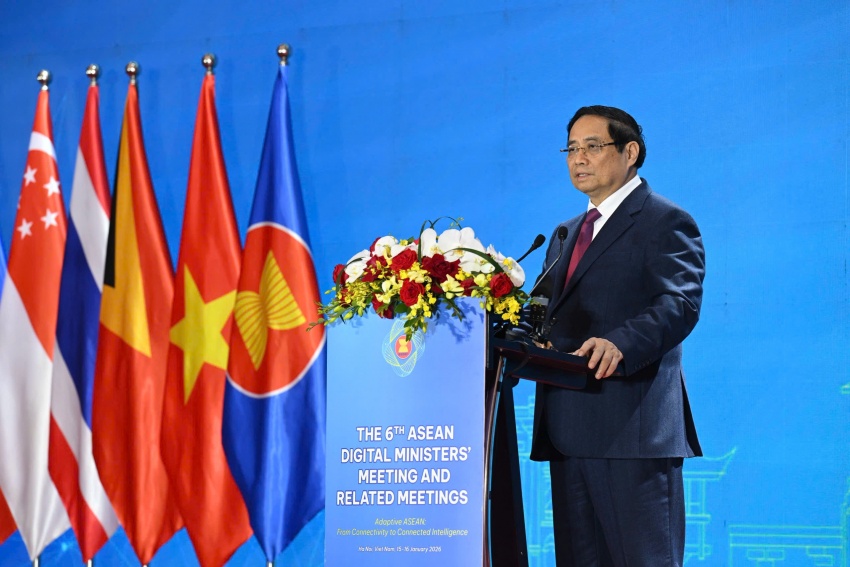 |
| Vietnamese Prime Minister Pham Minh Chinh. Photo: MST |
Vietnamese Minister of Science and Technology Nguyen Manh Hung emphasised the significance of this year's theme, "Adaptive ASEAN: From Connectivity to Connected Intelligence".
“This reflects a crucial shift in ASEAN's digital cooperation thinking, from expanding technical connectivity to utilising intelligence, data, and the added value created from those connections, to serve socioeconomic development, improve quality of life, and enhance governance capacity,” he said.
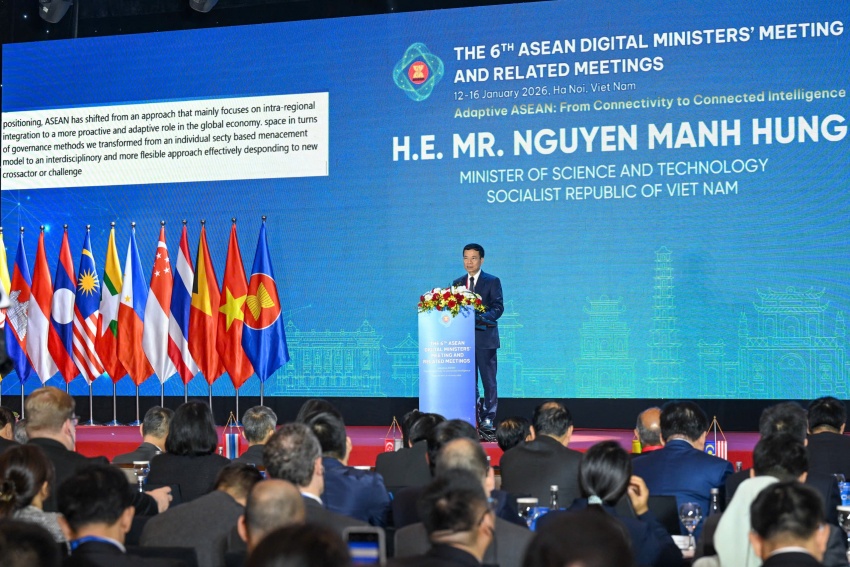 |
| Vietnamese Minister of Science and Technology Nguyen Manh Hung made opening remarks at ADGMIN. Photo: MST |
In his keynote remarks, Kao Kim Hourn said that ADGMIN serves as an important enabler for regional digital transformation. “Our coordinated policies on emerging technologies such as AI and quantum computing will fundamentally shape our future and help maximise the potential of our region-wide digital economy for the prosperity and social progress of our citizens.”
“The digital transformation of our region has been profound, reshaping how we work, communicate, govern, and innovate. With nearly 700 million people and a GDP of almost $4 trillion in 2024, ASEAN's digital economy has become a significant engine of growth, surpassing $300 billion in gross merchandise value in 2025, with projections of $2 trillion by 2030. Building on this momentum, the ASEAN Digital Economy Framework Agreement represents our most ambitious and forward-looking commitment to date,” he said.
He highlighted three priority areas where countries can focus concerted efforts on to advance a shared digital future. They are transitioning from digital connectivity to connected intelligence, fostering structured public-private partnerships, and enhancing the adoption of emerging technologies.
“We should continue efforts to narrow digital capability gaps, promote inclusive growth, and ensure no one is left behind through ongoing initiatives such as AI Ready ASEAN, which aims to train up to 5.5 million people in AI literacy, and AI for MSME ASEAN, which focuses on building AI capabilities among micro, small, and medium-sized enterprises. We welcome further collaboration with all partners, including through public-private partnerships, to achieve this goal,” he noted.
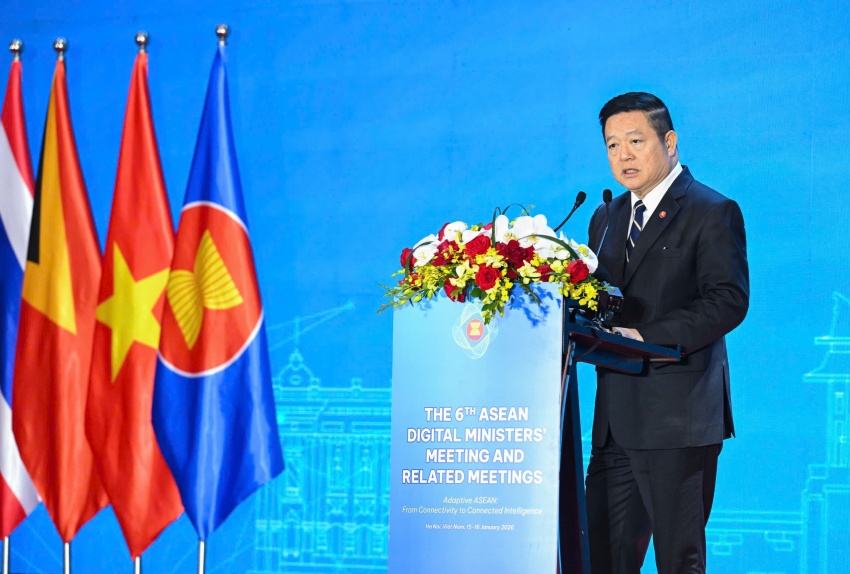 |
| Dr. Kao Kim Hourn, Secretary-General of ASEAN. Photo: MST |
ADGMIN is a key ministerial-level cooperation mechanism within ASEAN in the digital sector, aimed at reviewing the progress of implementing regional digital cooperation frameworks and initiatives, and exchanging views on future cooperation directions.
The sixth ADGMIN meeting focused on key issues such as digital transformation, the digital economy, connectivity of digital infrastructure and platforms, data governance, AI, cybersecurity, and strengthening cooperation with dialogue partners and international organisations.
Within the framework of the sixth ADGMIN, Vietnam held a series of conferences and related activities on ASEAN digital cooperation from January 12-16 in Hanoi.
The events included the sixth ASEAN Senior Officials Meeting on Digital Affairs, sessions of specialised working groups, sessions with dialogue partners, the sixth ASEAN Ministerial Meeting on Digital Affairs, and a number of sideline activities aimed at enhancing exchanges, connectivity, and cooperation among member states and partners.
 | The significance of the ASEAN digital economy in a post-pandemic world The Brunei government, as it takes over ASEAN Chairmanship from Vietnam in 2021, faces the daunting task of uniting members in addressing the biggest challenges of this generation. Driving the region's economic recovery post-pandemic must undoubtedly be at the top of the economic bloc's agenda. |
 | Thailand desires to become ASEAN digital center Recognizing a need to increase the use of digital technology as a key tool in economic and social development, the government of Thailand has adopted a policy to promote the digital economy. |
 | Promoting digital skills and online safety with ASEAN initiative The ASEAN Digital Literacy Program National Closing Workshop was held on May 23 to encourage the community's inclusive digital skill development and online safety. |
 | ASEAN digital economy set to reach $2 trillion by 2030 ASEAN's digital economy is projected to become the world's fourth-largest by 2030, reaching approximately $2 trillion, solidifying the region's central role in the global digital transformation landscape. |
What the stars mean:
★ Poor ★ ★ Promising ★★★ Good ★★★★ Very good ★★★★★ Exceptional
 Tag:
Tag:Themes: Digital Transformation
- Amazon Kuiper licensed for private satellite telecommunications network in Vietnam
- AWS ramps up security tools amid growing AI risks
- Machine vision and 3D: How logistics and warehousing are catching up with manufacturing
- Nvidia proposes areas of strategic cooperation with Vietnam
- Draft legal amendments target red tape and decentralisation
Related Contents





Latest News




More News
- MoF minister outlines priorities for international integration to support growth (August 03, 2026 | 23:24)
- AI adoption reshapes marketing across Southeast Asia (July 16, 2026 | 16:37)
- Vietnam leads region in using AI in academia (July 15, 2026 | 15:51)
- ADB maintains Vietnam's growth outlook amid Southeast Asia downgrades (July 10, 2026 | 14:48)
- ASEAN steps up digital push for agriculture MSMEs to boost competitiveness (July 08, 2026 | 12:00)
- Slovak Embassy directs applicants to VFS after alternate provider suspension (July 06, 2026 | 16:22)
- CPHI South East Asia 2026 to drive pharma partnerships across ASEAN (July 05, 2026 | 18:22)
- Vietnam, Singapore aim to shape ASEAN's future through AI and green growth (June 26, 2026 | 16:26)
- Skellefteå: A magnet for global talent (June 25, 2026 | 15:35)
- SunAsia Energy, VinEnergo launch Solar on Water portfolio in the Philippines (June 24, 2026 | 08:37)


Latest News




 Mobile Version