

Banks set for selective hiring in 2026

According to a survey on business trends conducted by the State Bank of Vietnam, around 40–50 per cent of credit institutions (CIs) expect to recruit additional staff in the first quarter (Q1) of 2026 and throughout the year, as banks position themselves to meet rising credit demand while advancing digitalisation and strengthening risk management.
Previously, in Q4/2025, CIs tended to step up recruitment to cope with the heavy workload typically seen at year-end.
However, by the end of the year, as many as 23 per cent of CIs still reported labour shortages, up from 19.8 per cent at the end of Q3.
The increase in recruitment demand for 2026 stems from CIs’ positive expectations for the banking sector’s business outlook, underpinned by anticipated expansion in the broader economy’s production activities.
Regarding capital mobilisation, after recording growth of 14.1 per cent in 2025 – the highest level since March 2020 – the CI system has raised its average growth expectation to 4.2 per cent for Q1/2026 and to 16.3 per cent for the whole of the year.
Short-term funds (with maturities under six months) are forecast to dominate these inflows.
On the credit front, outstanding loans across the entire system are projected to grow by 4.4 per cent as early as the first three months and to surge to 18.1 per cent for the full year.
This represents the highest growth expectation since 2020, up by 1.5 percentage points compared with the previous survey.
For the first six months of 2026 and for the year as a whole, credit demand is expected to rise steadily across all sectors, customer groups, and tenors.
In particular, credit demand from corporate customers is expected to grow faster than that from individuals, with short-term lending expanding more rapidly than medium- and long-term loans, while demand for VND-denominated borrowing is set to continue outpacing foreign-currency loans.
Among the six main sectors surveyed, industrial development and construction are again expected to see the strongest increase in capital demand.
Despite robust credit growth, liquidity in the banking system remains at a 'good' level and is expected to continue improving in 2026.
The survey also shows that in terms of asset quality, although non-performing loan (NPL) ratios showed a slight uptick towards the end of last year due to rapid credit expansion. CIs believe the trend will reverse in 2026.
Customer risk levels are forecast to decline and remain stable, helping the system-wide average NPL ratio ease by year-end.
While the business environment presents many bright spots, banks are maintaining a necessary degree of caution.
Overall business performance and pre-tax profits in 2025 are assessed as having improved well, but still falling short of initial expectations.
For 2026, profit prospects are viewed positively, although growth momentum may be slower than in 2025.
This cautious stance reflects CIs’ intention to ensure a solid risk management foundation amid signs that prices of financial products and services are edging up in line with market trends.
The report also suggests that credit institutions expect credit risk to edge up slightly in 2026, with real estate investment and trading remaining the riskiest segment, followed by securities investment and trading and import-export activities.
Experts said the labour market next year is unlikely to see rapid expansion in headcount, instead shifting towards more selective hiring. Rather than mass recruitment, enterprises are expected to prioritise roles critical to operations, focusing on candidates with strong skills, experience, and adaptability.
Banks, in particular, are forecast to streamline organisational structures, including closing some branches, while stepping up recruitment of high-quality talent, especially in technology, data, and digital business.
Demand will be strong for candidates with foreign language proficiency, digital capabilities, and a willingness to embrace change.
"2026 will open up many opportunities for workers with clearly defined professional expertise, practical experience, and the ability to work independently," said Le Quang Trung, former deputy director general of the Department of Employment, Ministry of Home Affairs. "Positions requiring high-level skills, management capabilities, and technological thinking will continue to see stable recruitment demand."
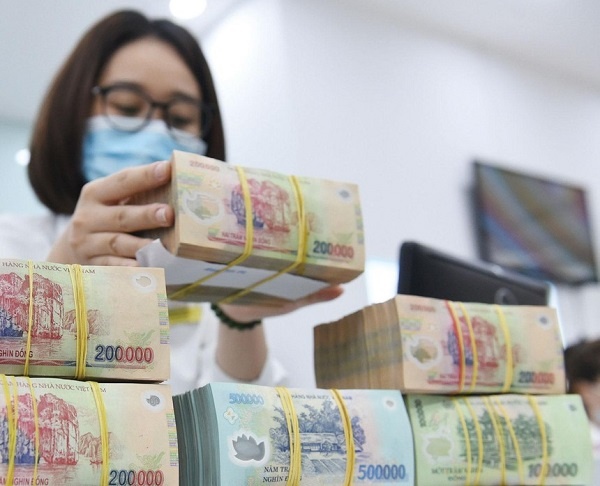 |
 | Banking sector braces for end of credit room policy The State Bank of Vietnam is devising a roadmap to eliminate the credit growth quota mechanism. Speaking to VIR’s Khanh Linh, Dr. Tran Phuoc Huy, chief of office at the School of Banking and Finance under the National Economics University, analysed the potential impacts and the necessary preparations for this transition phase. |
 | Banks resume cash dividends as financial health rebounds Several banks have resumed cash dividend payments, signalling a rebound in financial health after years of restrictions, with total disbursements reaching nearly $1.7 billion so far this year. |
 | Banks racing into year-end profit boom Vietnam’s banking sector continues to post robust profit growth this year thus far, with numerous lenders reporting impressive earnings and setting new records. |
What the stars mean:
★ Poor ★ ★ Promising ★★★ Good ★★★★ Very good ★★★★★ Exceptional
 Tag:
Tag:
Related Contents










Latest News





More News
- From loans to women’s economic empowerment (October 06, 2026 | 17:58)
- VIB named Outstanding Retail Bank 2026, targets transaction banking (October 06, 2026 | 10:52)
- FTSE upgrade paves way for stronger stock market development (October 05, 2026 | 18:44)
- coLoan to empower women through inclusive green finance (October 05, 2026 | 18:42)
- Techcombank CEO: AI no longer a tool but a new operating foundation (October 05, 2026 | 18:11)
- Banks sustain profit growth as funding costs squeeze margins (October 02, 2026 | 22:22)
- Nam A Bank delivers strong breakthrough in 2026 (October 02, 2026 | 19:00)
- Policy credit builds sustainable livelihoods from the grassroots (September 29, 2026 | 07:48)
- VIB deploys Front Arena treasury and foreign exchange trading system on AWS (September 28, 2026 | 16:46)
- Nam A Bank receives $60 million loan from FMO (September 28, 2026 | 12:37)


Latest News







 Mobile Version