
ACCA publishes global study on corporate sustainability reporting progress

Titled "Sustainability reporting: Track your progress to create decision-useful information", the research gathered input from more than 1,000 professionals across 113 jurisdictions and combined it with findings from global roundtables and interviews, providing a wide-ranging assessment of corporate readiness worldwide.
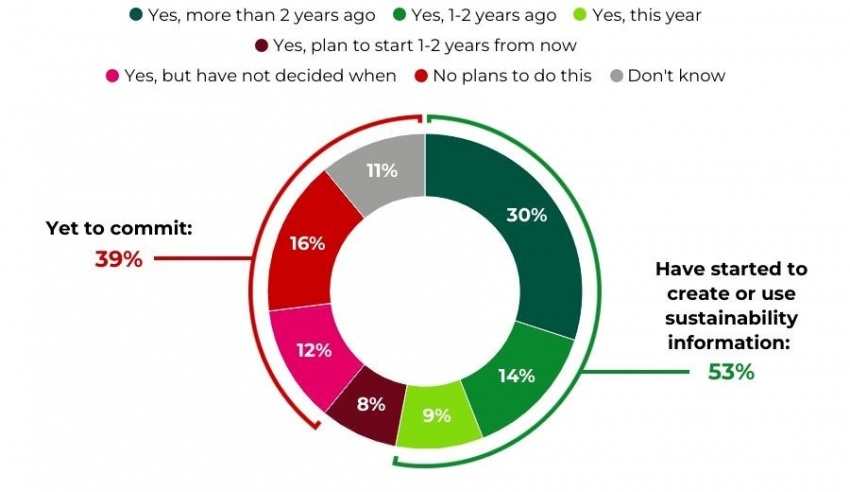
While sustainability is steadily rising on corporate agendas, the report shows that progress remains uneven. Just over half of surveyed organisations (53 per cent) have begun to create or use sustainability information, yet 39 per cent have yet to make any commitment. Among those that do collect data, only 16 per cent of senior management and boards currently use these insights to guide major business decisions. This suggests that for many companies, sustainability continues to function as a parallel activity rather than being fully integrated into core operations.
 |
| Photo: ACCA Vietnam |
The study highlights the practical challenges organisations face in gathering and applying sustainability data. Many companies find it difficult to identify critical resources or assess the information needs of diverse stakeholders.
“At the core of decision-useful information is an appreciation of the factors, society, geopolitics, geoeconomics, finance, the environment, and more, that can affect the resources an organisation depends upon. When those stakeholders or their resources are impacted, there are often direct financial consequences,” the report explains.
According to Sharon Machado, head of sustainable business at ACCA, leadership commitment emerges as a key determinant of progress. Where boards and executives actively take responsibility for sustainability outcomes, organisations are more likely to invest in the systems, processes, and skills needed to produce credible and actionable information.
“Organisation leaders must look ahead to understand and act upon the risks most threatening their organisation’s resilience and the ability to create sustainable value. Sustainability needs to be embedded into the heart of business strategy, not treated as a separate exercise,” Machado told VIR.
Regulatory requirements continue to drive sustainability reporting, cited by 71 per cent of respondents as a key motivator. However, ACCA notes that compliance alone is insufficient to deliver meaningful progress. The report observes that organisations focusing solely on meeting mandatory requirements miss the opportunity to improve decision-making, attract investment, and strengthen stakeholder trust.
To address this, ACCA advocates adopting globally consistent standards and fostering stronger cross-sector collaboration. About 30 per cent of respondents reported benefiting from partnerships across industries and regions to enhance reporting capabilities. “Such cooperation can help businesses overcome resource constraints, share best practices, and align reporting frameworks in line with international standards,” the report states.
Professional accountants are positioned to play a pivotal role in this transformation. Their expertise in financial measurement, governance, and assurance enables them to bridge the gap between sustainability and finance. “Professional accountants must champion sustainability and help create decision-useful information that drives strategic action,” the study adds.
For emerging markets such as Vietnam, these insights carry practical relevance. With regulators and investors increasingly emphasising environmental, social, and governance transparency, local firms are stepping up disclosure practices and aligning with international benchmarks. Adoption of standards such as those from the International Sustainability Standards Board helps enhance the comparability and credibility of sustainability reports, supporting both investor confidence and business resilience.
The ACCA report further reinforces that sustainability information is not an optional add-on but a central element of modern business decision-making. “Sustainability impacts everyone who provides and uses resources. It can threaten organisational resilience and also present opportunities for sustainable profits,” the report concludes, highlighting the growing necessity for organisations to integrate sustainability and financial considerations in a cohesive, strategic manner.
 | Vietnam’s audit frontier in the age of AI technology As Vietnam rises as one of ASEAN’s AI frontrunners, the national auditing industry stands at a defining crossroads where technology meets human judgment and innovation demands integrity. Talking to VIR’s Hazy Tran, ACCA’s global president Ayla Majid shared that the future of public auditing and public financial management will belong to those who balance intelligence with ethics. |
 | ACCA and VPBank join forces to elevate Vietnam’s financial talent to global standards ACCA and VPBank have entered into a strategic partnership, marking a new milestone in the development of financial and accounting talent aligned with international standards, and reaffirming the bank's emerging role in global integration. |
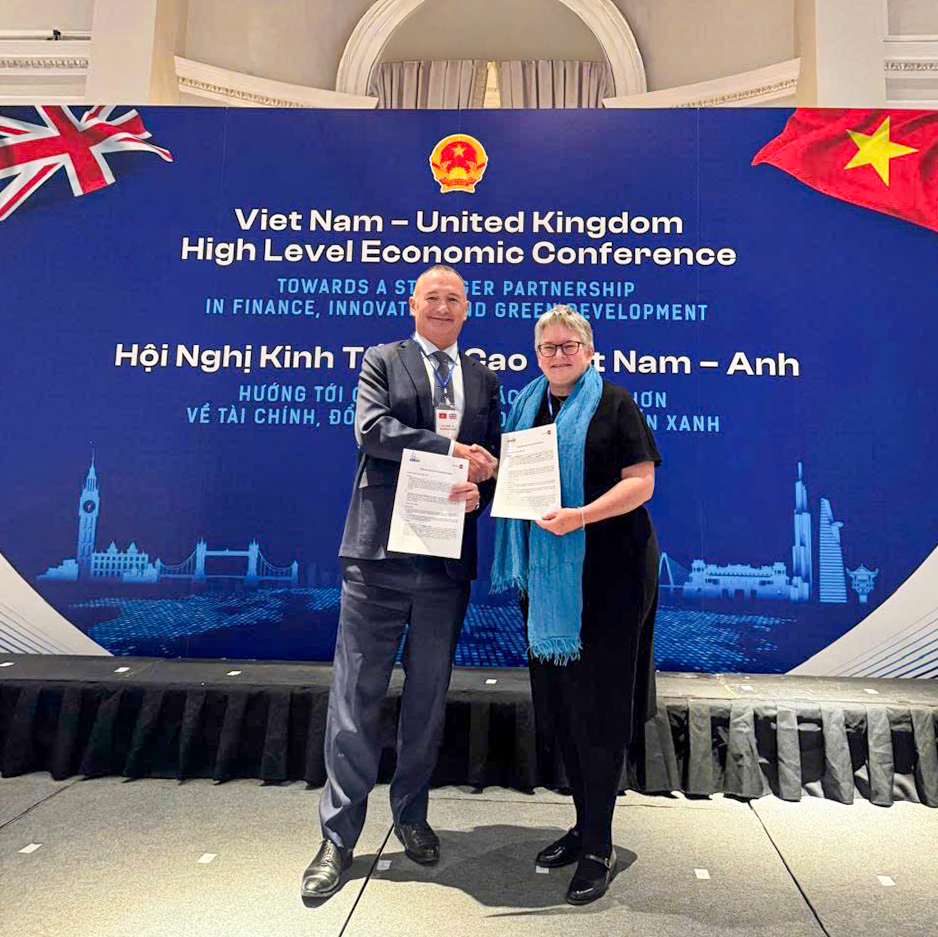 | KPMG Vietnam and ACCA partner to support development of IFC KPMG in Vietnam and the Association of Chartered Certified Accountants have joined forces to support the development of Vietnam’s international financial centre. |
What the stars mean:
★ Poor ★ ★ Promising ★★★ Good ★★★★ Very good ★★★★★ Exceptional
 Tag:
Tag:
Related Contents



Latest News


More News
- JBIC considers new financing options for Vietnam’s energy projects (October 03, 2026 | 08:00)
- Vestas to supply 16 turbines for two new Vietnam wind farms (October 01, 2026 | 07:00)
- Inter-sectoral cooperation on Montreal protocol (September 30, 2026 | 17:20)
- EV battery recycling rate proposed at 8 per cent from 2029 (September 29, 2026 | 16:00)
- Bankability remains hurdle for Vietnam's JETP projects (September 29, 2026 | 12:08)
- Binh Minh Plastics extends clean water project to border communities (September 29, 2026 | 10:57)
- Coca-Cola Vietnam expands packaging collection programme (September 25, 2026 | 08:15)
- Pacifico Energy secures sea survey licence for offshore wind project in Lam Dong (September 24, 2026 | 18:02)
- Vietnam secures $221 million in UN development programmes for 2027-2031 (September 23, 2026 | 17:39)
- Carlsberg Vietnam shows how resource efficiency can shape green industrial growth (September 18, 2026 | 09:03)


Latest News






 Mobile Version