
Party Resolution charts Vietnam’s development model through 2045 and beyond

The Resolution on Renewing the National Development Model, adopted at the third plenum of the 14th Party Central Committee, goes beyond economic reform to define the country’s development model for a new era. This was the central message at a national conference on July 29 to study, disseminate and implement the plenum’s resolutions.
Held in a hybrid format, the conference linked the central venue at Dien Hong Hall in the National Assembly Building with Party committees, ministries, sectors, localities, agencies and units nationwide
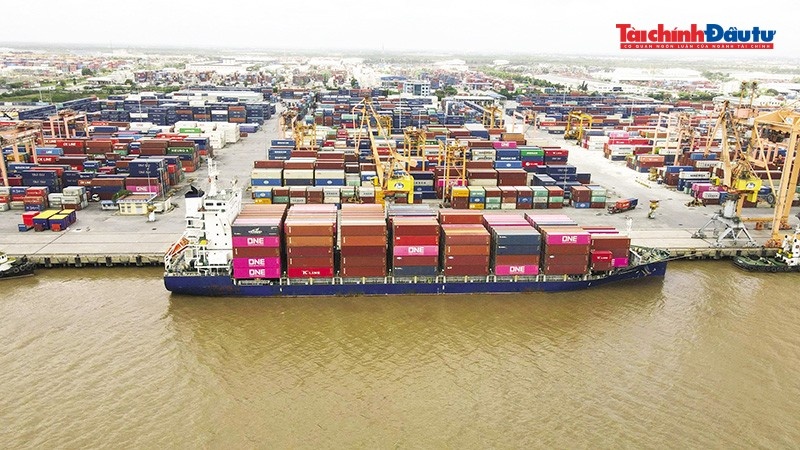 |
| Vietnam is reforming its development model to achieve high and sustainable economic growth |
Participants reviewed nine thematic reports approved at the third plenum, including resolutions on renewing Vietnam’s development model, developing the country into a strong maritime nation, building a disciplined, safe, civilised, harmonious and developed society, and advancing the national security strategy.
Addressing the conference, Politburo member and Chairman of the Party Central Committee’s Commission for Policies and Strategies Nguyen Thanh Nghi stressed the need for a shared understanding of the country’s development model.
“There is no single development model that fits every country or every historical period. Each nation must choose a model that is appropriate to its level of development, political institutions and international context,” he said.
Reviewing the 40 years of economic reforms since the 1980s, Party documents show how Vietnam has transformed itself from an underdeveloped economy into one of the fastest-growing economies in the region.
In 2025, Vietnam became an upper-middle-income countries, with gross national income per capita reaching $4,970.
However, the process of reforming the development model has remained slow. Economic growth continues to rely largely on expanding investment, exploiting natural resources, low-cost labour, and processing and assembly activities, while growth quality, labour productivity, science and technology capacity, innovation and strategic self-reliance remain limited.
These shortcomings have created the need for a dedicated resolution on renewing the national development model.
The resolution adopted by the third plenum is built around five major guiding principles.
It identifies renewal of the development model as a strategic task of historic significance; calls for transforming national organisation, governance and operations, driven primarily by science, technology and innovation; promotes modern governance and stronger coordination among the state, market and society; seeks to mobilise all resources for national prosperity while strengthening strategic self-reliance; and prioritises institutional and governance reform, shifting from managing development to enabling it, with services to citizens and businesses as the key measure of effectiveness.
At the third plenum of the 14th Party Central Committee, held from July 20 to 24, Party General Secretary and State President To Lam emphasised that reforming Vietnam’s development model is an issue of enormous significance, unprecedented in nature, and one that will shape the country’s national development model through 2045 and beyond.
“The resolution goes beyond reforming the growth model. It establishes a comprehensive development model, translates the nation’s development aspirations into concrete policies, places people at the centre, and embodies the core principles of the Resolution of the 14th National Party Congress together with international experience adapted to Vietnam’s conditions,” the Party General Secretary said.
Dr. Le Xuan Ba, former president of the Central Institute for Economic Management, said the resolution established a new growth model, shifting from extensive growth to intensive growth, with science, technology and the quality of human resources serving as its foundation.
“However, developing sci-tech requires resources to invest in research and innovation, while building a highly skilled workforce demands investment in education and physical infrastructure. Without adequate financial resources, all these objectives will be difficult to achieve," Ba said. “In addition to public investment and private-sector capital, foreign direct investment (FDI) continues to play an especially important role. Beyond supplementing financial resources, the FDI sector helps boost economic restructuring and develop key industries, expanding export markets, enabling deeper participation in global value chains, and facilitating the transfer of technology and modern management practices.”
Dr. Le Bo Linh, president of the Institute for Economic Strategy Studies and former Vice Chairman of the National Assembly’s Committee for Science, Technology and Environment, suggested that ensuring national energy security should be the priority in successfully implementing the resolution.
“Energy is the lifeblood of a modern economy. Without a stable, sufficient and reasonably priced energy supply, achieving high economic growth will be extremely difficult," he said.
“Vietnam is undergoing a strong transition towards a growth model driven by manufacturing and processing industries, high technology, the digital economy and innovation. These sectors all consume large amounts of electricity and require a reliable power supply. Energy security is not merely an issue for the electricity or oil and gas industries; it is a cornerstone of national economic security.”
Defining a national development model for a new era is of critical importance to becoming a developed, high-income country by 2045. Accordingly, the Party Central Committee has set out specific development targets for 2030, 2035 and 2045, while outlining a long-term vision through 2130.
The establishment of a new growth model at the Party Central Committee’s plenary meetings is of vital importance. It shall enable the economy to shift from extensive to intensive growth, improve productivity through sci-tech, and help realise the goal of strong development in the new era.
 | Private sector expected to support the green growth model in Vietnam Last year Vietnam made a remarkable commitment to achieve net-zero carbon emissions by 2050. Patrick Lenain, senior associate of the Swiss-based Council on Economic Policies, shares some recommendations to encourage the private sector’s role in this ambitious target. |
 | Redefining Vietnam’s growth model for the era of innovation Vietnam is moving to establish a new growth model centred on science, innovation and digital transformation, aiming to unlock double-digit growth and strengthen long-term competitiveness in a rapidly changing global environment. |
 | Reshaping capital flows to unlock Vietnam's next growth engine As Vietnam pursues double-digit economic growth, restructuring capital channels beyond bank credit, spanning the equity market, corporate bonds and institutional investors, will be essential to building a more balanced and resilient financial system. |
 | SCG calls for new growth model at Nikkei Asia Forum SCG called for a new growth model advancing carbon neutrality through competitiveness, energy security and innovation, addressing delegates at the Nikkei Asia Forum APAC 2026 in Bangkok. |
What the stars mean:
★ Poor ★ ★ Promising ★★★ Good ★★★★ Very good ★★★★★ Exceptional
 Tag:
Tag:
Latest News



More News
- Financing options for shock-responsive social protection in Vietnam (July 30, 2026 | 14:59)
- HER2+ breast cancer carries $3.71 billion productivity burden in Vietnam (July 30, 2026 | 14:32)
- STEM education evolves for AI era (July 21, 2026 | 09:38)
- Vietnam’s workforce ready for AI era (June 26, 2026 | 16:04)
- Why child online safety is now a business imperative (June 24, 2026 | 11:00)
- Hybrid work is reshaping Vietnam’s labour market (June 17, 2026 | 16:24)
- World's children exposed to at least three overlapping climate threats (June 17, 2026 | 15:54)
- Thai Nguyen event promotes safer food systems for World Food Safety Day (June 11, 2026 | 14:08)
- Vietnam emerges as rising hub for wealth creation (June 02, 2026 | 18:31)
- Danang launches DIFF 2026 with world-class performances (May 31, 2026 | 08:00)








 Mobile Version