
Vietnamese goods and services gain ground on international markets

 |
| Deputy Minister of Industry and Trade Phan Thi Thang |
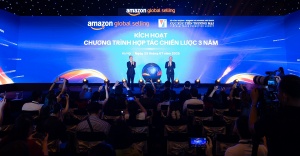
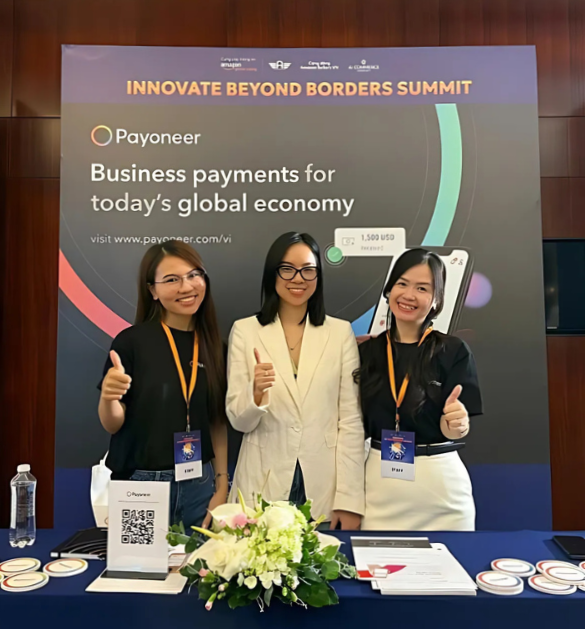
On September 5 in Ho Chi Minh City, a forum on e-commerce and cross-border trade was held as part of the Vietnam International Sourcing 2025 Exhibition.
Deputy Minister of Industry and Trade Phan Thi Thang noted that Vietnam’s e-commerce market reached over $25 billion in 2024, up 20 per cent on-year. "E-commerce now accounts for about 10 per cent of total national retail sales of goods and consumer service revenues, helping Vietnam maintain its position among the top three largest e-commerce markets in Southeast Asia," she said.
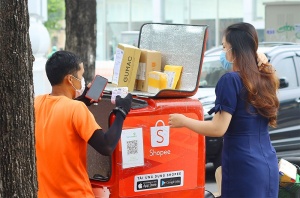
Many Vietnamese brands and local-made products have secured their positions on domestic e-commerce platforms and are now expanding to international markets through global platforms.
With the strong momentum of e-commerce, cross-border e-commerce is viewed as an important business trend for enterprises and a strategic driver for national exports, incorporated into the 'GoGlobal Plan' under government direction.
In 2024, the global cross-border e-commerce market reached exceeded $791 billion and is forecast to grow over 30 per cent in the coming years. Vietnamese companies have been expanding their online presence in key markets such as the US, China, the EU, Japan, and South Korea, while also seeking opportunities in less-explored markets like ASEAN, the Middle East, Russia, and Australia.
According to the National E-Commerce Development Master Plan for 2026–2030, cross-border e-commerce will be one of the strategic pillars in the next phase, aiming to build a sustainable digital export ecosystem, enhance the international competitiveness of Vietnamese enterprises, and extend the reach of Vietnamese products on the global trade map.
To realise this vision, the Ministry of Industry and Trade, together with the Department of E-Commerce and Digital Economy, will push forward with comprehensive measures. These include improving institutions and policies, supporting businesses through training and capacity building, strengthening links with major global e-commerce platforms, and working closely with Vietnamese Trade Offices abroad to promote and facilitate exports via e-commerce.
 |
Building on the perspective of government agencies, international experts and associations also shared their views on the role and potential of cross-border e-commerce.
Nguyen Thi Hoai An, vice chairwoman of the Global Alliance of Cross-Border E-Commerce (ACBC Global) and chairwoman of ACBC Vietnam, emphasised that cross-border e-commerce is the new infrastructure of global trade and an “extended arm” of globalisation, where products, values, and knowledge circulate without borders.
"With the global market value reaching nearly $800 billion in 2024 and growing by more than 30 per cent annually, cross-border e-commerce has become an inevitable trend for all nations and enterprises," said Hoai An. Vietnam, she added, is well positioned to seize this moment thanks to its favourable geographical location as a potential logistics hub, abundant resources, young workforce, and rapid digital transformation.
"Cross-border e-commerce allows Vietnamese goods to reach international markets while also creating opportunities to export knowledge and high-quality services, shaping ‘national products’ on the global trade map," she noted.
Hoai An urged Vietnamese businesses to prepare carefully by meeting high standards, building clear brand stories, and adopting professional processes. She added that companies should move beyond subcontracting or simply fulfilling foreign orders, and instead develop their own brands to secure a stronger position.
Another crucial direction is selling directly to end consumers, rather than only through intermediaries. This model helps deliver products faster and fosters stronger trust and connection between brands and customers.
Additionally, transparent product traceability is essential. Businesses can apply advanced technologies to verify product origins, production processes, and quality standards. Securing reputable international certifications will also enhance trust and help Vietnamese products win over global consumers.
"Reputation, quality, and transparency are the keys to building an international brand," Hoai An stressed.
Regarding infrastructure, Tran Thoang, director of CT-Strategies Vietnam, highlighted that Free Trade Zones (FTZs) serve as the infrastructure to reorganise the e-commerce supply chain. "FTZs can become the core of e-commerce, equipped with e-fulfilment facilities, bonded warehouses, return processing centres, and modern data systems such as Pre-Arrival Data Hubs and e-commerce Single Windows," he said.
Thoang proposed linking Vietnam’s FTZs with international hubs such as KLIA DFTZ in Malaysia, Dubai CommerCity in the UAE, and Liege eHub in EU to shorten delivery times, reduce logistics costs, and enhance competitiveness.
"For the 2025–2027 period, it is necessary to establish an FTZ–E-Commerce Coordination Committee, sign international cooperation agreements, and pilot new mechanisms such as 'de minimis' and AEO-eCommerce," he added.
 |
Highlighting the role of AI in cross-border e-commerce, Nguyen Duc Thang, director of Taureau AI Vietnam, said AI enhances customer experiences through virtual try-ons, image-based search, 24/7 chatbot consultations, and hyper-personalised recommendations that make every customer feel like a 'VIP'. At the same time, it helps enterprises optimise their supply chains and boost profitability.
"Particularly with the rapid growth of generative AI, enterprises can overcome language and cultural barriers, tailor marketing strategies for each market, and significantly increase global customer engagement," said Thang.
Thang stressed that to turn AI into a real competitive advantage, businesses must start by optimising operations, develop adaptive AI strategies for each geographic market, and invest heavily in immersive customer experiences. "Today, AI is no longer an optional add-on but has become an essential expectation in global trade," he added.
What the stars mean:
★ Poor ★ ★ Promising ★★★ Good ★★★★ Very good ★★★★★ Exceptional
 Tag:
Tag:Related Contents


Latest News




More News
- Expanding education partnerships to drive mutual growth (October 06, 2026 | 16:04)
- VTG 2026 to showcase textile and footwear innovation in Ho Chi Minh City (October 06, 2026 | 16:00)
- Infineon boosts Vietnam footprint with Ho Chi Minh City office (October 06, 2026 | 10:02)
- Vietnam Customs expands priority enterprise scheme to 74 firms (October 03, 2026 | 08:00)
- ASL Law opens Danang office (October 02, 2026 | 22:12)
- Project ACTIVE 2.0 launches in Vietnam to boost cervical cancer care (October 02, 2026 | 22:02)
- Vietnam launches first embodied AI conference to advance robotics ecosystem (October 02, 2026 | 17:00)
- DKSH Performance Materials – A trusted partner in Vietnam’s evolving personal care landscape (October 02, 2026 | 14:28)
- Ghanaian delegation reviews PSL Machinery’s cashew factory-management and implementation roadmap (October 02, 2026 | 10:18)
- People living with chronic kidney disease and diabetes should be aware of infectious disease risks (September 30, 2026 | 18:00)


Latest News



 Mobile Version