
Vietnam wood exports near $11.7 billion in eight months

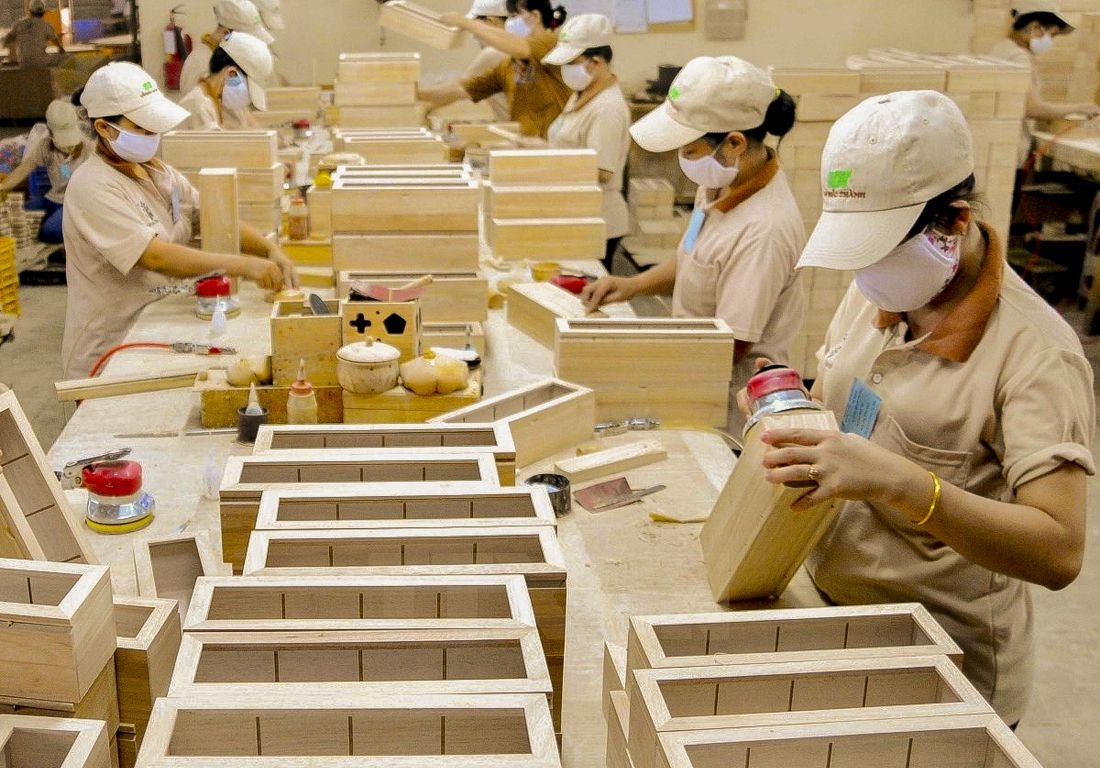 |
| Photo: Ministry of Agriculture and Environment |
According to a September 8 report from the Ministry of Agriculture and Environment (MAE), exports were estimated at $1.48 billion in August alone, bringing the eight-month total to $11.69 billion. Wood and wood products recorded the highest export value among Vietnam’s agricultural commodities during the period.
The United States remained Vietnam’s largest export market, accounting for 49.9 per cent of total wood and wood product exports. In effect, nearly $1 of every $2 earned from the sector came from the US market.
China, meanwhile, has rapidly expanded its purchases. Vietnam’s wood and wood product exports to China reached $1.54 billion, up 46.4 per cent on-year, lifting China’s share to 15 per cent, 4.2 percentage points higher than a year earlier.
China has therefore overtaken Japan to become Vietnam’s second-largest market for wood and wood products.
Exports to Japan, Malaysia, the Netherlands, Germany and the UK also recorded solid growth, pointing to improving demand across several Asian and European markets and creating opportunities for Vietnamese exporters to broaden their customer base.
Mexico posted the strongest growth among Vietnam’s 15 largest wood export markets, with export value more than doubling on-year. India, by contrast, recorded the sharpest decline, with exports falling 30.3 per cent.
The changing market picture highlights the need for Vietnam’s wood industry to maintain its established markets while accelerating diversification to reduce reliance on a small number of destinations.
According to the Ministry of Industry and Trade’s Foreign Trade Agency, exports to the US are facing greater pressure as Washington steps up trade defence measures.
On July 16, the US Department of Commerce announced its final determinations in the anti-dumping and countervailing duty investigations into hardwood plywood and decorative plywood from Vietnam, imposing a general anti-dumping duty rate of 84.95 per cent.
Although the final rate was significantly lower than the preliminary range of 196-199 per cent, the agency said it still represents a major barrier for Vietnamese exporters.
Vietnam’s wood industry has established a strong position in the US, becoming an important supplier as American importers diversify their furniture supply chains. However, the impact of higher trade costs is already becoming visible.
US importers are becoming more cautious about signing long-term contracts, shortening order cycles and seeking greater cost-sharing from suppliers, potentially putting further pressure on exporters’ margins.
The bigger risk is that Vietnamese suppliers could gradually lose their position in US supply chains. Once importers shift to alternative sources and establish new inspection, logistics and product-standard systems, regaining market share could become considerably more difficult.
For Vietnamese wood exporters, maintaining customer confidence in the US market is therefore becoming more important than retaining orders at any cost, according to an industry expert.
The MAE is working with wood industry associations to help businesses respond to US anti-dumping and countervailing duty investigations, including the hardwood plywood case, as well as participate in the Section 301 investigation hearings.
The ministry is also proposing measures to address VAT-related difficulties in wood exports to provide timely support for businesses.
What the stars mean:
★ Poor ★ ★ Promising ★★★ Good ★★★★ Very good ★★★★★ Exceptional
 Tag:
Tag:
Related Contents



Latest News






More News
- EuroCham confidence index holds at 78.3 despite operational hurdles (October 16, 2026 | 17:27)
- Shrimp and rice firms face rising standards in export markets (October 16, 2026 | 09:00)
- SCG and Prime Group add value to the ecosystem (October 15, 2026 | 15:55)
- Project readiness key to unlocking green finance (October 15, 2026 | 12:35)
- Sovereign AI and human oversight key to secure digital government (October 15, 2026 | 12:32)
- MEXC Ventures partners with Corelia Academy: Bringing digital asset education closer to Vietnamese students (October 15, 2026 | 09:00)
- Global design expertise meets a more sophisticated Vietnam market (October 15, 2026 | 09:00)
- Vietnam growth nears double digits, UOB raises forecast (October 14, 2026 | 17:39)
- Smart factories need skills, finance and trust to scale (October 14, 2026 | 17:33)
- Sanofi-Aventis Vietnam appoints new head of Vaccines and country lead (October 12, 2026 | 17:21)




Latest News






 Mobile Version