
TEKCOM embarks on strategic journey towards higher-value growth

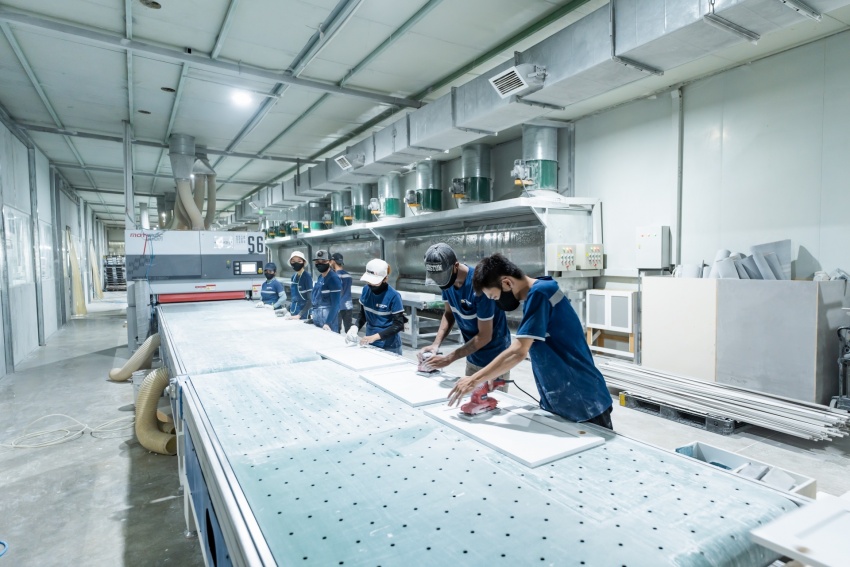 |
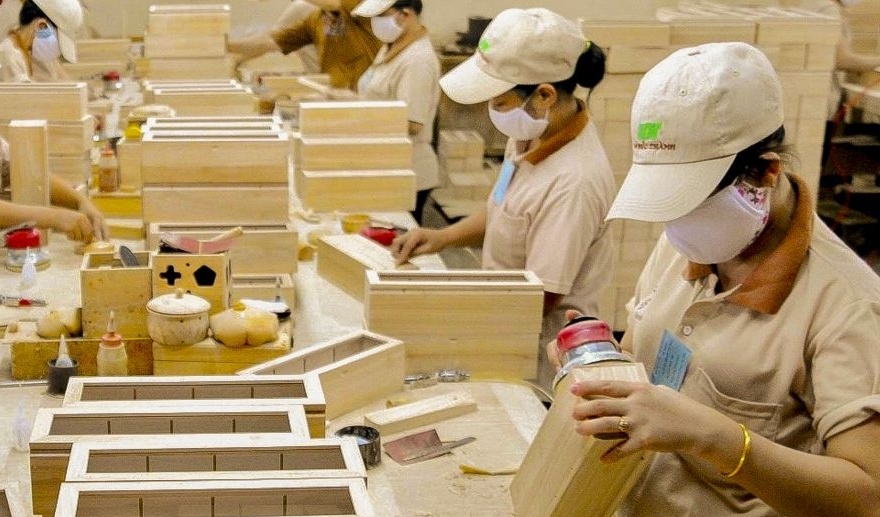
| TEKCOM's factory in Nam Tan Uyen Industrial Park in Ho Chi Minh City |
Speaking with VIR at the company's factory last week, Vu Quang Huy, chairman and CEO of TEKCOM, said that today's challenges stem not only from tariffs but also from increasingly aggressive non-tariff barriers.
“Regarding tariffs, especially in the US market, we recognise that the US does not have a production advantage and will continue to rely on imports. The key question is how are tariff policies being applied to countries competing with Vietnam, and how quickly can Vietnamese companies adapt?” he noted.
In the kitchen cabinet segment, for example, TEKCOM develops product lines tailored to specific customer groups.
"By working closely with tier 1 customers, we gain deeper insights into their end users, co-designing products that meet demand while enhancing value and optimising material costs. This is how TEKCOM is building Vietnam's long-term competitive edge," Huy explained.
In the medium term, TEKCOM is exploring new cooperation opportunities with partners, aiming to participate more deeply in the value chain, develop brands, and build future distribution channels.
On non-tariff barriers, Huy said, each export market requires its own set of standards for plywood, such as BIS (India), IMANOR (Morocco), or EUDR (Europe), and demands legally sourced, fully traceable timber.
“These are mandatory conditions, the entry ticket to the market. Therefore, we must create real differentiation to win,” he emphasised.
TEKCOM is among the few Vietnamese companies with the capacity to build and operate factories that meet global standards.
It is one of the first manufacturers in Vietnam certified under IMANOR for Morocco's market and is working with partners to meet EUDR requirements in a substantive and verifiable way.
"In a fast-changing world, both tariff and non-tariff barriers can become opportunities. Those who adapt quickly will move ahead," he said.
After 20 years of development, TEKCOM now exports to more than 50 countries, with strategic focuses targeted to each market, such as in Europe with compliant, value-added products, the United States with not only finished goods but also components, India with leveraging strong brand foundations and partnerships to deepen access to key customers, and ASEAN with developing mass-market, commodity-type products.
Looking ahead, Huy believes tariff barriers are only temporary. He recalls TEKCOM's early decision to target Turkey to avoid direct competition with China; however, Vietnamese plywood later faced anti-dumping duties in South Korea and may soon be investigated in the US.
"But these developments actually gave us an initial window to enter the market, understand customers, and refine our competitive edge. The key is to identify the right advantages and target segments to transform short-term opportunities into long-term strengths," he said.
He added that TEKCOM will continue pursuing these strategies over the next five years, as the global plywood industry has historically followed a similar trajectory.
Vietnam currently produces over 3.7 million cubic meters of plywood annually. China's share of global production has fallen from 90 per cent to around 60 per cent and continues to decline, opening significant opportunities for countries like Vietnam, which benefits from a strong supply chain and competitive costs.
However, the Vietnamese wood industry still faces limitations. Vietnam's plantations can supply base plywood but not high-quality veneer due to a lack of large, light-coloured, low-defect timber, forcing manufacturers to import.
The country has also yet to build a distinct, high-value timber brand, unlike Birch from Russia–Europe, Poplar from China, Meranti and Falcata from Indonesia and Malaysia, or Eucalyptus and Pine from Brazil and Chile. Vietnam's Acacia is still mostly used for lower-value segments such as construction and packaging.
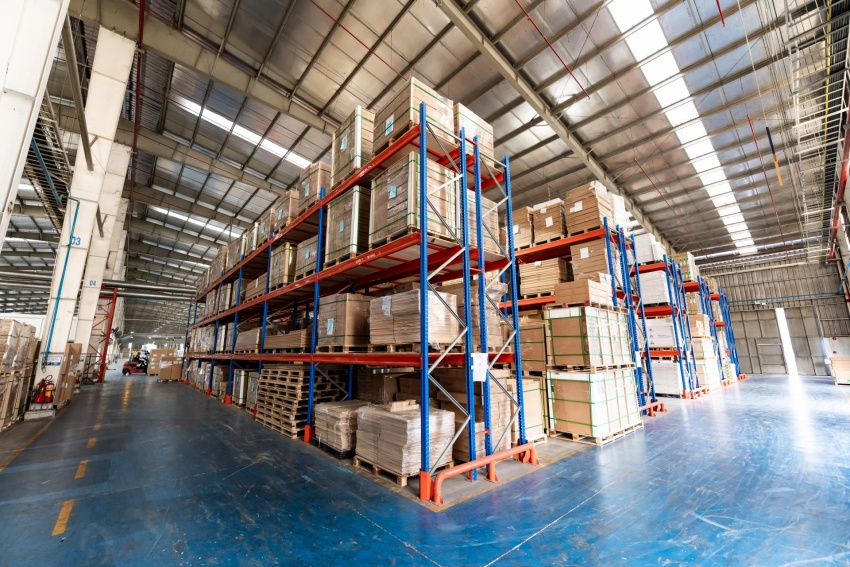 |
| Finished products made by TEKCOM are ready for export |
What the stars mean:
★ Poor ★ ★ Promising ★★★ Good ★★★★ Very good ★★★★★ Exceptional
 Tag:
Tag:Related Contents


Latest News




More News
- A broader platform for France-Vietnam cooperation (October 16, 2026 | 17:51)
- AEON to open 13th general merchandise store in Vietnam (October 14, 2026 | 17:56)
- Three international exhibitions open to boost industrial supply chain links (October 14, 2026 | 17:37)
- Garment and textile industry transitions towards high-value production (October 14, 2026 | 17:30)
- French business delegation meets MoF to discuss investment cooperation (October 14, 2026 | 11:37)
- Friso promotes global scientific collaboration on children’s gut health in Vietnam (October 13, 2026 | 16:18)
- Germany and Vietnam look to expand strategic cooperation and investment (October 13, 2026 | 16:14)
- Vietnam-Australia forum boosts AI and digital technology cooperation (October 13, 2026 | 11:30)
- Digital transformation shifts focus to added value (October 09, 2026 | 18:00)
- Melatec Dental Clinic - accompanying international clients on their smile care journey (October 09, 2026 | 17:25)



Latest News






 Mobile Version