
Vietnam seeks stronger Australian investment to support growth target

 |
| Photo: Manh Tuan |
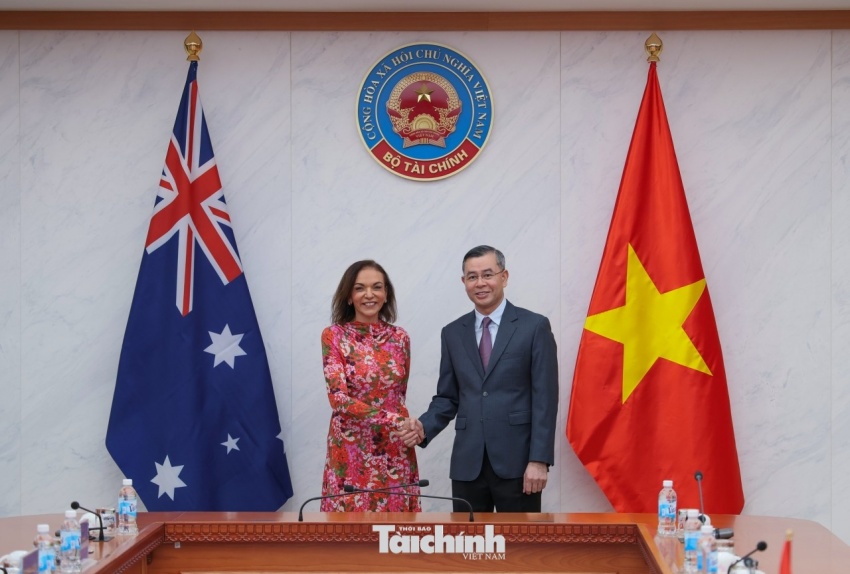
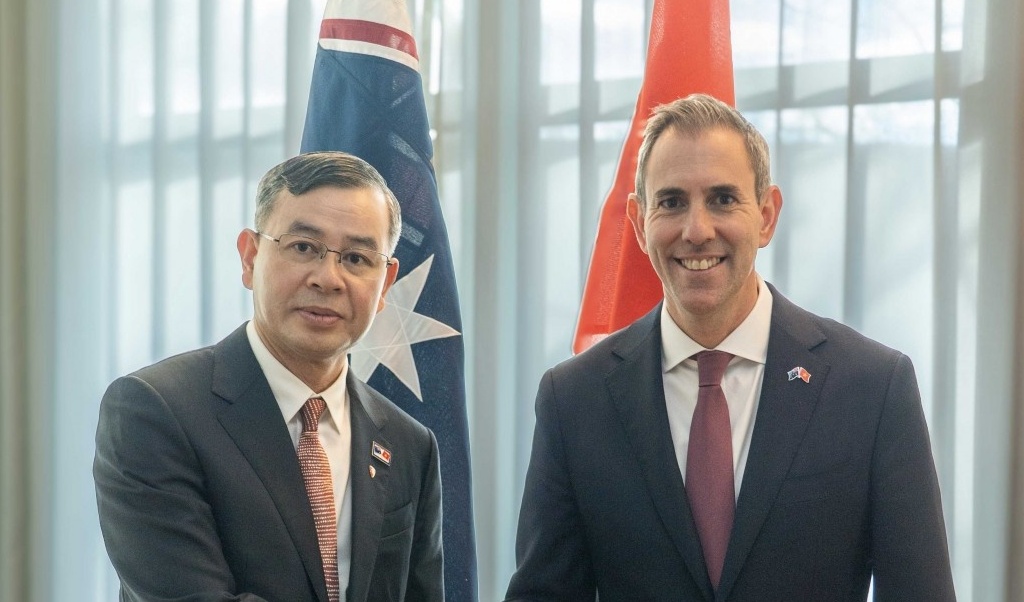
The proposal was made during a meeting in Hanoi on Monday between Minister Tuan and Australia's Minister for International Development Anne Aly who is leading an Australian government delegation to Vietnam.
Tuan described Australia as one of Vietnam's key development partners, noting that Australian cooperation had consistently closely aligned with Vietnam's development priorities and been supportive across the country's economic development.
He expressed hope that Australia would continue to deepen its cooperation with Vietnam during its next phase of growth.
The minister also thanked Minister Aly and Australia's Minister for Foreign Affairs Penny Wong, for informing the Vietnamese government that Australia will provide approximately AUD98.3 million ($68.5 million) in official development assistance for Vietnam during 2026-2027. The funding will support activities under the Vietnam-Australia Comprehensive Strategic Partnership and the two countries' Development Partnership Plan.
Economic ties between the two countries continued to strengthen during the first half of 2026. Two-way trade reached $8.2 billion during the six-month period, up 21.9 per cent from a year earlier. Vietnam's exports to Australia rose 25.1 per cent on-year to $3.8 billion, while imports from Australia increased 19.1 per cent to $4.3 billion.
Tuan said trade relations are expanding rapidly in both scale and growth rate, and suggested that bilateral investment should develop at a pace more consistent with the growing volume of trade between the two economies.
He also noted that issues relating to the licensing of RMIT University had largely been resolved. The Vietnamese government has issued a resolution extending the operating period of RMIT Vietnam's Hanoi campus project, paving the way for the university to continue expanding its presence in the country.
According to the minister, RMIT will play an important role in developing the highly skilled workforce needed to support Vietnam's long-term economic development.
During the meeting, Minister Tuan expressed hope that Vietnam and Australia would soon sign a bilateral economic development cooperation programme covering energy, trade, transport, and the economy.
He said Vietnam was shifting towards a growth model driven by productivity, quality, efficiency, and science and technology, while the private sector is expected to become a stronger engine of growth under Politburo Resolution 68.
Maintaining economic growth above 10 per cent in the coming years is essential to achieving Vietnam's socioeconomic development strategy, which aims to make the country an upper-middle-income economy with a modern industrial base by 2030, he said.
Minister Tuan described Australia's planned support for private sector development as particularly valuable, highlighting innovation as one of the most significant components.
He said both sides should move quickly to sign and implement the programme, while ensuring that projects are evaluated against concrete and measurable outcomes.
The minister also expressed hope that Australia would support Vietnam through technology transfer, partnerships, policy experience, and stronger business connections between enterprises from both countries.
He encouraged greater cooperation to help small and medium-sized enterprises (SMEs) participate in supply chains for renewable energy, high-tech agriculture, minerals, and downstream processing, enabling Vietnamese businesses to capture more value within global supply chains.
Vietnam has more than one million operating businesses, around 98 per cent of which are SMEs, according to Minister Tuan. The government has introduced a range of measures to help these firms expand and improve their competitiveness.
He said Vietnam was keen to learn from Australia's experience in designing SME policies, particularly in improving the business environment and helping companies gain better access to finance, land, technology, markets, and modern corporate governance practices.
Alongside its ambition to sustain rapid economic growth, Vietnam continues to face significant challenges from climate change and rising sea levels. He said he hoped the two countries would strengthen cooperation in these areas as well.
 |
| Photo: Manh Tuan |
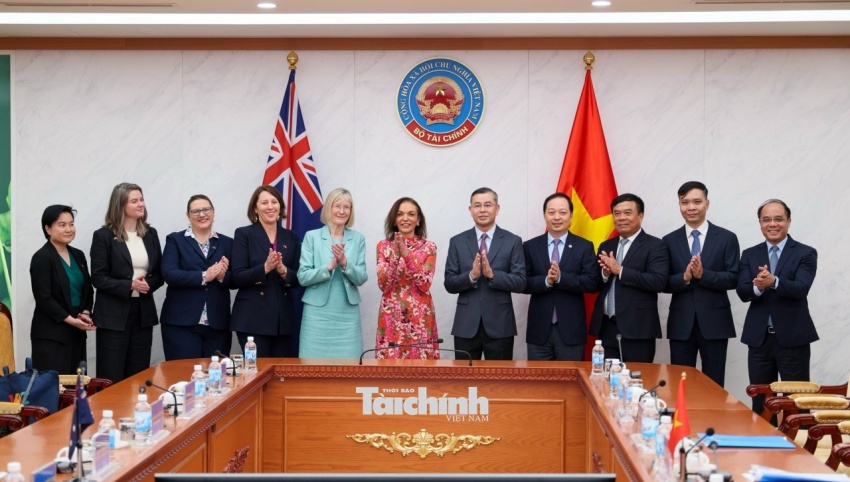
Minister Aly thanked Minister Tuan for outlining Vietnam's development priorities and future areas of cooperation. Discussing future collaboration, she said climate change adaptation would remain a key area for bilateral cooperation, particularly in water resource management.
On SMEs, she noted that Australia was home to around 2.8 million small businesses, many of which face challenges similar to SMEs in other countries. Supporting businesses as they grow from SMEs, and from medium-sized to larger businesses, while strengthening their resilience and long-term sustainability, remains a common policy challenge, she said.
Minister Aly added that governments had an important role in creating conditions that enable businesses to grow over the long term through supportive policies and a favourable operating environment.
She expressed hope that Australia's development programme would continue supporting Vietnam to accelerate economic growth. The meeting also provided a valuable opportunity for Australia to better understand Vietnam's development priorities, helping both sides identify areas for deeper cooperation in the years ahead.
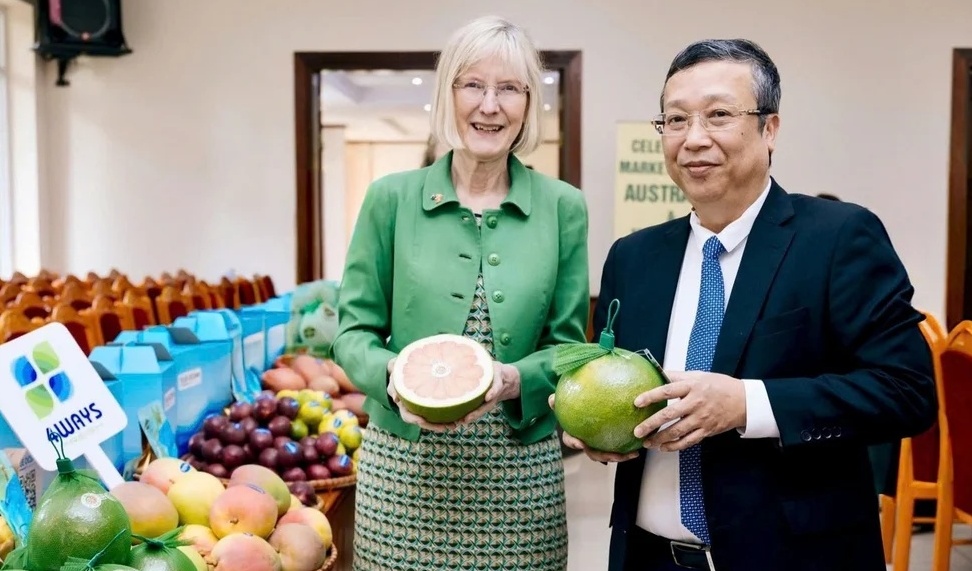
 | Australia seeks market access for kangaroo meat and lychees in Vietnam Australia is seeking market access for kangaroo meat and lychees in Vietnam, with Australian Ambassador to Vietnam Gillian Bird calling on the Ministry of Agriculture and Environment to complete its assessment process. |
 | Australia provides $1.3 million to support joint research projects with Vietnam On June 16, a new partnership to fund collaborative research projects between Australia and Vietnam is open. |
 | Australia shifts immigration focus from capital to talent Australia is reshaping its migration policy to attract highly skilled talent through a new innovation visa, moving away from traditional investment-based pathways. |
What the stars mean:
★ Poor ★ ★ Promising ★★★ Good ★★★★ Very good ★★★★★ Exceptional
 Tag:
Tag:Related Contents






Latest News



More News
- Vung Ang LNG Terminal looks for candidates for $1 billion EPC contract (October 16, 2026 | 17:53)
- Work on digital technology building begins in Hanoi (October 16, 2026 | 17:46)
- Vietnam CFA showcase highlights $120m funding need for climate ventures (October 16, 2026 | 17:14)
- Long-delayed LNG power projects may be replaced in revised PDP VIII (October 14, 2026 | 11:59)
- Foreign investors seeking a synchronised manufacturing ecosystem (October 14, 2026 | 11:51)
- Localities report breakthrough results in FDI in first nine months (October 14, 2026 | 11:45)
- Why Asian FDI is flowing into northern Vietnam’s industrial parks (October 14, 2026 | 09:03)
- Hung Yen unveils adjusted master plan with three economic zones (October 13, 2026 | 11:30)
- Ho Chi Minh City climbs 17 places in Global Financial Centres Index (October 13, 2026 | 11:27)
- Quang Tri province to tighten delayed power projects (October 13, 2026 | 10:34)








 Mobile Version