
Vietnam navigates complex landscape to accelerate strategic FDI

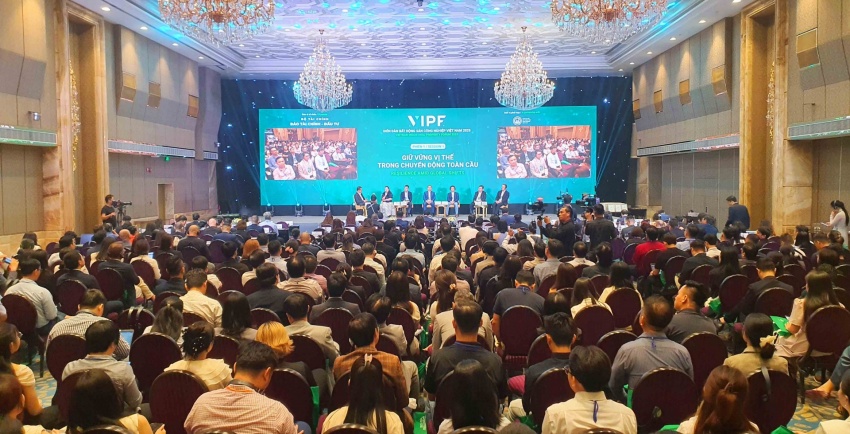 |
The fifth Vietnam Industrial Property Forum (VIPF 2025) opened in Ho Chi Minh City on October 29, bringing together building developers, experts, and industry leaders to discuss the latest developments and emerging trends in Vietnam's industrial real estate sector.
During session one, participants shared strategic insights on how Vietnam can maintain its appeal and advance as a destination for high-quality FDI.
Discussions assess the impact of tariff policies and shifting FDI flows into Vietnam, explore opportunities, and analyse Vietnam's adaptability amid geopolitical and trade fluctuations and ongoing policy risks. Experts also outline strategies for Vietnam to transition from a cost-based advantage to building long-term trust with global corporations.
The session further compared Vietnam's FDI competitiveness with that of regional peers such as Thailand, Indonesia, and India, identifying strengths and weaknesses in attracting strategic capital. Speakers emphasised the proactive role of the government and local authorities in repositioning Vietnam from a low-cost destination to a strategic investment partner leading regional value chains.
Key recommendations focused on essential factors for Vietnam to sustain and elevate its investment position in the global supply chain, amid variables such as non-tariff barriers.
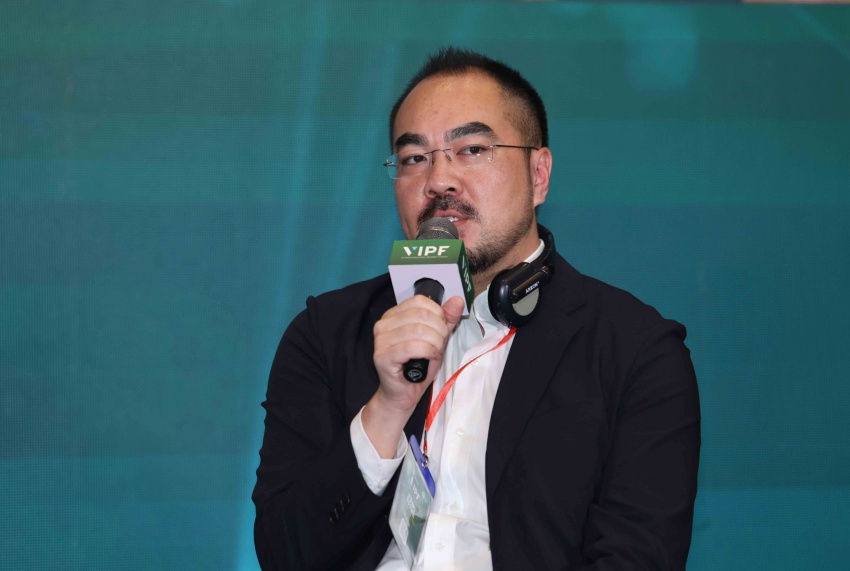
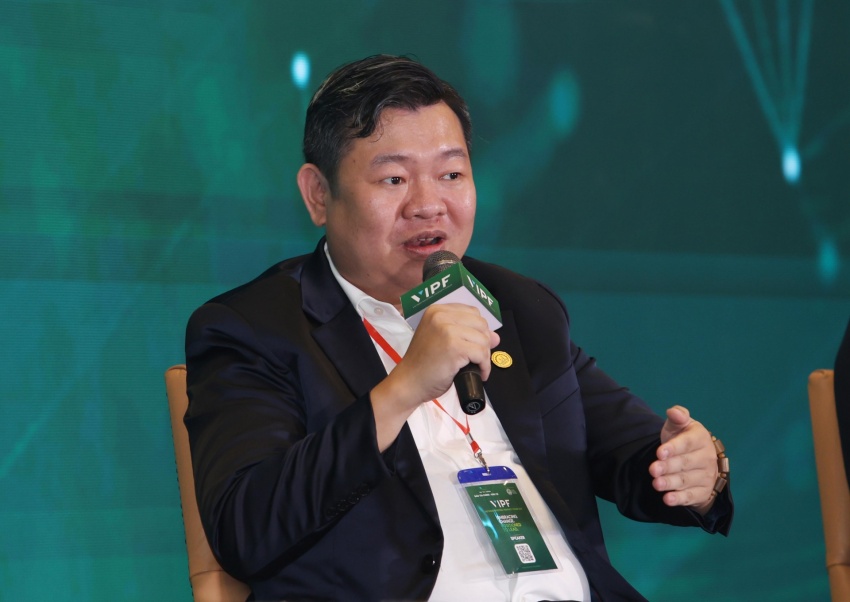
Will Tran - Head of leasing, JLL Vietnam Vietnam will witness a significant shift in FDI flows, not only in quantity but also in quality. Current policies and reforms are aimed at added value, rather than focusing on project scale. Towards 2030, completing infrastructure, including highways, railways, and airports, will be the key to helping Vietnam increase its competitiveness against other countries in the region. Vietnam is still in a relatively early stage of attracting foreign investment. However, the country is witnessing optimistic signals, especially the growing interest in areas such as factories and warehouses, key factors in the supply chain. Vietnam currently has about 15 major infrastructure projects underway, which will serve as a foundation for quality FDI flows. This is a particularly important time for the country to assert its position and move towards the goal of sustainable development by 2030. At the same time, the government has demonstrated its strong commitment through active exchanges with the US and early adaptation to global policies such as the global minimum tax. Thus, Vietnam has become one of the emerging countries to receive much support from international investment funds. | |
Truong Gia Bao - Vice chairman, Vietnam Industrial Real Estate Association The current high occupancy rate of warehouses and factories is actually a short-term response to long-term changes in investment flows. The shift in supply chains is creating a greater demand for logistics, making Vietnam an attractive destination for investors, especially at a time when are looking for flexible solutions. However, this is only a short-term investment wave. In the near future, we will witness a longer-term investment wave, towards manufacturing, technology and large-scale industrial centres, which do not combine Asian enterprises and corporations from Europe and North America. The current investment wave shift can be seen as a small but an important initial step before Vietnam welcomes a larger-scale transition wave in the next few years. For Vietnam, its competitive advantage lies not only in tax incentives, but also in political stability, a transparent investment environment, and the ability to quickly adapt to global trends. In the ASEAN region, Vietnam currently ranks third in attracting FDI, after Singapore and Indonesia. Vietnam's Global Competitiveness Index 2024 ranked 56th among 141 countries, up four places. The rate of foreign-invested enterprises expanding production in Vietnam was 62 per cent, the highest in the ASEAN group (according to JETRO 2024). I believe that the country's biggest opportunity lies in transforming the quality of FDI capital flows, attracting high-tech projects associated with knowledge transfer and added value, instead of just processing activities. This is the right direction for us to take advantage of the current wave of global migration. Vietnam is also aiming to build international financial centres in Ho Chi Minh City and Danang, creating a foundation to attract more capital and talent. | |
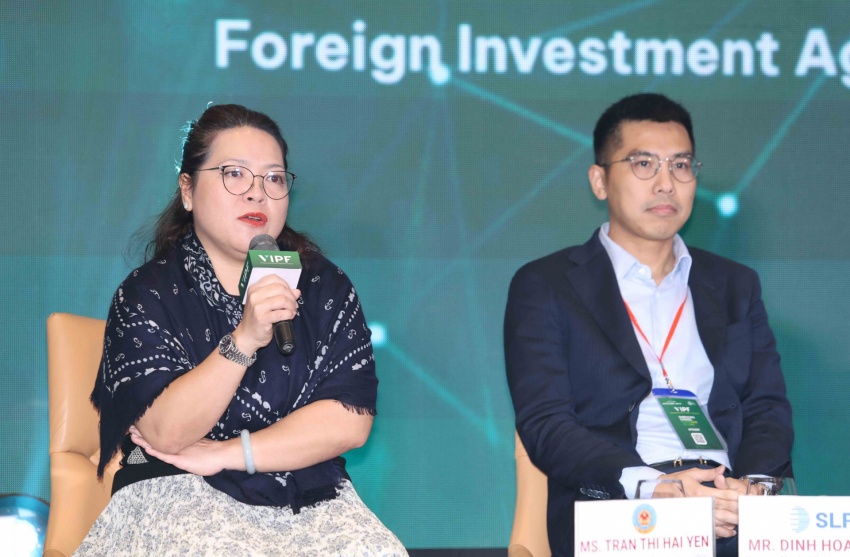
Tran Thi Hai Yen - Director, South Investment Promotion Centre, Foreign Investment Agency under the Ministry of Finance. Vietnam used to open its doors to all foreign-invested projects, but now it has shifted to targeted areas, which is priority for investment attraction, so several specific incentive policies have been promulgated. Senior leaders of the government regularly travel to countries to strengthen relationships, especially with countries that have strengths in high-tech fields, while promoting the signing and implementation of free trade agreements. Last week, Party General Secretary To Lam worked with the United Kingdom to upgrade the relationship to a strategic partnership, opening up opportunities to draw investment from that country. In addition, a synchronous and consistent investment promotion programme has been developed with links between regions and localities. There will be a competition to attract FDI in the semiconductor and high-tech sectors, so Vietnam needs to meet both hard and soft infrastructure. Therefore, in addition to the government's general policy to attract investment effectively, there needs to be a strong voice from businesses, experts, and associations to contribute ideas and advice to move from orientation and policies to specific and effective actions. |
 | Mandates reshaping US and European FDI The restructuring of US and European foreign funding strategies towards Vietnam is now centrally guided by the principles of de-risking and resilience. Dr. Sven David, general director and CEO at VIET Transformation Advisors, analyzes mandates reshaping such investment in Vietnam. |
 | HSBC projects Vietnam's GDP growth to reach 7.9 per cent in 2025 HSBC has raised its yearly GDP growth forecast for Vietnam to 7.9 per cent for 2025 (from 6.6 per cent), and 6.7 per cent for 2026 (from 5.8 per cent). |
 | SLP charts strategic path through Vietnam's industrial real estate market SEA Logistics Partners (SLP), an industrial and logistics infrastructure developer, has fared well in the Vietnamese market. Nam Dinh, head of business development and commercial at SLP, spoke to VIR's Thanh Van about the company's development plans. |
What the stars mean:
★ Poor ★ ★ Promising ★★★ Good ★★★★ Very good ★★★★★ Exceptional
 Tag:
Tag:Related Contents


Latest News
More News
- Honouring businesses in Vietnam’s industrial property development (October 05, 2026 | 18:31)
- Soilbuild wins three awards at Green Future Awards 2026 (October 05, 2026 | 18:23)
- Vietnam emerging as an industrial location of choice (October 05, 2026 | 16:21)
- Investors interest amid ongoing reshuffling of global manufacturing (October 02, 2026 | 22:10)
- LŌ-GOI Group sets up industrial estate venture with three Asia-based institutional investors (October 02, 2026 | 16:00)
- Stavian IP accelerates its modern expansion (October 02, 2026 | 14:00)
- ESG for future-ready industrial success (October 02, 2026 | 09:00)
- Green Future Awards honour five leading industrial park developers (October 01, 2026 | 22:20)
- Green transition leaders honoured at Green Future Awards 2026 (October 01, 2026 | 22:10)
- Six developers honoured as Emerging Green Industrial Property Developers (October 01, 2026 | 22:00)





 Mobile Version