
Industrial parks pivot to sustainable models amid rising ESG demands

Held on November 14, the event featured panel discussions and a site visit as part of Vietnam Industrial Real Estate Forum 2025, and was co-organised by VIR, the Vietnam Industrial Real Estate Association (VIREA), Thanh Binh Phu My Corporation, and NS BlueScope Vietnam. It brought together industry leaders to examine emerging trends, investment priorities, and sustainable development opportunities in Vietnam’s industrial park sector.
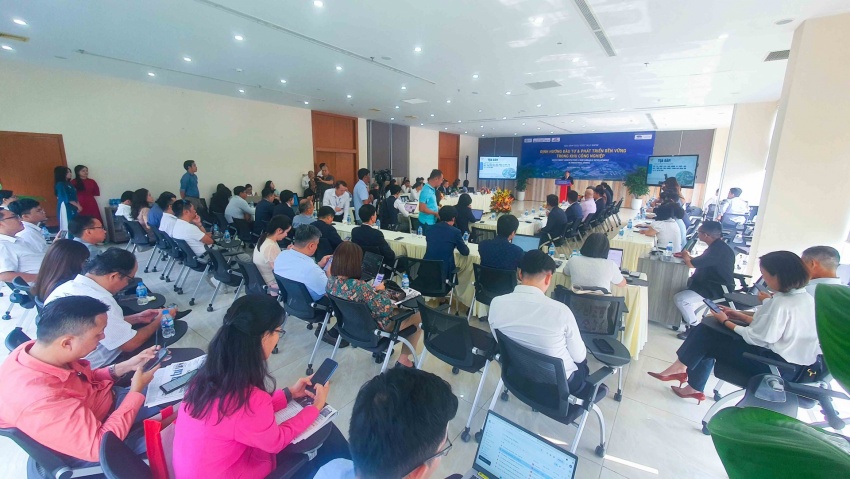 |
In his opening remarks, Nguyen Hong, deputy editor-in-chief of VIR, noted that 2025 has been a period of strong transformation for Vietnam’s industrial real estate market, as the shift of high-quality foreign investment becomes increasingly evident and aligned with environmental, social, and governance (ESG) requirements for green, smart, and sustainable development.
“Aligning investment strategies and industrial park development with international ESG standards is no longer just a trend – it is essential for Vietnam to stay competitive and strengthen its role in global value chains,” Hong said.
Sharing insights on policies, orientations, and industrial park development strategies for the new phase in Ho Chi Minh City, Vo Thanh Phong, deputy head of Ho Chi Minh City Export Processing and Industrial Zones Management Authority (HEPZA), explained that transformation within industrial parks (IPs) is now mandatory.
“Businesses operating in IPs must transform their models, technologies, and operational methods. This is an urgent requirement in the new development phase,” said Phong.
Le Ngoc, senior director and head of Strategic Consulting at Cushman & Wakefield Vietnam, noted that for many consecutive years, aside from Singapore, which remains the region’s leading destination, Vietnam has consistently ranked among the top and maintained stable growth.
“Vietnam’s geographical location is a major advantage as it sits close to key markets and along vital international shipping routes, offering strong potential for logistics development. Additionally, after provincial mergers, the expansion of industrial land has created greater room to attract large amounts of overseas funding, thanks to an abundant supply of clean, ready-to-build land,” Ngoc said.
As the head of a business operating within an IP – and one of the developers that has completed its proposal for recognition as an eco-industrial park – Nguyen Thi Thao Nhi, chairwoman and CEO of Thanh Binh Phu My JSC, noted that developing a green, modern industrial park is a long-term journey.
"The criteria for determining whether an IP meets 'green' standards already exist. However, for individual factories within parks, the government has yet to issue specific criteria defining what constitutes a green or eco-friendly facility. As a result, most factories’ efforts towards greener and more eco-conscious operations are driven by pressure from the market. Therefore, businesses cannot 'go green' overnight, they must select the criteria that suit their capabilities and development roadmap," Nhi said.
In this context, Nhi added that the role of infrastructure developers becomes especially crucial.
“Only when the IP developer possesses a profound understanding of eco-industrial models and circular economy principles, and is capable of accompanying businesses throughout regulatory procedures, can the eco-industrial park model truly operate as intended,” Nhi said.
Sharing lessons from nearly a decade of pursuing ESG while operating in IPs, Lam To Trinh, vice president of product and segment development at NS BlueScope Vietnam, stated that if a company wants to go green, the best approach is to start from the very beginning. The longer the delay, the greater the cost and time required.
“Green transition is a long journey, but it begins with small improvements, such as reusing paint, solvents, and water sources, or reducing noise to protect workers’ health. These actions may seem minor, but once considered, they can be applied immediately and deliver very tangible benefits,” Trinh said
For example, at BlueScope Vietnam’s factory in Phu My 1 Industrial Park, from 2010 to 2022, the company implemented numerous sustainable transformation initiatives such as switching to LED lighting, improving production processes to save electricity, reducing gas usage in production areas, requiring suppliers to use low-emission materials, and automating production lines. These efforts helped reduce more than four million kg of CO₂, save energy, lower operating costs, and enhance competitiveness.
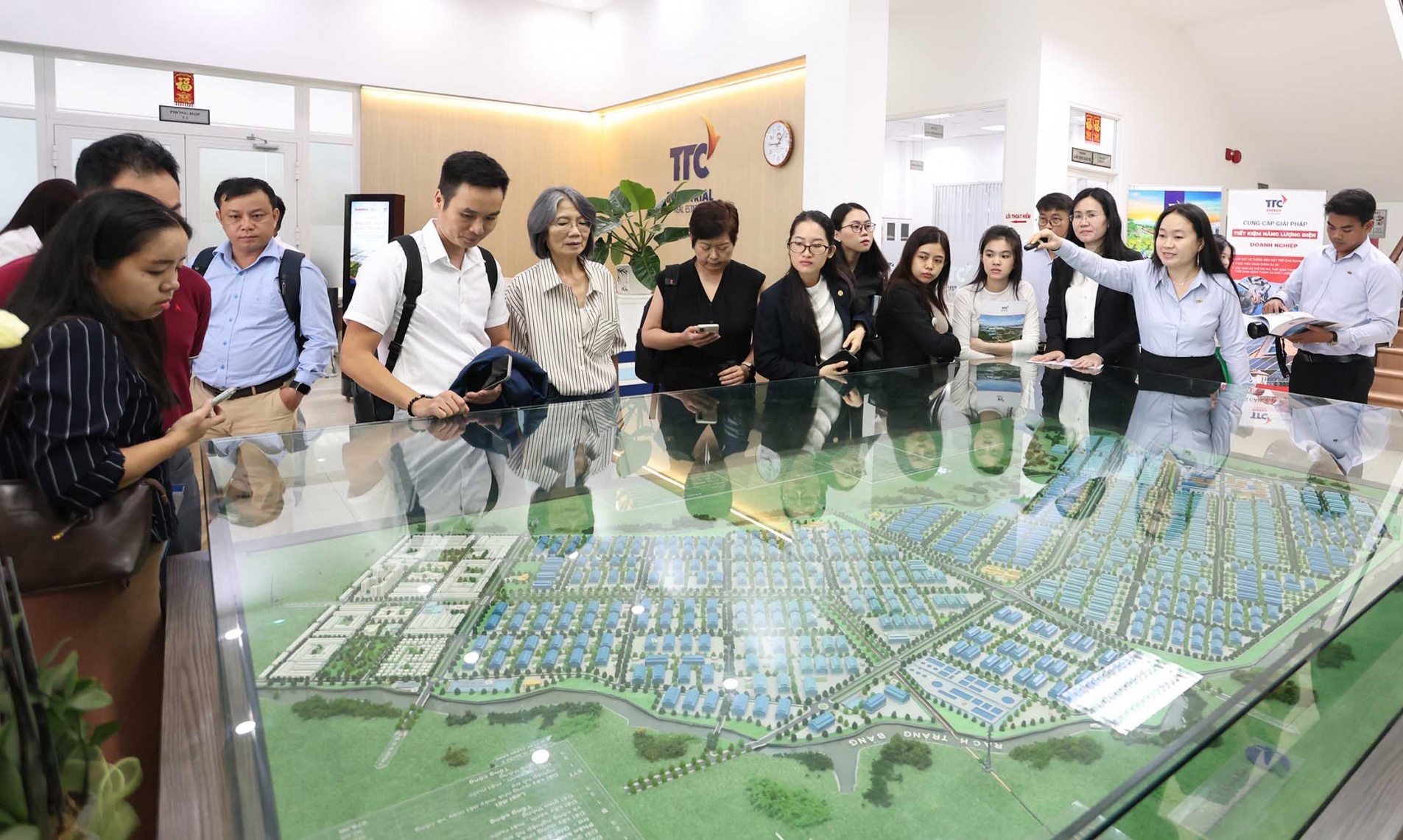
As part of the event, delegates visited the Ashton Furniture Consolidation bonded warehouse, the Thanh Binh Phu My warehouse, and Phu My Inland Container Depot at the Phu My 3 Specialised Industrial Park. These facilities have adopted NS BlueScope Vietnam’s building envelope and factory solutions.
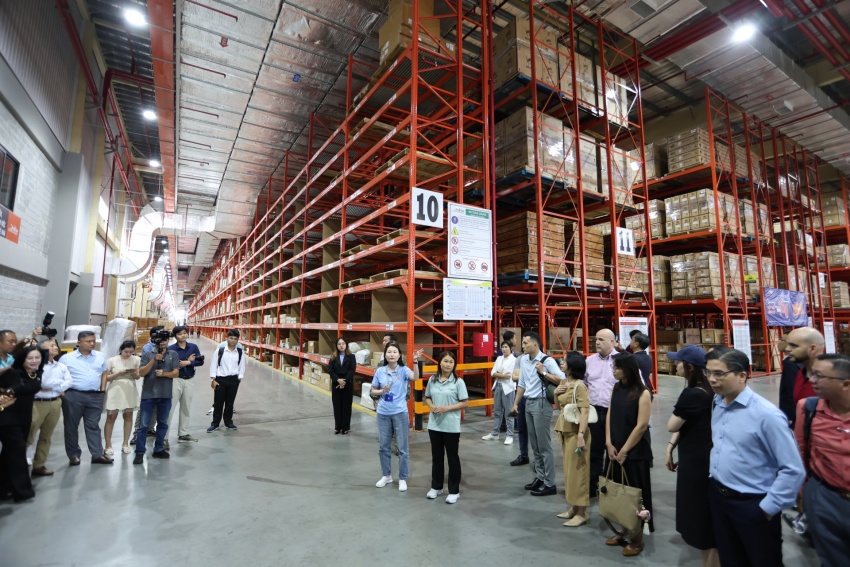 |
| Talk show participants at Ashton Furniture Consolidation Factory |
 | Trelleborg breaks ground on manufacturing facility in Phu My 3 Specialized IP On January 16, Trelleborg Marine & Infrastructure broke ground on a new manufacturing facility in the Phu My 3 Specialized Industrial Park (IP) in the province of Ba Ria-Vung Tau. |
 | Eco-industrial parks help build long-term destination Industrial real estate is becoming part of a broader ecosystem aimed at attracting high-quality investment, where modern standards are increasingly applied to enhance competitiveness and meet global benchmarks. |
What the stars mean:
★ Poor ★ ★ Promising ★★★ Good ★★★★ Very good ★★★★★ Exceptional
 Tag:
Tag:Related Contents

Latest News
More News
- Enterprises honoured for sustainability in industrial parks (October 06, 2026 | 11:49)
- Honouring businesses in Vietnam’s industrial property development (October 05, 2026 | 18:31)
- Soilbuild wins three awards at Green Future Awards 2026 (October 05, 2026 | 18:23)
- Vietnam emerging as an industrial location of choice (October 05, 2026 | 16:21)
- Investors interest amid ongoing reshuffling of global manufacturing (October 02, 2026 | 22:10)
- LŌ-GOI Group sets up industrial estate venture with three Asia-based institutional investors (October 02, 2026 | 16:00)
- Stavian IP accelerates its modern expansion (October 02, 2026 | 14:00)
- ESG for future-ready industrial success (October 02, 2026 | 09:00)
- Green Future Awards honour five leading industrial park developers (October 01, 2026 | 22:20)
- Green transition leaders honoured at Green Future Awards 2026 (October 01, 2026 | 22:10)








 Mobile Version