
Prodezi Long An advances towards integrated eco-centric industrial park model

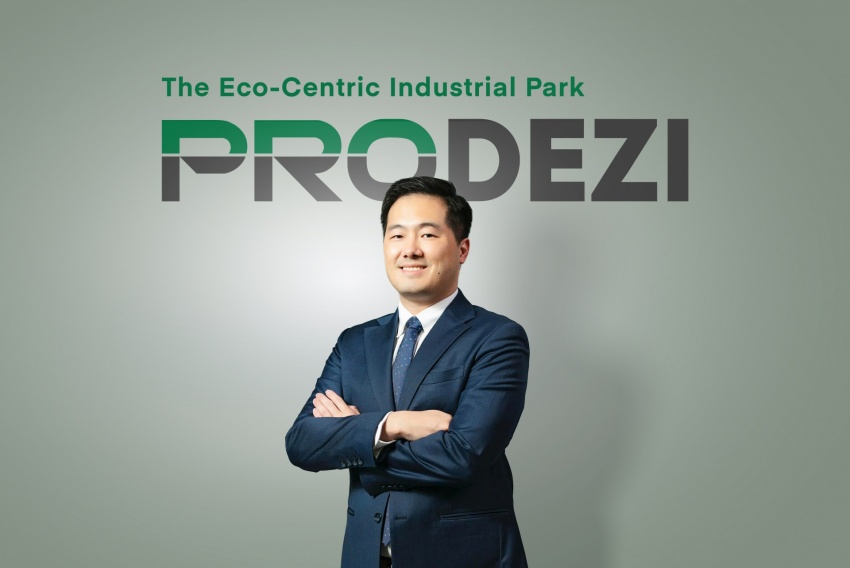 |
| Truong Khac Nguyen Minh, deputy general director of Prodezi Long An |
How do you assess the ongoing shift from traditional industrial parks (IP) to eco-IPs, and what are the core changes in today's IP development mindset?
The transition from a traditional IP to integrated eco-industrial parks is becoming increasingly evident. This is no longer an experimental option, but an inevitable requirement if Vietnam is to continue integrating deeply into global supply chains, particularly those serving high-standard markets such as Europe, North America, and Japan.
The fundamental shift in today's IP development mindset lies in moving from a “land-leasing” model to an “ecosystem-building” approach. IPs are no longer viewed as production spaces, but as integrated platforms where infrastructure, energy, services, logistics, and living environments are developed in a coordinated manner to help businesses operate efficiently, comply with environmental, social, and governance (ESG) standards, and achieve long-term sustainable growth.
Translating this ecosystem-based mindset into practice requires the systematic integration of ESG principles, green infrastructure, and circular economy solutions throughout the industrial park lifecycle.
How has Prodezi integrated ESG principles, green infrastructure, and circular economy models into its IP to meet the increasingly stringent requirements of international investors?
As one of the early developers of integrated, eco-centric IPs in Vietnam, at Prodezi, ESG factors are embedded from the very early stages of planning and design, rather than being treated as add-ons during the operational phase. We focus on developing green infrastructure, optimising resource use, and progressively scaling up energy-efficiency and emissions-reduction solutions throughout the entire lifecycle of our IP, in line with the eco-IP development framework set out under Decree No.35/2022/ND-CP.
Beyond infrastructure, Prodezi places strong emphasis on implementing circular economy models through partnerships with international players that possess deep expertise in sustainable technologies. For example, our collaboration with CHITOSE Group of Japan enables the application of microbial technologies to treat biomass and sludge, converting waste generated within the IP into organic fertiliser on site. This approach significantly reduces waste volumes and carbon emissions and delivers tangible circular value.
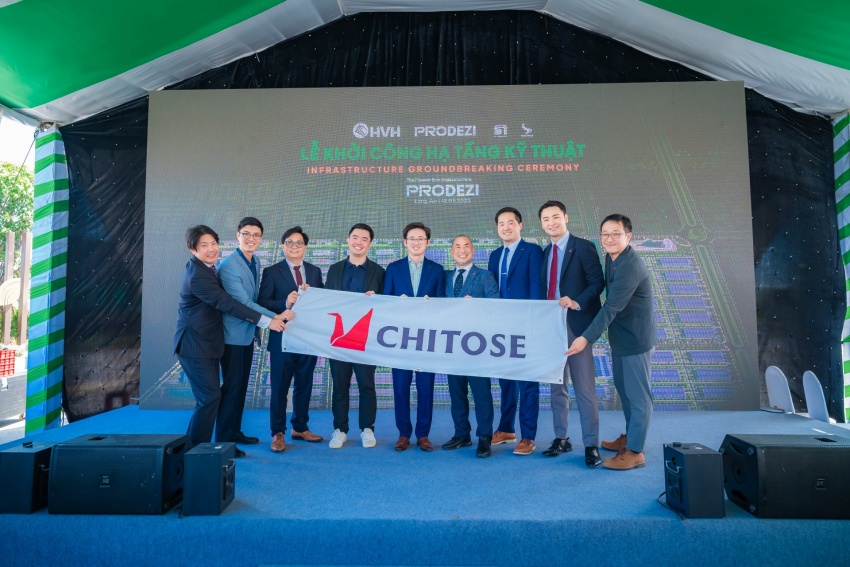 |
| The partnership with CHITOSE Group enables Prodezi to integrate circular economy solutions into its service-connection model, supporting waste treatment and emissions reduction across the industrial park |
We are developing a service-connection and coordination model within our IPs, enabling tenants to access pre-vetted solutions in environmental management, energy, logistics, and operations. Through this ecosystem, international investors can shorten project implementation timelines, better manage ESG compliance, and confidently scale up their operations over the long term.
This integrated service ecosystem has become a critical differentiating factor as competition intensifies among industrial parks to attract high-quality foreign direct investment (FDI).
From the perspective of attracting high-quality FDI, what competitive advantages does the integrated eco-centric industrial park model offer Prodezi over traditional IPs, particularly in attracting high-tech investors and sustainable supply chains?
From the standpoint of attracting high-quality FDI, the integrated eco-IP model offers clear competitive advantages over traditional IPs. Today's high-tech investors and companies within sustainable supply chains are no longer looking solely for production sites, instead, they place greater emphasis on operating standards, emissions-reduction capabilities, infrastructure reliability, and a stable long-term investment environment.
Through its integrated eco-centric industrial park model, Prodezi can address these requirements simultaneously through coordinated infrastructure, a comprehensive service ecosystem, and a production environment aligned with sustainable development.
This enables investors to shorten project implementation timelines, reduce operating costs, and enhance compliance with ESG standards, thereby creating a strong competitive edge in attracting and retaining next-generation FDI flows. Beyond investor considerations, the long-term success of this model also requires active engagement with the wider community and socio-economic stakeholders to ensure sustainable and balance development.
During the development of eco-IPs, how does Prodezi work alongside local authorities to strike a balance between economic growth, environmental protection, and the locality's long-term sustainable development goals?
In developing eco-IPs, Prodezi considers close environmental collaboration with local authorities to be a key factor in balancing economic growth, protection, and long-term sustainability. We proactively coordinate with relevant agencies on planning, infrastructure investment, and the early adoption of environmental standards, ensuring alignment with the locality's overall development orientation from the outset.
In addition, Prodezi emphasises on its role as a connector between local authorities, the business community, and socio-professional organisations. Through cooperation with the Ho Chi Minh City Young Business Association (YBA), Prodezi has rolled out dialogue and investment-linkage initiatives, creating bridges for businesses, particularly small- and medium-sized enterprises, to access relevant information, infrastructure, and suitable partnership opportunities.
Building on these foundations, Prodezi is now setting clearer strategic priority to further advance and scale the integrated eco-industrial park model in the coming years.
What strategic priorities and development vision is Prodezi setting for advancing the integrated eco-IP model in Vietnam?
For the 2026-2030 period, our top priority is to complete and further elevate the integrated eco-centric IP model at Prodezi Long An, positioning it as the foundation of our long-term development strategy. Our focus is not on rapid expansion in scale, but on product diversification, strengthening the service ecosystem, and optimising operations towards lower emissions, greater energy efficiency, and improved resource utilisation.
At the same time, Prodezi is selectively studying the expansion of this model, replicating preparations and proven approaches that are closely integrated with urban and service developments, thereby creating a sustainable production and living environment for both businesses and workers.
Over the longer term, we aspire for Prodezi to be not merely an IP developer, but a benchmark for green development aligned with economic efficiency, contributing to the shaping of new standards for Vietnam's IP over the next decade.
Could you update the progress of the integrated Prodezi Long An eco-centric IP?
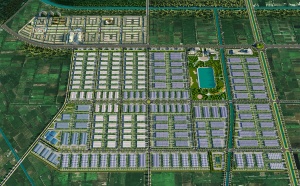
We are currently implementing phase one of the IP, covering a total area of 122 hectares, of which 77.9 ha are allocated for industrial and logistics use, and 4.2 ha for administrative and service functions. The technical infrastructure has been completed, and we expect the occupancy rate to reach around 30 per cent in 2026.
The LA Home eco-urban area is being developed in parallel to complement the service and amenities ecosystem, helping to create a convenient working and living environment for both businesses and employees.
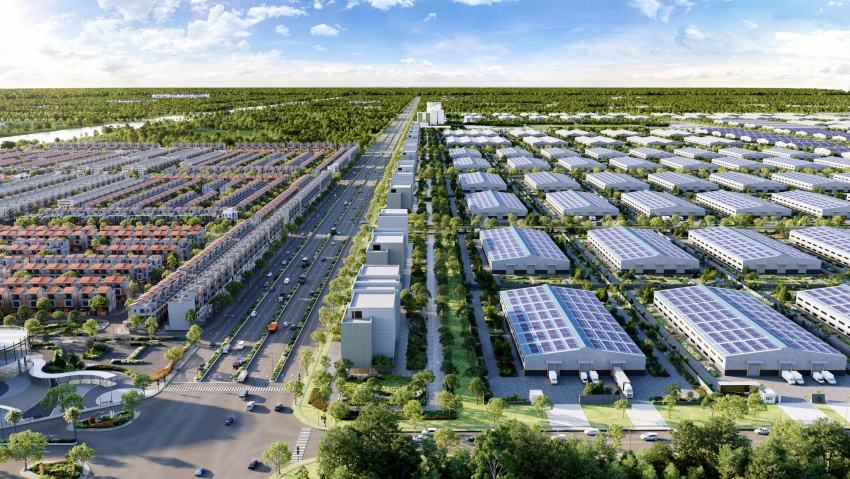 |
| The integrated master plan of Prodezi Long An, combining industrial, logistics, and eco-urban developments to support long-term sustainable operations |
Prodezi also plans to roll out ready-built factory and warehouse in the next phase, with construction expected to commence in the first quarter of 2026 and completion targeted for the fourth quarter of the same year.
These developments are designed to help businesses shorten investment timelines, bring factories into operation more quickly, and leverage the existing infrastructure and service ecosystem within the IP.
 | Prodezi named among Vietnam’s Top 50 Sustainable Businesses for 2025 Prodezi Long An Corporation has landed a spot among the Top 50 Sustainable Businesses at the 2025 Corporate Sustainability Awards, recognised for leading the charge in waste reduction and eco-industrial innovation. |
 | Green industrial parks offer solution to ESG challenges for next-generation businesses As environmental standards increasingly become a prerequisite for participation in global supply chains, the shift towards sustainable production models has become a matter of survival. |
 | Vietnam’s growth formula evolves as high-tech and green industries take lead Vietnam is entering a new phase of economic transformation where foreign direct investment (FDI), high-tech industries, environmental, social, and governance (ESG) commitments, and human resources quality will define its growth path. Industry leaders highlight that the next generation of industrial parks must evolve to be green, smart, and integrated to meet investors' rising standards and Vietnam's net zero ambitions. |
What the stars mean:
★ Poor ★ ★ Promising ★★★ Good ★★★★ Very good ★★★★★ Exceptional
 Tag:
Tag:Related Contents
Latest News
More News
- Honouring businesses in Vietnam’s industrial property development (October 05, 2026 | 18:31)
- Soilbuild wins three awards at Green Future Awards 2026 (October 05, 2026 | 18:23)
- Vietnam emerging as an industrial location of choice (October 05, 2026 | 16:21)
- Investors interest amid ongoing reshuffling of global manufacturing (October 02, 2026 | 22:10)
- LŌ-GOI Group sets up industrial estate venture with three Asia-based institutional investors (October 02, 2026 | 16:00)
- Stavian IP accelerates its modern expansion (October 02, 2026 | 14:00)
- ESG for future-ready industrial success (October 02, 2026 | 09:00)
- Green Future Awards honour five leading industrial park developers (October 01, 2026 | 22:20)
- Green transition leaders honoured at Green Future Awards 2026 (October 01, 2026 | 22:10)
- Six developers honoured as Emerging Green Industrial Property Developers (October 01, 2026 | 22:00)






 Mobile Version