
The green revolution laid bare for capital

Last week, Prime Minister Pham Minh Chinh signed off on urgent measures to tackle environmental pollution. One of the directive’s central components requires Hanoi to prohibit traditional motorbikes on selected streets from July 2026.
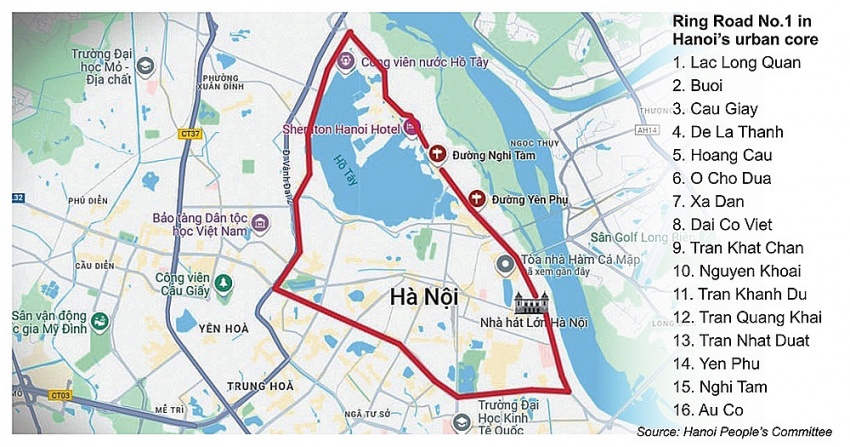
The new policy will initially apply to the 7.2km corridor within Ring Road 1, covering nine inner wards. In addition to restricting fossil fuel-powered motorbikes, Hanoi will begin limiting fossil fuel-based private cars in the Ring Road 1 and 2 areas from the start of 2028. By 2030, the ban will extend to all personal vehicles using fossil fuels within the broader Ring Road 3 perimeter.
The prime minister has also asked Hanoi to release support policies by September 30 to facilitate vehicle conversion for citizens and boost public transport adoption. Mechanisms to support manufacturers and assemblers of clean energy vehicles are also on the agenda.
According to Duong Duc Tuan, Deputy Chairman of Hanoi People’s Committee, the directive marks a crucial turning point in the city’s efforts to reduce air pollution and foster sustainable mobility. “Hanoi’s pollution levels are directly threatening the quality of life and public health,” Tuan said. “Air pollution, in particular, poses a serious challenge to the city’s development goals. Decisive action is now imperative.”
Hanoi is currently home to about 8 million personal vehicles, including 1.1 million cars and 6.9 million motorbikes, excluding frequent interprovincial traffic. Of the motorbikes registered in the city, approximately 5.6 million are petrol-powered, while only 1.3 million are electric.
Traffic volumes are increasing at a pace far outstripping infrastructure development. Vehicle numbers are rising 4-5 per cent annually, roughly 11-17 times faster than capacity improvements. Private car ownership is expanding even faster, at nearly 10 per cent per year.
Research from the Ministry of Agriculture and Environment reveals that nearly 60 per cent of Hanoi’s air pollution originates from around seven million largely unregulated motorbikes, 800,000 fossil fuel-powered cars, and particulate matter from road surface wear. Compounding the issue, nearly 70 per cent of motorbikes in use are outdated and fall short of current emission standards. Additional contributors include industrial emissions, residential combustion, and unfavourable weather conditions.
However, experts warn that phasing out fossil fuel-powered motorbikes poses significant challenges. “With such a dense population, what alternative will people have when public transport currently meets only one-fifth of travel demand?,” said Dr. Dao Ngoc Nghiem, vice president of the Vietnam Urban Planning and Development Association.
Current figures indicate that metro systems account for just 1-2 per cent of daily commutes, while 150 bus routes serve only 14 per cent of the population, according to the Vietnam Urban Planning and Development Association.
Combined, public transport supports just one-fifth of total trips, with private vehicles covering the rest. By 2030, forecasts suggest public transport could serve 35-40 per cent of trips, with personal vehicles still making up 60-65 per cent.
In response, Hanoi is implementing a series of pilot initiatives to promote the transition to electric motorbikes. These include incentives for selected districts, and calls on manufacturers and distributors to support consumers with measures such as full coverage of registration and licensing fees, expanded charging infrastructure, and access to public investment funds.
Some highlights include direct cash incentives for people with older petrol or diesel motorbikes in low-emission zones who switch to green vehicles. The subsidy ranges from $120-200, depending on income status, and is valid through to 2030.
The city will also provide low-interest loans, ranging from 3-5 per cent annually, for up to 100 per cent of contract value and a term of up to five years. Eligible recipients include public service units, passenger and freight transport operators (excluding bus services), and companies investing in the collection and recycling of old vehicles. In addition, registration and licence plate fees for green vehicles will be waived entirely from the date the resolution takes effect to the end of this decade.
To ensure a safe and effective transition, the city also plans to introduce technical regulations on battery use and fire safety, along with a network of standardised battery-swap stations to enhance convenience and compliance. “In parallel with vehicle conversion efforts, Hanoi is expanding its green public transport system,” Tuan noted. “The city is preparing to deploy compact electric buses with 8-12 seats and four-seat electric cars in high-density urban areas, further supporting the shift towards sustainable mobility.”
Air pollution in Hanoi has consistently ranked at alarming levels in recent years. As of July 14, data from air monitoring app IQAir placed Hanoi as the world’s second most polluted city, trailing only Kinshasa in the Democratic Republic of the Congo with an AQI reading of 167, classified as harmful to human health.
Complementing these transport-focused efforts, Hanoi People’s Council has passed a new resolution aimed at curbing plastic waste across production, business, services, and daily life. The resolution sets out a clear timeline for the elimination of single-use plastic products, except for those certified with Vietnam’s eco-label or meeting biodegradability standards.
From 2026, hotels and tourism establishments will no longer be permitted to use single-use plastic items such as toothbrushes, razors, cotton swabs, shower caps, and packaging for personal care products.
 |
Bobby Nguyen, chairman Mekong Rustic Hospitality
The directive to ban petrol-powered vehicles within Hanoi city centre from July 2026 sends a strong message about Vietnam’s commitment to its net-zero goals and the green economy. From a sustainable tourism perspective, this is more than a transport policy, it’s a rare opportunity to reimagine urban tourism in Hanoi as greener, cleaner, and more people-centred.
This shift can enhance the capital’s appeal to international visitors, especially younger travellers from Europe, North America, and Australia, who increasingly seek environmentally responsible destinations. A low-emission city centre would help position Hanoi as a slow-living, green, and responsible capital, creating a powerful story for international media and tourism promotion.
Beyond branding, the ban could also enrich visitor experiences. Expanding walkable areas and cycling paths in the Old Quarter, Hoan Kiem Lake, and the French Quarter would allow tourists to better engage with the city’s culture, history, and daily life, without the distractions of traffic and pollution. This is also a chance to revitalise community-based tourism, with greater potential for street food tours, craft experiences, and folk art performances that generate local income and preserve cultural values.
To ensure success, Hanoi must invest in green infrastructure and support businesses transitioning to sustainable models. Public engagement and clear communication will be key. If implemented effectively, this policy can be a defining moment, not only for urban transport, but for shaping Hanoi into a regional model of sustainable tourism where people, culture, and environment thrive in harmony.
Lucy Wilson, australian tourist
I’m from Melbourne, a city where green spaces and sustainability are part of everyday life. Back home, people go hiking in the Grampians, camp in national parks, or stay at off-grid eco-lodges that run on solar power. We also have urban initiatives like rooftop gardens and community compost programs.
So when I visited Hanoi, I honestly didn’t expect to find many green experiences in such a densely populated and traffic-heavy city. But to my surprise, there were real pockets of nature and thoughtful eco-activities. What struck me most was the potential, as Hanoi still has many natural and cultural assets that can support meaningful green tourism.
Stephanie Martins, Spanish tourist
I come from Inverness, a small city in the north of Scotland surrounded by forests, rivers, and rolling hills. For us, nature is part of daily life. We’re raised with a strong sense of stewardship, especially because our highland ecosystems are sensitive and easily disturbed.
When I arrived in Hanoi, it was the opposite in many ways: energetic, chaotic, and full of motion. But after a few days, I realised that the connection to nature here is just expressed differently. It’s in the early-morning tai chi by the lakes, the small shrines under banyan trees, or how fresh herbs are essential in every meal. What I found most inspiring was how much cultural identity is still tied to the land, even near a growing city.
If Hanoi can protect these traditions while managing growth, it doesn’t need to imitate any other model. Vietnam has a deeply rooted form of sustainability, it just needs space and support to flourish.
Stephanie Martins, Spanish tourist
I come from Barcelona, where green mobility and sustainable living have become a core part of urban planning. In recent years, we’ve seen the rise of ‘superblocks’ - areas where cars are restricted and pedestrians, cyclists, and green spaces are prioritised. We also have community markets with local produce, public bikes, and a lot of investment in eco-education for both citizens and visitors.
When I first arrived in Hanoi, it felt like a completely different world. The traffic was overwhelming, and green spaces seemed limited. But once I settled in and explored beyond the touristy Old Quarter, I found a different side of the city. A garden café tucked behind an old apartment complex, a quiet corner near Truc Bach Lake, and a walking tour in Duong Lam village where a local guide passionately shared stories of traditional Vietnamese architecture and rural life.
Hanoi’s green tourism is still at an early stage, but it has soul. What it needs now is a clearer strategy, especially in terms of waste management, transport alternatives, and creating more public spaces that prioritise both locals and tourists.
What the stars mean:
★ Poor ★ ★ Promising ★★★ Good ★★★★ Very good ★★★★★ Exceptional
 Tag:
Tag:Related Contents

Latest News



More News
- HER2+ breast cancer carries $3.71 billion productivity burden in Vietnam (July 30, 2026 | 14:32)
- Party Resolution charts Vietnam’s development model through 2045 and beyond (July 30, 2026 | 12:29)
- STEM education evolves for AI era (July 21, 2026 | 09:38)
- Vietnam’s workforce ready for AI era (June 26, 2026 | 16:04)
- Why child online safety is now a business imperative (June 24, 2026 | 11:00)
- Hybrid work is reshaping Vietnam’s labour market (June 17, 2026 | 16:24)
- World's children exposed to at least three overlapping climate threats (June 17, 2026 | 15:54)
- Thai Nguyen event promotes safer food systems for World Food Safety Day (June 11, 2026 | 14:08)
- Vietnam emerges as rising hub for wealth creation (June 02, 2026 | 18:31)
- Danang launches DIFF 2026 with world-class performances (May 31, 2026 | 08:00)









 Mobile Version