
Spring Fair 2026 boosts domestic demand

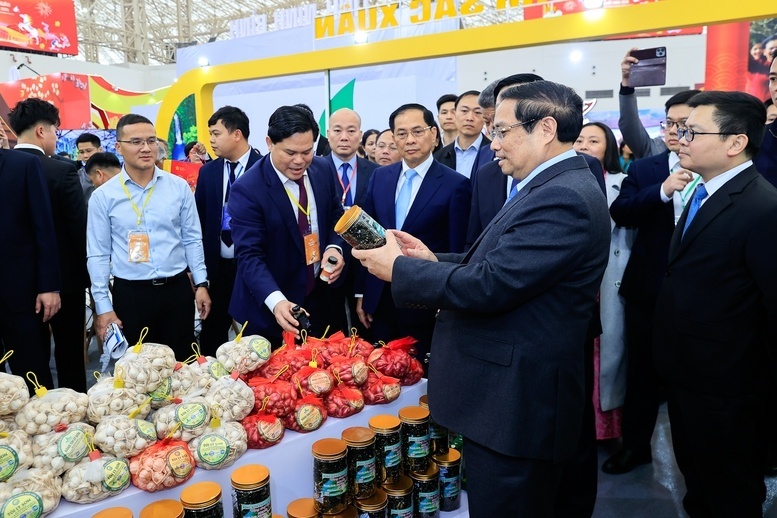 |
| Spring Fair 2026 took place in the first weeks of February in Hanoi |
Looking back at the first Spring Fair 2026, held from February 2-13, the event not only generated vibrant early-year trade but also raised a broader economic question: what role can the fair model play in stimulating domestic consumption and supporting first-quarter growth?
According to the Organising Committee, the fair gathered hundreds of booths from enterprises, cooperatives, and producers across multiple provinces. Product categories ranged from fresh agricultural produce and processed foods to One Commune, One Product items, fast-moving consumer products, handicrafts, and gift items.
During the event, visitor numbers surged on weekends and towards the closing days. Many businesses reported retail revenues exceeding initial targets by 20-30 per cent, while some speciality regional products achieved sales volumes double their expectations.
More importantly, the economic value of the fair extended beyond on-site revenue. Business matchmaking sessions, meetings with distributors, and memorandum signings opened up medium- and long-term revenue streams. Several enterprises reached preliminary agreements to distribute products through supermarket chains, convenience stores, and e-commerce platforms.
One of the highlights of the event was the strong participation of local cooperatives and agricultural enterprises. For this sector, securing stable market access early in the production cycle is critical for income stability and reinvestment.
Direct sales at the fair shortened distribution chains and improved profit margins for producers. Transparent sales channels with traceable origins also strengthened consumer confidence and reduced unreasonable price fluctuations.
Abundant and diversified supply created positive competitive pressure, contributing to price stabilisation after the Lunar New Year. Timely supply supplementation and direct distribution to consumers helped limit localised price spikes.
Beyond participating businesses, the fair activated related value chains, including transportation, warehousing, printing and advertising, food and beverage services, accommodation, media, and digital payment services. This reflects the characteristics of the event economy, an area increasingly viewed by localities as a supplementary growth driver for the service sector.
Preliminary estimates suggest that visitor spending extended beyond booth purchases to surrounding auxiliary services, boosting aggregate demand and creating short-term employment opportunities.
The integration of trade activities with cultural and artistic programmes extended visitor stay duration and increased per capita spending. As consumer behaviour shifts from buying products to buying experiences, multifunctional fair models demonstrate strong adaptability.
A notable trend this year was the increased adoption of cashless payments and digital platforms for product promotion. Many booths integrated QR codes for traceability and accepted payments via e-wallets and digital banking.
Digital transactions not only improved convenience but also enabled businesses to collect customer data, analyse consumer behaviour, and develop long-term marketing strategies. From a regulatory standpoint, data generated from the fair provides valuable references for trade promotion policy and domestic market development.
If standardised in future editions, the fair could serve as a pilot platform for digital commerce solutions, enhancing the competitiveness of small and medium-sized enterprises (SMEs).
Despite positive results, the inaugural edition highlighted areas for improvement, including spatial planning, visitor flow management, payment infrastructure, and standardised revenue reporting.
To become more effective, future editions should be more closely integrated with regional supply-demand programmes, strategies boosting Vietnamese goods, and SME support policies.
Establishing a clear key performance indicator framework, such as total direct revenue, contract value signed, conversion rates into modern distribution channels, and brand awareness growth, would enable a more quantitative assessment of the fair’s economic contribution.
 | Retail stocks poised for growth as consumption recovery and policy tailwinds align Retail stocks are drawing growing investor interest as recovering consumer demand, supportive tax policies and improving income prospects underpin expectations of strong earnings growth and rising valuations. |
 | Tet 2026 points to more value-driven consumption Vietnam’s Tet 2026 market is expected to reflect a clear shift towards more value-conscious consumption, as households prioritise practicality over extravagance while maintaining traditional gifting habits, according to a survey released by B&Company on January 28. |
 | Rising consumption and travel fuel ‘Tet season’ stocks Investors are turning to ‘Tet season’ stocks, betting on stronger consumption, rising travel and solid earnings momentum early in the year. |
What the stars mean:
★ Poor ★ ★ Promising ★★★ Good ★★★★ Very good ★★★★★ Exceptional
 Tag:
Tag:Related Contents






Latest News





More News
- Vietnam-Australia forum boosts AI and digital technology cooperation (October 13, 2026 | 11:30)
- Digital transformation shifts focus to added value (October 09, 2026 | 18:00)
- Melatec Dental Clinic - accompanying international clients on their smile care journey (October 09, 2026 | 17:25)
- 12 localities achieve double-digit growth in first nine months (October 09, 2026 | 17:00)
- CYE 2026 announces top 5 finalists (October 09, 2026 | 16:55)
- Robotics inspires Vietnam’s next generation of engineers (October 08, 2026 | 15:18)
- Vietnam among fastest AI adopters, Pearson-AWS study finds (October 07, 2026 | 12:26)
- Ho Chi Minh City Oncology Hospital signs MoU with Novartis Vietnam (October 07, 2026 | 10:36)
- Expanding education partnerships to drive mutual growth (October 06, 2026 | 16:04)
- VTG 2026 to showcase textile and footwear innovation in Ho Chi Minh City (October 06, 2026 | 16:00)







 Mobile Version