

Hanoi sees launch of new innovation centre with state-private model

On February 26, the Hanoi Innovation Centre JSC was launched at the headquarters of Hanoi People's Committee. Positioned as a 'central brain' for innovation, the centre aims to address urban development challenges, support the national innovation ecosystem, advance the digital economy and society, improve quality of life, and foster creative industries linked to Hanoi's identity.
 |
| Truong Viet Dung, Vice Chairman of Hanoi People’s Committee |
For the first time, Hanoi will be home to an innovation institution operating as a joint stock company with state capital, while adhering to modern corporate governance standards including financial transparency, risk control, and accountability to shareholders and the law. The 70 per cent state ownership is intended to safeguard development objectives rather than micromanage business operations.
"This centre represents more than the creation of a new organisation," said Truong Viet Dung, Vice Chairman of Hanoi People's Committee. "It embodies a state-guided, enterprise-operated model that shifts innovation governance from policy-driven support towards market-based mechanisms."
Dung described the move as a structural transition: from administrative allocation to co-investment and risk-sharing; from fragmented support to ecosystem coordination; and from a startup movement to a standardised value chain measured by results.
“Within a clear and disciplined market framework, innovation can become a genuine productive force for the capital,” he said.
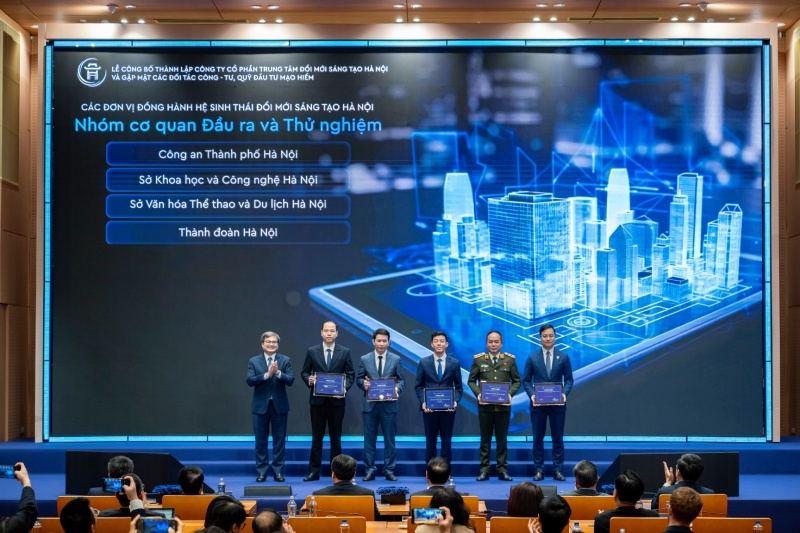 |
| Hanoi People’s Committee handing over certificates to partners of the new centre |
The centre outlined three core priorities. First, it aims to engage the global innovation community to tackle Hanoi’s practical urban challenges, including traffic congestion, pollution and data governance. The city seeks to pilot advanced technologies and business models through controlled experimentation, ranging from AI and autonomous mobility to fintech, digital assets and creative industries rooted in local culture.
Second, the centre will pursue an outward-facing strategy designed to encourage Vietnamese tech entrepreneurs and professionals with international experience to return, register operations and contribute to the local economy. Returning founders bring not only revenue and tax contributions but also global networks, venture capital connections and international management expertise. The centre also hopes to attract young foreign founders to build teams and launch start-ups in Vietnam, leveraging competitive labour costs and Hanoi’s dynamic environment.
Third, the centre’s domestic strategy emphasises coordination and support for local creative industries at a time when multinational platforms increasingly dominate segments of the digital economy. The goal is to foster a fair competitive environment grounded in innovation and practical support for start-ups.
To implement these priorities, the centre introduced a four-stage innovation pipeline.
The connection stage gathers development challenges from both public and private sectors in a common framework, mobilising talent from secondary schools, universities, research institutes, and the Vietnamese diaspora.
The incubation stage transforms ideas into testable products, using AI as a 'co-founder' to accelerate development and market entry.
The platform-building stage supports business registration, corporate structuring, intellectual property, cloud infrastructure, public-private partnerships and venture capital access through a shared digital platform.
The scaling stage focuses on commercialisation and growth acceleration, supported by venture capital funds, including a leading role from Hanoi’s insurance investment fund.
Between 2026 and 2030, the city targets the incubation of more than 200 innovative start-ups and mobilisation of over VND500 billion ($20 million) in funding.
With new governance reform, the centre acts as a bridge linking urban development challenges, such as smart transport, digital healthcare, education, environment and urban security, to research institutions and businesses through transparent competition and measurable socioeconomic outcomes.
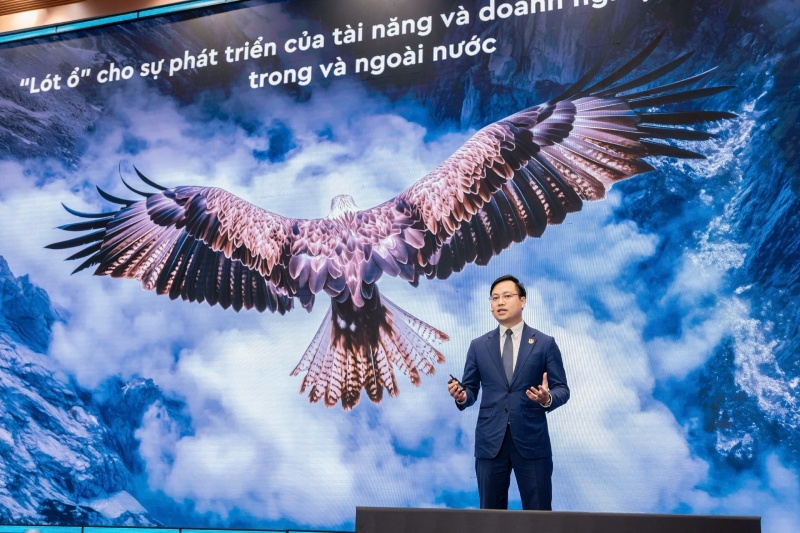 |
| Tran Quang Hung, chairman of Hanoi Innovation Centre JSC |
At the event, Lieutenant General Nguyen Thanh Tung, director of Hanoi Public Security, stressed the importance of technology in ensuring urban security. With high population density and rapid urbanisation, the force handles thousands of cases daily, requiring faster response times and higher accuracy.
Based on a digital mapping system transferred to the city in December, the police are collaborating with the centre to develop a digital public security management ecosystem. This includes real-time patrol coordination, AI-powered camera systems capable of recognising individuals and vehicles, behavioural analytics, and aerial monitoring using unmanned aerial vehicles.
“The integrated system will improve response efficiency, enhance incident handling and optimise budget resources,” he said.
Meanwhile, the centre proposed a citizen-focused super-app integrating navigation, ride-sharing, asset management, connectivity with national digital identity platforms and the iHanoi application. Initially targeting six million existing iHanoi users, the solution will be piloted in Hanoi before wider rollout.
Tran Quang Hung, chairman of Hanoi Innovation Centre JSC, said, “Innovation must translate into tangible benefits for residents, shaping daily experiences across transport, security, environment and public services.”
Closing the event, Dung called on technology firms, major corporations, investment funds, academic institutions and domestic and international partners to collaborate with the city. “The centre as a shared innovation space where development challenges are openly presented, solutions responsibly tested, and public-private resources mobilised to generate new value,” he said.
With its institutional structure, modern governance model and clear strategic direction, the centre is expected to convert scientific and technological momentum into tangible economic outcomes, contributing to Hanoi’s development in the years ahead.
 | Innovation and ESG practices drive green transition in the digital era Innovation and environmental, social and governance (ESG) practices are becoming critical enablers for businesses to access capital, particularly green credit and green bonds at preferential costs, while strengthening long-term competitiveness. |
 | NAB Innovation Centre underscores Vietnam’s appeal for tech investment Vietnam continues to attract high-quality foreign investment in technology and innovation, as global financial institutions expand their digital operations in the country. |
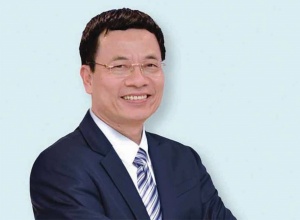 | Innovation breakthroughs that can elevate the nation Vietnam’s digital infrastructure is on an upwards trajectory. Nguyen Manh Hung, Minister of Science and Technology, talked to VIR’s Minh Anh about how the next few years may shape up for the sector. |
What the stars mean:
★ Poor ★ ★ Promising ★★★ Good ★★★★ Very good ★★★★★ Exceptional
 Tag:
Tag:Related Contents



Latest News


More News
- ASL Law opens Danang office (October 02, 2026 | 22:12)
- Project ACTIVE 2.0 launches in Vietnam to boost cervical cancer care (October 02, 2026 | 22:02)
- Vietnam launches first embodied AI conference to advance robotics ecosystem (October 02, 2026 | 17:00)
- DKSH Performance Materials – A trusted partner in Vietnam’s evolving personal care landscape (October 02, 2026 | 14:28)
- Ghanaian delegation reviews PSL Machinery’s cashew factory-management and implementation roadmap (October 02, 2026 | 10:18)
- People living with chronic kidney disease and diabetes should be aware of infectious disease risks (September 30, 2026 | 18:00)
- Keppel launches IKONIC lifestyle rewards platform (September 28, 2026 | 16:43)
- Vaccinology training programme launched to boost preventive care capacity (September 28, 2026 | 10:40)
- Ministry of Education and Training and Suntory Pepsico Vietnam sign environmental education cooperation agreement (September 25, 2026 | 15:28)
- Air transport agreement between Canada and Vietnam expanded (September 25, 2026 | 13:59)







 Mobile Version