
Government outlines solutions for economic growth

Prime Minister Pham Minh Chinh on March 3 chaired a meeting with the Policy Advisory Council to discuss the socioeconomic situation in the first two months of 2026, new global developments impacting Vietnam, and key tasks going forward.
Participants agreed the global situation has been changing rapidly and unpredictably. Strategic competition among major countries has intensified; conflicts in some regions, particularly the Middle East, continue to escalate, directly impacting maritime transport, supply chains, and global energy prices.
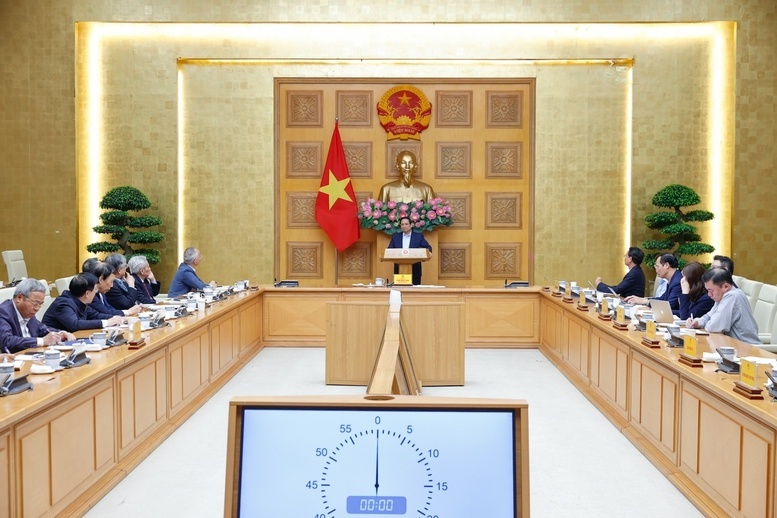 |
| Prime Minister Pham Minh Chinh 3 chaired a meeting with the Policy Advisory Council. Photo: Government Office |
International financial, monetary, and commodity markets have experienced significant fluctuations, and the development goals and trade policies of major economies have undergone numerous adjustments that are difficult to predict.
In the past two months, the country continued to maintain a positive trend in most socioeconomic areas.
Attendees discussed key policy issues aimed at supporting Vietnam’s 10 per cent growth target in 2026 while maintaining macroeconomic stability, controlling inflation, and safeguarding major economic balances. They also examined responses to external risks – including energy security, supply chain stability, and potential impacts from Middle East conflicts and oil price volatility – alongside measures to stimulate domestic consumption, boost exports, and accelerate public investment disbursement.
The prime minister explained the need to pursue the goal of maintaining macroeconomic stability, controlling inflation, and growth of 10 per cent, while ensuring balance in the economy.
He outlined nine specific groups of solutions. Firstly, regarding energy solutions, he requested that there be no shortages of petrol, electricity, or energy. He identified this as an opportunity to transition to green energy, exploiting the unique potential, outstanding opportunities, and competitive advantages of the country.
Secondly, regarding macroeconomic stability, he explained the need to continue managing macroeconomic policies in a synchronised, flexible, and effective manner; paying particular attention to close coordination between fiscal and monetary policies.
Monetary policy should be managed promptly, and effectively, stabilising exchange rates and interest rates, and increasing national reserves; contributing to macroeconomic stability, controlling inflation, boosting growth, and ensuring balance of economy.
The country must continue implementing a focused expansionary fiscal policy by boosting revenue, reducing expenditure, supporting production and business activity, and considering a stimulus package if needed. It must also prioritise capital for production, accelerate public investment, attract selective investment, mobilise public capital, and better utilise domestic resources. Review tax and fee policies to support businesses and household enterprises.
Thirdly, regarding strategic autonomy, it must strive for self-sufficiency in energy and national resources, thereby decentralising power to local authorities.
Fourth, it is critical to remove obstacles and difficulties; focus on resolving outstanding projects, remove obstacles for business households; address bottlenecks related to land, electricity, and resources; mobilie social investment to increase by 5 per cent; and boost public investment.
Fifth, emphasise workforce development, recognising people as central to the nation’s future and key drivers of change. Investing in people means investing in development—through improved policies and salaries, encouraging creativity, and protecting those who act boldly for the common good without personal gain or corruption.
Sixth, includes building and perfecting institutions that foster innovation, removing bottlenecks; reducing input costs for individuals and businesses by boosting infrastructure development, reducing compliance costs through administrative reform, and increasing the competitiveness of businesses, products, and the economy.
Seventh is to encourage the development of sci-tech, focusing on developing AI based on national and ministerial/local/unit databases, ensuring sufficient power supply, and data-driven management.
Eighth requires stimulating domestic demand and tourism; developing social housing with complete, synchronised, green, clean, infrastructure and institutions; expanding access to social housing; increasing supply to reduce housing costs. At the same time, expanding export markets and diversifying markets, products, and supply chains.
Finally, local authorities must be more proactive and assertive, eliminating waiting, relying on others, and asking for favours, and improving the capacity of grassroots officials.
 | Sustaining high growth must be balanced in stable manner Vietnam is carving a path towards sustained economic growth. Vanne Khut, an economist from the ASEAN+3 Macroeconomic Research Office (AMRO) based in Singapore, talked with VIR’s Thanh Tung about how the economy performed and offers some policy recommendations. |
 | Citi economists project robust Vietnam economic growth in 2026 Vietnam’s economy looks to maintain strong growth momentum in 2026, with robust domestic demand playing a central role in offsetting cyclical export headwinds, according to the latest Vietnam Economics Outlook report by Citi Research on February 12. |
 | Green finance and circular economy as drivers of growth As low-cost, sustainability-driven green capital increasingly flows into circular business models, the circular economy is set to evolve into a new driver of Vietnam’s economic growth. Long Viet Nguyen, partner in Consulting for EY Vietnam, spoke to VIR about unlocking green finance for such business models. |
 | Higher rates and stricter credit caps reshape lending landscape Interest rates are forecast to remain elevated in 2025, with credit flows expected to steer towards productive industries and priority economic drivers. |
What the stars mean:
★ Poor ★ ★ Promising ★★★ Good ★★★★ Very good ★★★★★ Exceptional
 Tag:
Tag:
Related Contents





Latest News




More News
- KN Holdings honoured for ESG efforts in Vietnam (October 18, 2026 | 11:00)
- APEA 2026 Vietnam honours 65 outstanding leaders and enterprises (October 17, 2026 | 10:00)
- MEXC highlights AI-driven trading and broader market access at TOKEN2049 (October 17, 2026 | 09:00)
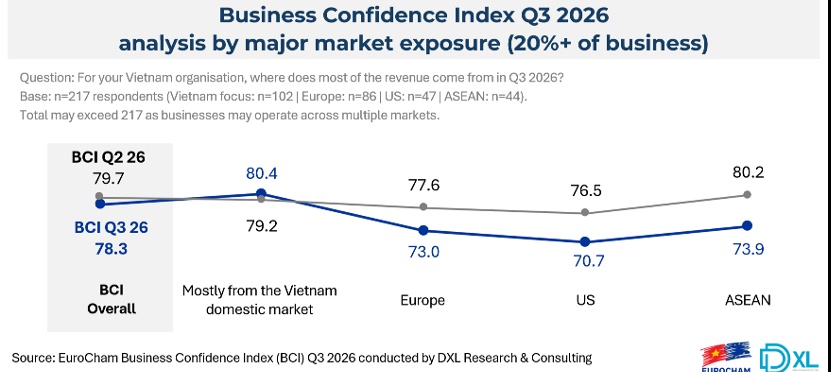
- EuroCham confidence index holds at 78.3 despite operational hurdles (October 16, 2026 | 17:27)
- Shrimp and rice firms face rising standards in export markets (October 16, 2026 | 09:00)
- SCG and Prime Group add value to the ecosystem (October 15, 2026 | 15:55)
- Project readiness key to unlocking green finance (October 15, 2026 | 12:35)
- Sovereign AI and human oversight key to secure digital government (October 15, 2026 | 12:32)
- MEXC Ventures partners with Corelia Academy: Bringing digital asset education closer to Vietnamese students (October 15, 2026 | 09:00)
- Global design expertise meets a more sophisticated Vietnam market (October 15, 2026 | 09:00)









 Mobile Version