
Monsoon Wind: Building confidence in cross-border energy investment

With wind resources in place and a 25-year power purchase agreement secured, how could a project in Laos persuade banks to commit nearly $700 million? For Monsoon Wind, the challenge was not simply to demonstrate investment viability, but to design a financing structure capable of efficiently identifying, allocating, and managing risks to bring multiple financial institutions on board.
Winning bank confidence
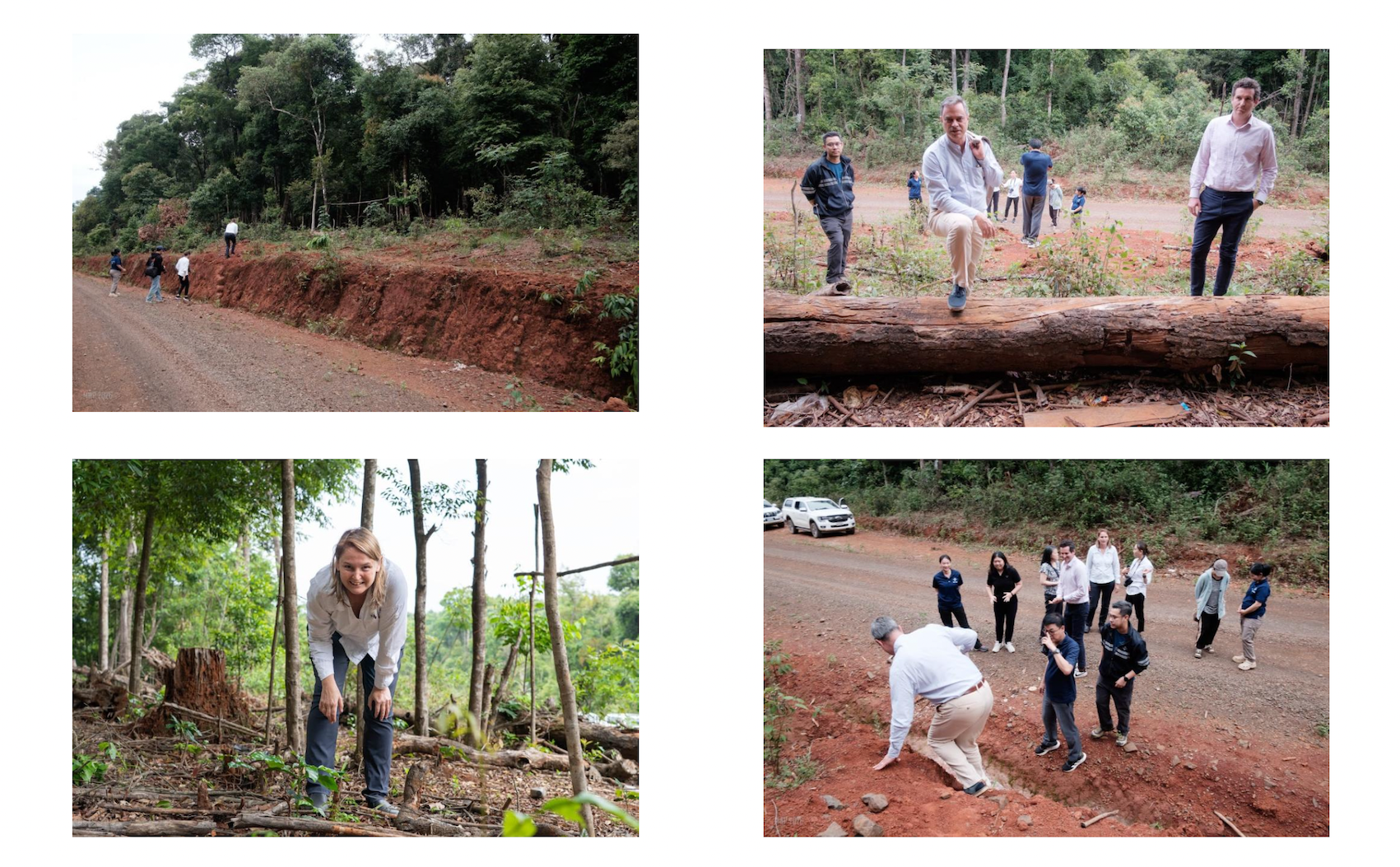 |
| Canadian Ambassador to Laos and ADB country director for Laos visit and inspect the site of the Monsoon Wind Power Project. Photos: Chakrit Duangjai, the project’s social manager |
With a capacity of 600MW, Monsoon Wind is the first large-scale wind power project in Laos, with all its electricity output exported to Vietnam under a 25-year power purchase agreement (PPA). In terms of both resource potential and market access, the project had the key prerequisites for development. But from the perspective of lenders, these alone were not enough.
Scott Roberts, ADB country director for Vietnam and head of ADB’s ASEAN Power Grid and Special Funds Unit, pointed to one major obstacle: Laos’ sovereign credit rating remains constrained.
For a large-scale infrastructure project in a market such as Laos, country risk can directly affect its ability to mobilise financing, even when a long-term power offtake agreement is already in place.
This was the hindrance that Monsoon Wind had to overcome. According to Roberts, the project’s financing structure had to be designed to identify, allocate, and mitigate risks, thereby building confidence among lenders.
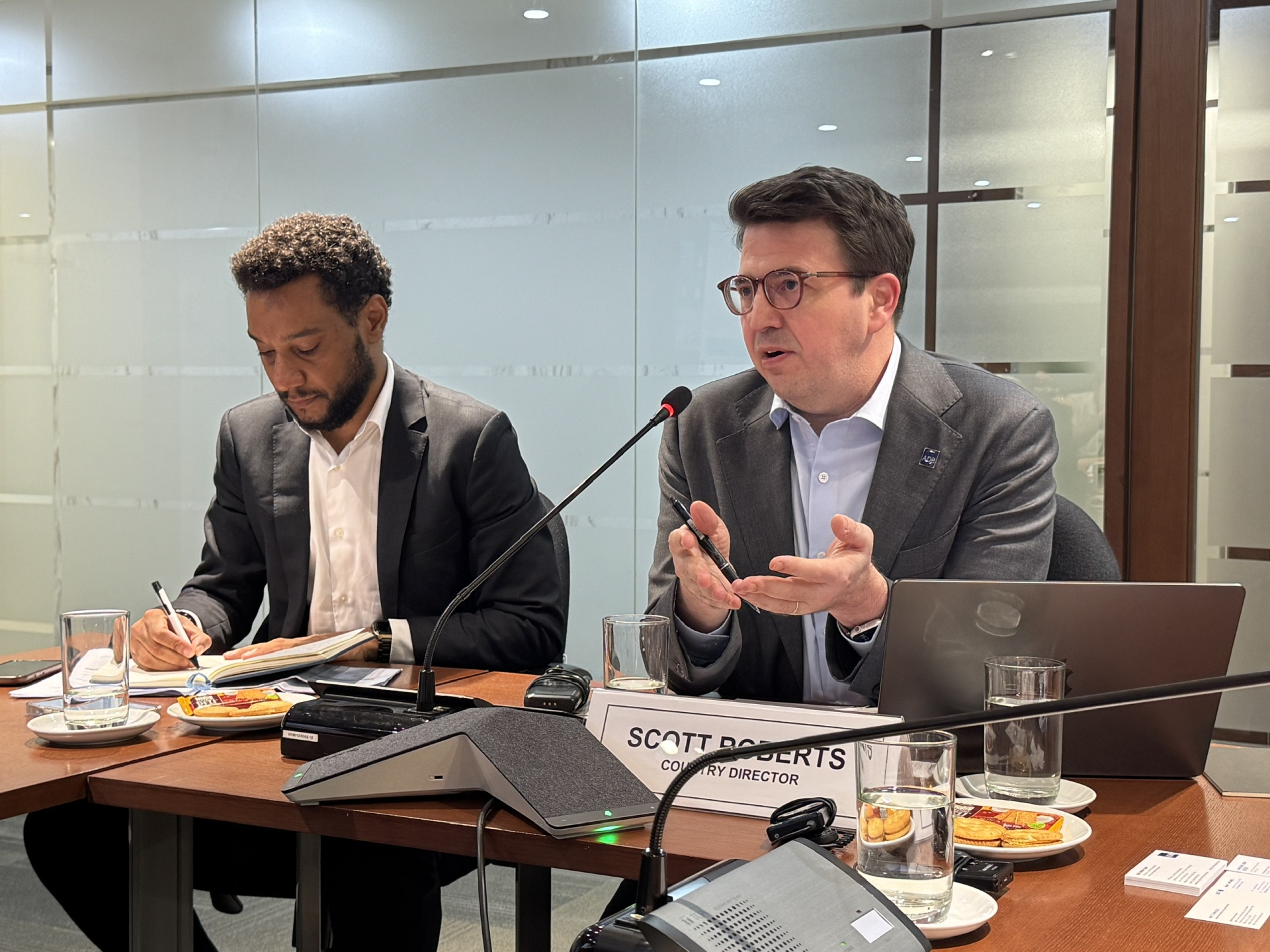 |
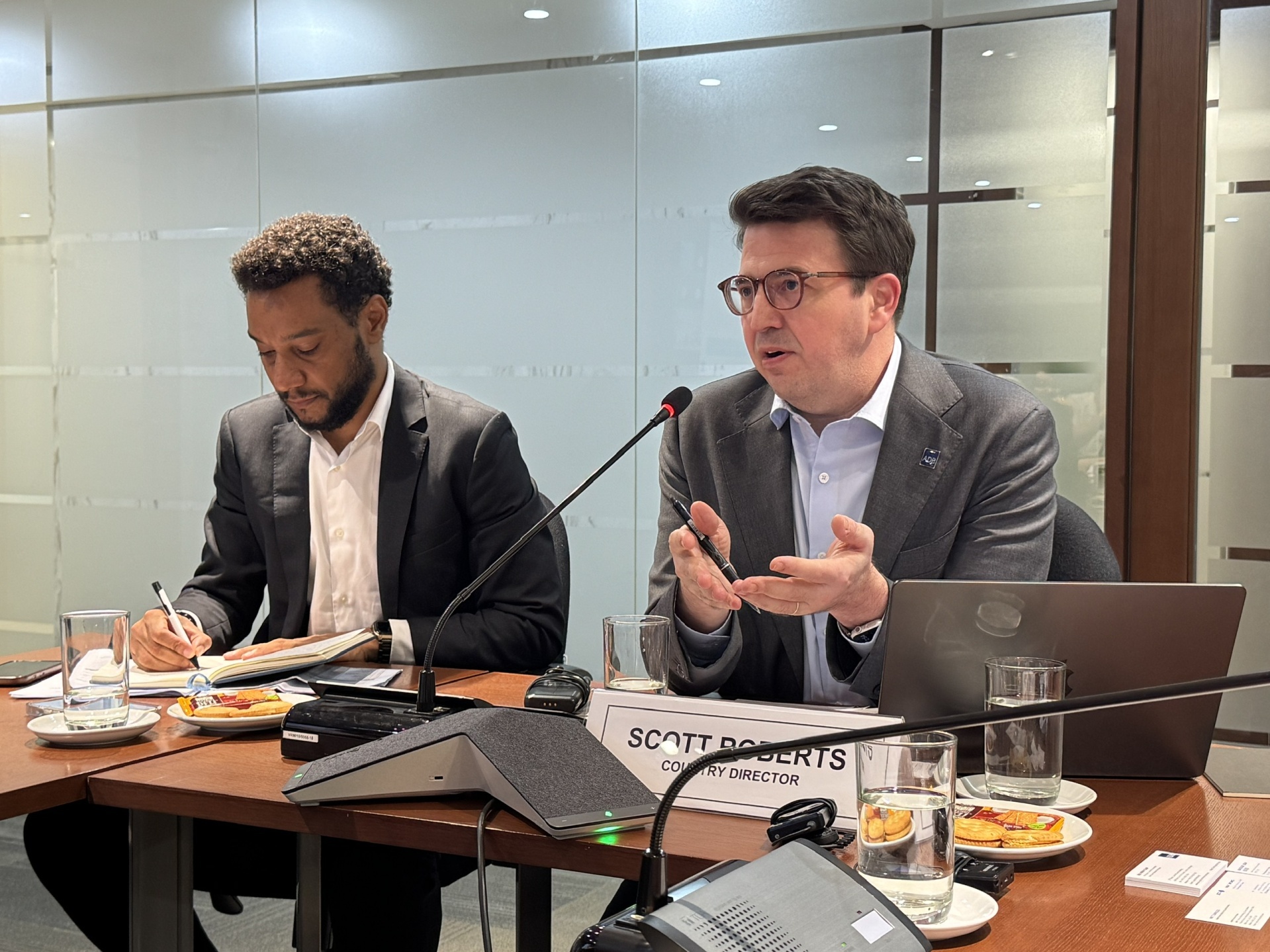
| Scott Roberts, ADB country director for Vietnam and head of ADB's ASEAN Power Grid and Special Funds Unit, briefs the visiting delegation on the project |
Some commercial banks joined the project on an unguaranteed basis. “This means they are taking on part of the project’s credit risk, rather than relying solely on guarantees to secure their loans,” he said.
When commercial banks agree to lend without guarantees, their decisions depend much more heavily on the quality of the project, its contractual arrangements, and the mechanisms in place to manage risks. Monsoon Wind therefore had to demonstrate that it could generate sufficiently reliable cash flows to safeguard their investments.
This was also why ADB’s involvement went beyond that of a financing provider. Daniel Wiedmer, director of Private Sector Infrastructure Finance for East Asia, Southeast Asia and the Pacific at ADB, said: “Our role is to help develop a financing structure capable of mobilising capital from multiple sources while creating the conditions for other lenders to participate.”
According to Wiedmer, development finance can act as a catalyst, helping projects gain access to additional funding from other institutions, including commercial banks.
“The financing structure is therefore not simply a collection of loans. It needs to combine funding sources with different tenors and terms, alongside concessional financing and grants, to address specific risks,” Wiedmer said.
Beyond mobilising capital: Sharing risks
Monsoon Wind secured total financing of approximately $692.5 million. This included a $100 million A loan from ADB. The $150 million B loan involved Siam Commercial Bank, which provided $100 million, and Sumitomo Mitsui Banking Corporation, which contributed $50 million.
In addition, the project received $382.5 million in parallel loans from the Asian Infrastructure Investment Bank, EXIM Thailand, Hong Kong Mortgage Corporation, the Japan International Cooperation Agency, and Kasikornbank.
The financing package also included $50 million in concessional financing and a $10 million grant from ADB.
Although multiple institutions participated, each source of funding came with its own terms and requirements. Combining commercial loans, concessional financing, and grants helped create a funding structure better suited to the project’s scale and risk profile.
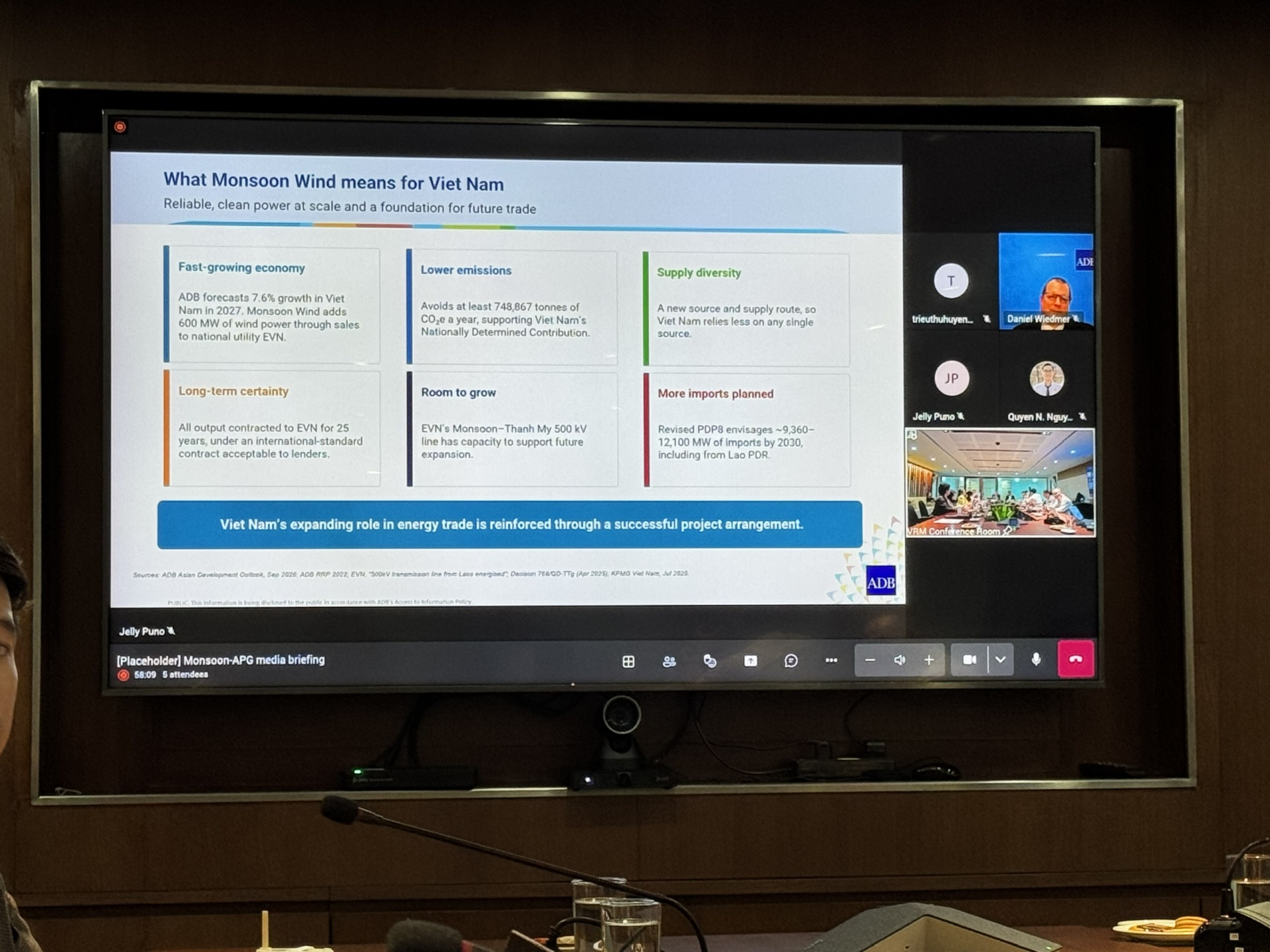 |
| An online discussion with the visiting delegation at ADB Vietnam Resident Mission on the significance of the Monsoon Wind Power Project for Vietnam and prospects for regional energy cooperation |
“ADB’s role was not simply to put $100 million into the project, but also to help establish a structure that would enable other sources of capital to participate,” Wiedmer said.
However, the most difficult challenge did not end with mobilising financing. For a wind power project, lenders also had to consider whether the projected electricity output could actually be delivered to the grid and sold in line with the financial plan.
For Monsoon Wind, ADB also helped structure a $60 million financial risk support package, comprising a $30 million loan facility and a $30 million reserve. ADB’s $10 million grant helped establish this reserve mechanism.
These instruments provide additional resources for the project to respond to adverse scenarios under predefined conditions, while also supporting liquidity when needed. This constitutes an additional layer of financial protection, with clearly defined scope and conditions for its application.
From an individual project to a regional energy network
According to Scott Roberts, the significance of cross-border electricity trade needs to be viewed from a broader perspective. “The benefits should be assessed at the level of the entire system, rather than by comparing the electricity prices of individual projects in isolation,” he said.
Roberts explained that if each country develops its power generation sources and infrastructure entirely independently, overlapping or excess investment could undermine overall efficiency.
“By contrast, coordinated planning and interconnected power systems can help optimise infrastructure investment, improve transmission efficiency, and contribute to lower average electricity costs for consumers,” he said.
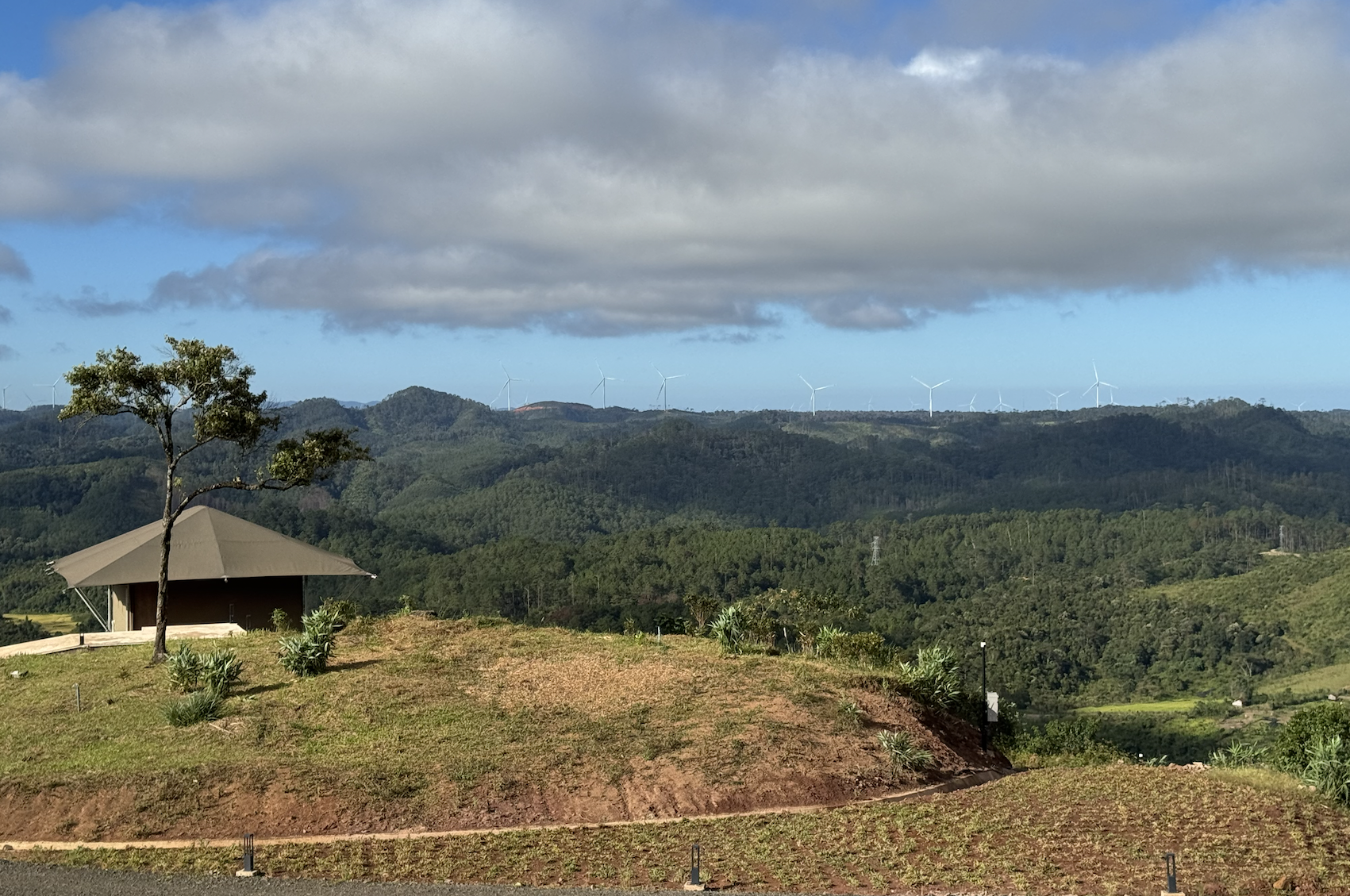 |
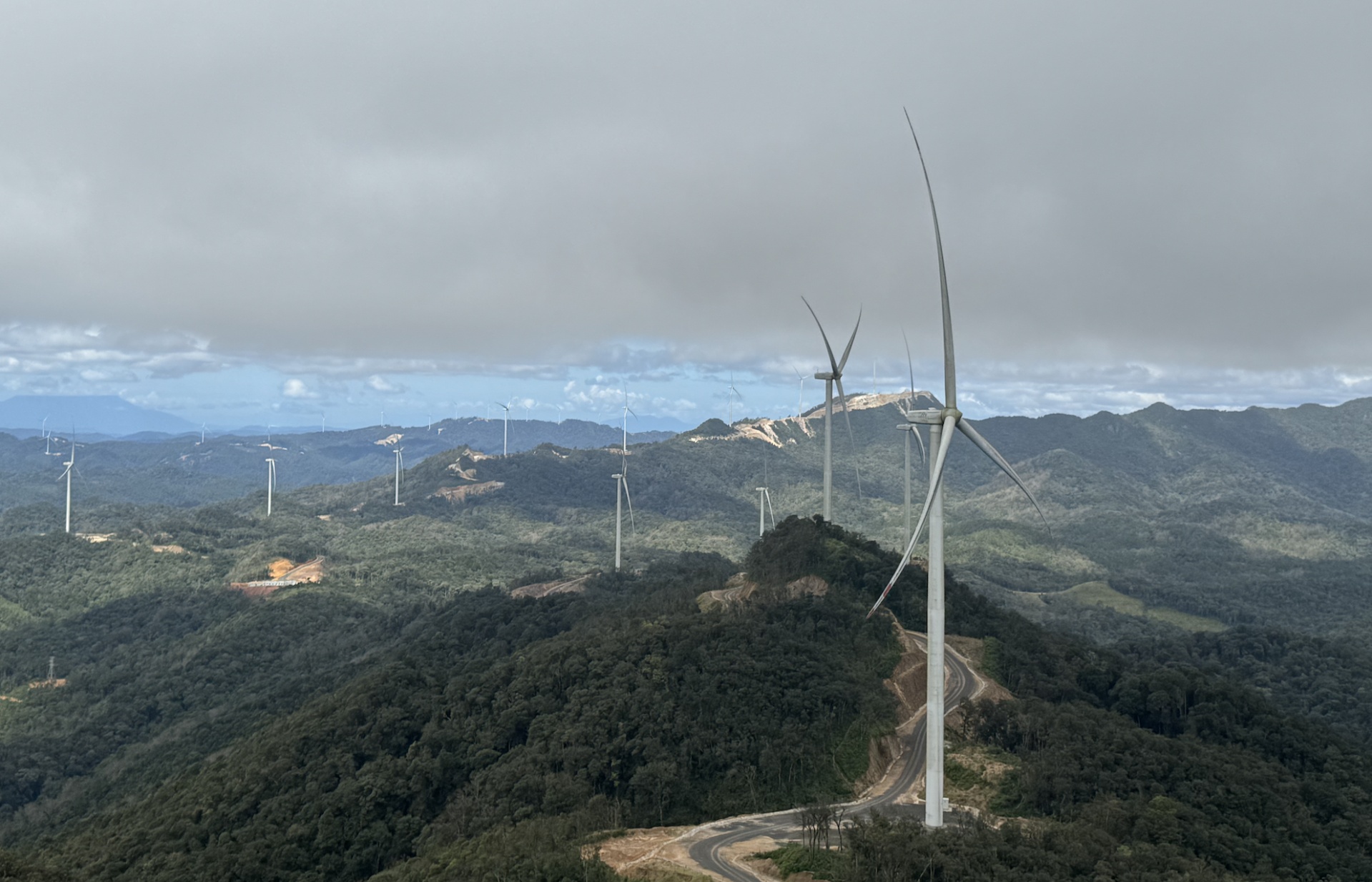
| Seen from HAKSA accommodation facility, Monsoon Wind's turbines stand amid the rugged mountain landscape of Sekong province, Laos |
This is also a shared challenge facing the ASEAN Power Grid (APG) initiative. According to ADB, electricity demand in Southeast Asia could quadruple by 2060, driving an estimated $100 billion in investment needs over the next 20 years. This funding will be required not only for cross-border interconnections, but also to upgrade national power grids, and develop new generation capacity.
The APG does not mean that countries must immediately operate a single integrated power system. According to Daniel Wiedmer, achieving this goal will require countries to address differences in power development planning, technical standards, operational arrangements, and policy frameworks.
ADB is working with the ASEAN Secretariat, member states, and development partners on policy advice, technical assistance, capacity building, and project preparation.
Such preparatory work needs to begin early, even before projects are fully investment-ready, to identify risks and strengthen their ability to attract financing.
Monsoon Wind is not a model that can be entirely replicated across all projects. Each country has its own conditions in terms of electricity markets, power development planning, grid capacity, regulatory frameworks, and risk profiles.
However, Roberts said the project's experience demonstrates that cross-border electricity trade needs to be viewed within the context of the wider power system, supported by coordination among countries and different groups of lenders.
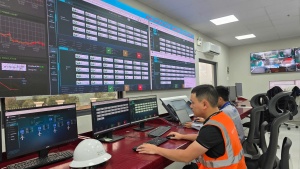 | Powering across borders: The 500kV link connecting Laos and Vietnam The Monsoon Wind project is bringing electricity from southern Laos to Vietnam through a 500kV transmission line, strengthening cross-border energy links, and laying groundwork for wider regional power connectivity. |
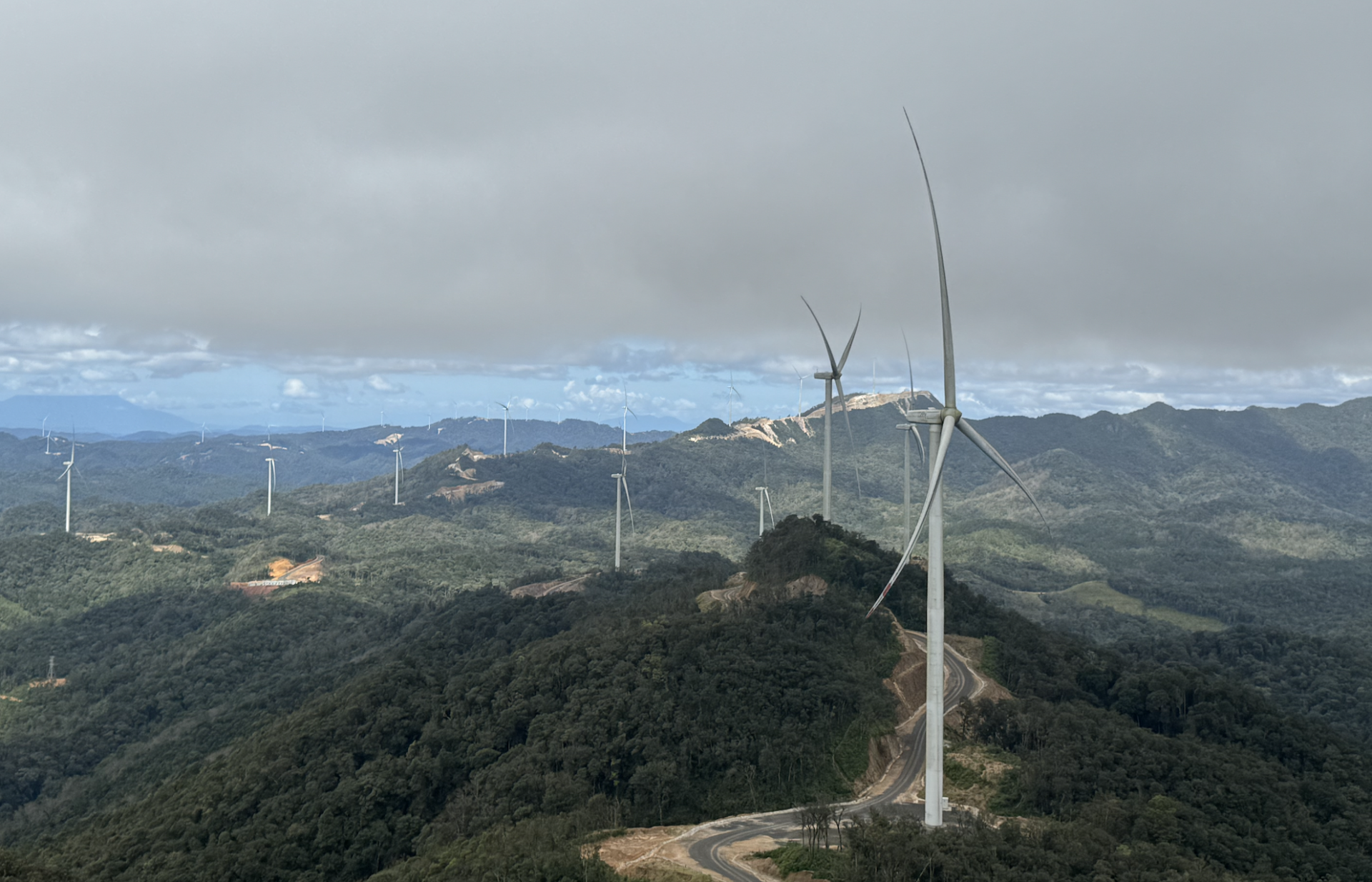 | Monsoon Wind: Powering Vietnam-Laos energy cooperation, transforming local lives As Vietnam and Laos deepen energy cooperation through the Monsoon Wind project, its impact extends beyond cross-border electricity exports to reshape livelihoods and living conditions in remote communities. |
 | Work starts on Japan–Bac Lieu wind power plant On June 20, Ca Mau People’s Committee, in collaboration with the Japan–Bac Lieu Energy JSC, held the groundbreaking ceremony for the Japan–Bac Lieu wind power plant in Dong Hai commune. |
 | Envision Energy secures 200 MW nearshore wind project in Vietnam On August 3, Chinese manufacturer Envision Energy secured an order from REE Energy to supply wind turbines for a 200 MW nearshore wind project in Vietnam. |
What the stars mean:
★ Poor ★ ★ Promising ★★★ Good ★★★★ Very good ★★★★★ Exceptional
 Tag:
Related Contents



Latest News
More News
- Monsoon Wind: Powering Vietnam-Laos energy cooperation, transforming local lives (November 17, 2026 | 09:00)
- Powering across borders: The 500kV link connecting Laos and Vietnam (November 16, 2026 | 18:00)
- Nearly two-thirds of Viettel’s IBA awards from overseas markets (October 30, 2026 | 13:56)
- Kim Long Motor eyes Central American expansion through Costa Rica partnership (October 27, 2026 | 17:34)
- Businesses accelerate overseas expansion (August 28, 2026 | 15:00)
- Outbound investment surge signals stronger push into global markets (August 13, 2026 | 18:06)
- Vietnamese groups expand their footprint across Southeast Asia (July 08, 2026 | 13:30)
- Vietnam records huge increase in outbound investment in first five months (June 10, 2026 | 13:06)
- Vingroup invests $12.75m in US-based humanoid robot research company (June 02, 2026 | 19:19)
- Vietnam channels $714 million into overseas projects (May 20, 2026 | 17:35)






 Mobile Version