
Lao Cai-Hanoi-Haiphong railway revisions to go before National Assembly

The adjustment to the investment policy for the Lao Cai–Hanoi–Haiphong railway project is expected to be submitted to the National Assembly’s session in August.
To finalise the document for submission, the National Assembly Standing Committee requested the government to direct the drafting agency and relevant bodies to urgently review, incorporate, and fully address the comments of the Standing Committee, the National Assembly chairman, and the verification agency.
Specifically, it is necessary to clarify the rationale for revising the investment policy, comprehensively assess the impact of changes to planning, administrative boundaries, the national railway network development strategy, regional connectivity requirements, and economic growth projections, and review transport demand forecasts to ensure the project is scientifically sound and feasible.
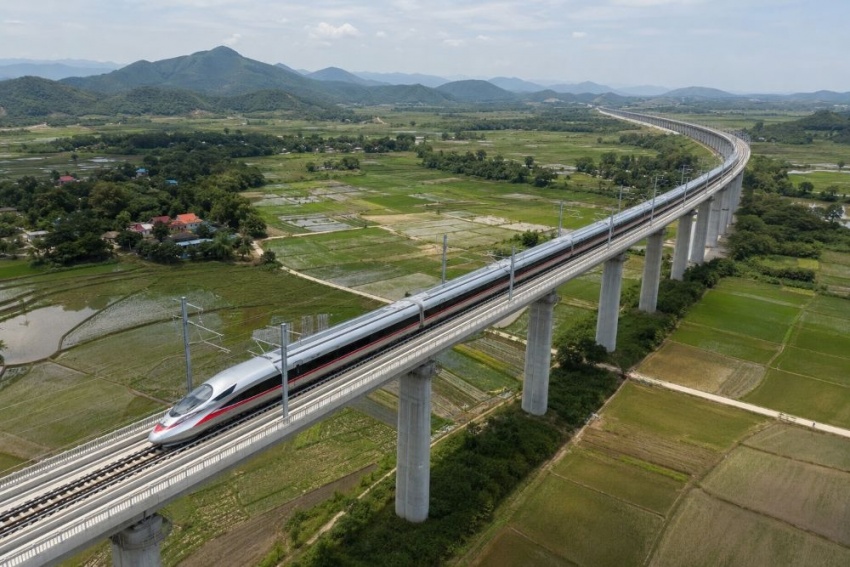 |
| Illustration photo: baodautu.vn |
Along with that, it is necessary to clarify the basis for determining the investment scale, phasing plan, and selection of technology for each section of the route, ensuring optimal efficiency.
The committee proposed clarifying the roadmap for transitioning to clean fuel for branch lines connecting seaports in cases where diesel locomotives are used, ensuring a net-zero, and researching additional policies to gradually develop a domestic railway industry.
The standing committee requested refinement of the basis for determining the preliminary total investment; a clear explanation for the cost increase; solutions to control costs; and clarification of the economic, social, national defence, and security benefits of the project.
In addition, the government is requested to clarify the plan for mobilising and allocating capital; finalise land clearance and resettlement; review overall progress, especially the plan for implementing the branch line connecting the southern Haiphong station with Nam Do Son Port; and supplement the inspection and monitoring and the periodic reporting ensuring that the project is implemented properly.
According to the government's proposal, the revised investment policy for the railway includes many important changes regarding scope, scale, technology, land use requirements, total investment, and implementation.
Specifically, the project starts at the railway junction across the border in Lao Cai province and ends at southern Haiphong station, with a main line length of approximately 363 km and branch lines of approximately 63 km, passing through six provinces and cities including Lao Cai, Phu Tho, Hanoi, Bac Ninh, Hung Yen and Haiphong.
The government has proposed new investment in a single-track section from Lao Cai station to Bac Hong station; a double-track section from Bac Hong station to southern Haiphong station and the Yen Vien–Gia Lam section, using a 1,435 mm gauge, for shared passenger and freight train operation.
The speed will be up to 160 km/h on the main line from the new Lao Cai station to the southern Haiphong station, 120 km/h through the Hanoi railway hub area, and 80 km/h on remaining sections.
The main line and the Yen Vien–Gia Lam branch section propose to use electrified railways. Meanwhile, the branch lines connecting to seaports will initially use diesel, with a transition to clean energy in the future.
According to the plan, the project requires the acquisition of approximately 2,075 hectares of land, including about 784ha of rice paddy, 897ha of forest, and 394ha of other land types; not including approximately 1,048ha for material mines and waste disposal sites. Preliminary estimates indicate more than 25,500 people will need to be relocated.
The preliminary total investment is proposed to be adjusted to nearly $11.15 billion.
The feasibility study report has been prepared since 2025, aiming for the project to be completed by 2030. The branch line connecting the southern Haiphong station with Nam Do Son Port will be implemented concurrently with the investment progress of Nam Do Son Port.
Other aspects will be implemented in accordance with National Assembly Resolution No.187/2025/QH15.
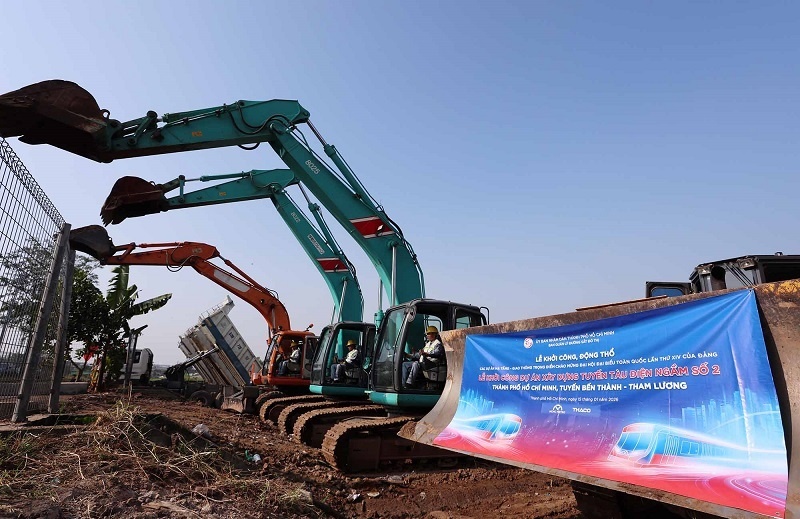
 | Ho Chi Minh City to start construction on four urban railway lines Ho Chi Minh City People’s Committee is accelerating the procedures to start construction on four urban railway lines from now until the end of 2026, with the goal of completion by the end of 2030. |
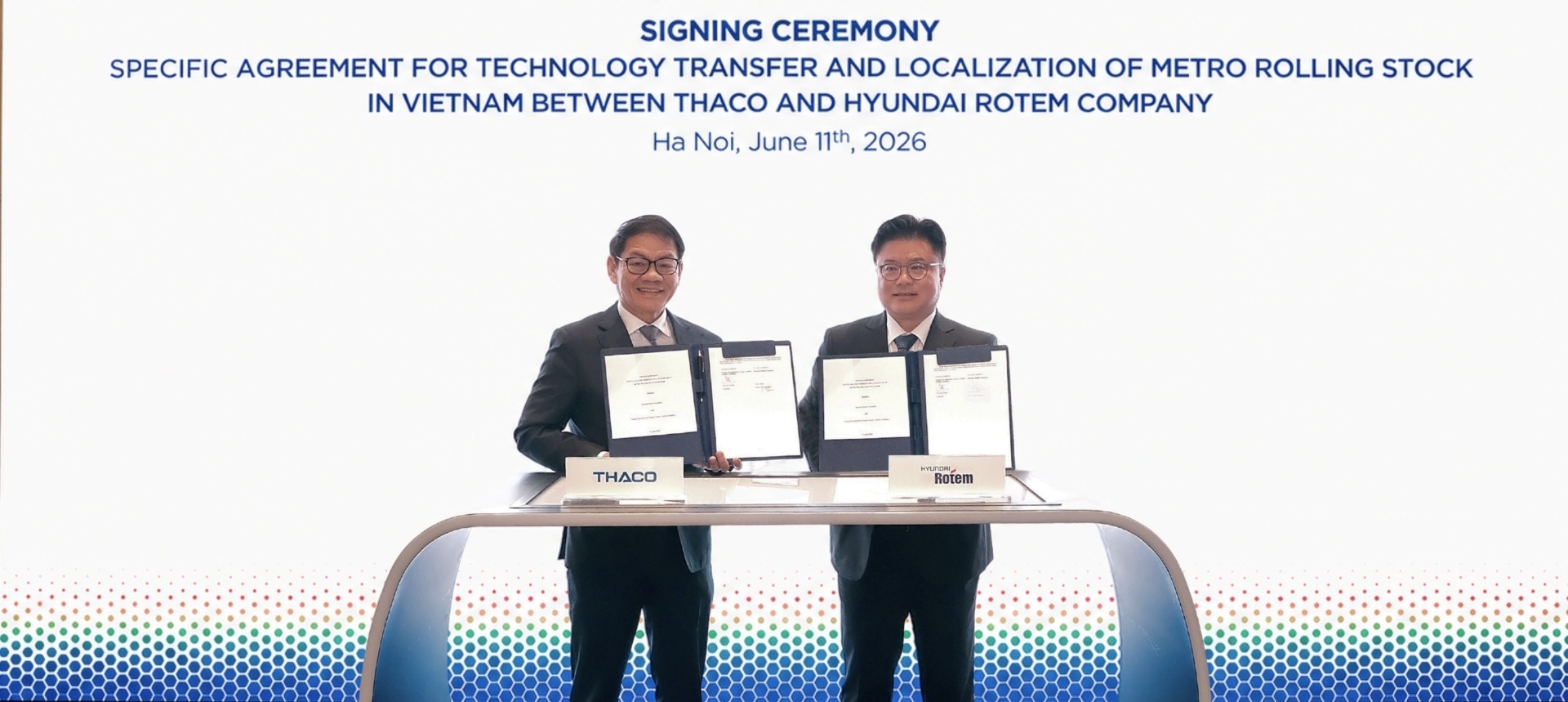
 | THACO, Huyndai Rotem to advance railway localisation On June 11, THACO and South Korea’s Huyndai Rotem signed a specific agreement for technology transfer and localisation of metro rolling stock in Vietnam. |
 | Railway administrative procedures amended to support investment New railway industry regulations are expected to streamline administrative procedures and boost business and investment activities in the sector. |
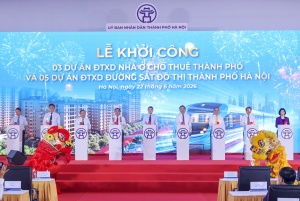 | Hanoi breaks ground on three rental housing, five urban railway projects Hanoi People's Committee has broken ground on three rental housing projects and five urban railway projects, with Prime Minister Le Minh Hung in attendance. |
What the stars mean:
★ Poor ★ ★ Promising ★★★ Good ★★★★ Very good ★★★★★ Exceptional
 Tag:
Tag:Related Contents





Latest News

More News
- VIR seminar to explore innovative global supply chains in Hanoi (October 07, 2026 | 12:04)
- Vietnam’s registered FDI surpasses $50 billion in nine months (October 07, 2026 | 10:30)
- Samsung Electro-Mechanics to add $1.85 billion semiconductor investment in Thai Nguyen (October 06, 2026 | 18:23)
- Electronics funding will be won via a capable ecosystem: SGS (October 06, 2026 | 09:00)
- LNG power plant projects risk falling behind schedule (October 03, 2026 | 09:00)
- Pandora opens world’s largest fine jewellery crafting facility (October 02, 2026 | 22:21)
- An Phat 5 Industrial Park positions for new wave of investment in northern Vietnam (October 02, 2026 | 09:00)
- Hanoi to launch portal to ease hurdles for tech businesses (October 01, 2026 | 09:00)
- Foreign investors to be widened for market access (September 30, 2026 | 17:54)
- Phu Quoc Airport planning adjusted to serve APEC 2027 (September 30, 2026 | 17:35)









 Mobile Version