
Growing in motion – TOD: reshaping urban lifestyle and space

The organisers included the Ho Chi Minh City Handicraft and Wood Industry Association (HAWA), the Ho Chi Minh City Association of Construction and Building Materials (SACA), and the Ho Chi Minh City Architects Association.
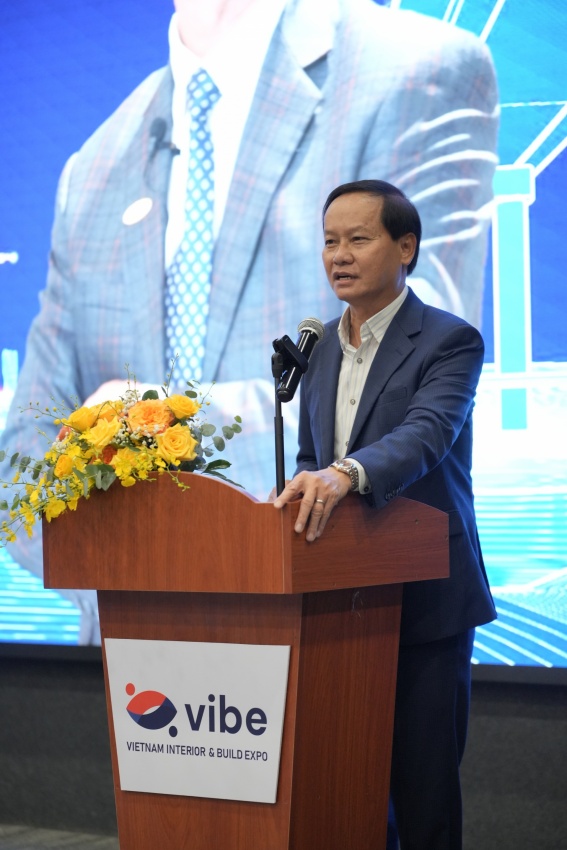 |
| Phung Quoc Man, chairman of the Ho Chi Minh City Handicraft and Wood Industry Association (HAWA). Photo: Organising Board |
Themed “Growth in Motion,” the seminar was designed to help businesses across the architecture, interior, and building materials supply chains identify the opportunities and risks arising from this wave of transformation.
According to Phung Quoc Man, chairman of HAWA, the decision to make TOD the focus of the seminar was driven by developments already taking place across the city.
“Ho Chi Minh City is accelerating the development of its urban railway network and ring roads, while implementing a pilot mechanism for transit-oriented urban development under Resolution No.98/2023/QH15. TOD is therefore no longer merely a planning concept, but is gradually taking shape through new development areas, projects, and market demand,” said Man at the event.
The shift will affect not only transport but also the way the city organises urban development, housing, commercial areas, offices, and services. It will also create new requirements for the construction, building materials, and interior industries.
“The market will require more efficient buildings, more sustainable materials, and more flexible living spaces. For businesses, the opportunity lies not only in the number of projects that emerge, but also in their ability to participate in those projects with the right products, solutions, and capabilities. This requires businesses to gradually move from selling individual products to providing integrated solutions, while engaging earlier in the value chain alongside developers, architects, designers, and contractors,” said Man.
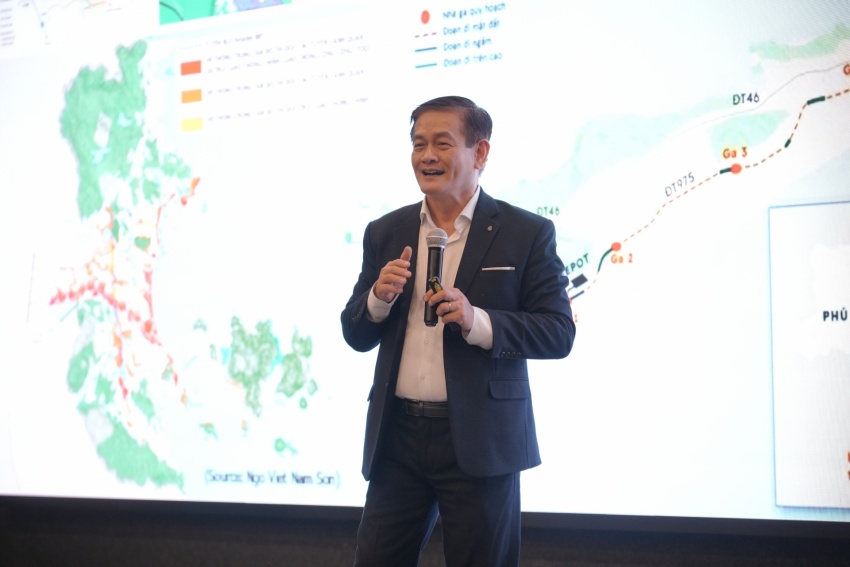 |
| Dr. Ngo Viet Nam Son, chairman of Ngo Viet Architects & Planners. Photo: Organising Board |
According to Dr. Ngo Viet Nam Son, chairman of Ngo Viet Architects & Planners, mechanisms to develop mixed-use service, commercial and residential complexes around transport hubs are essential to optimise land use and create a sustainable growth engine for urban development.
“I think TOD is a very new urban development model in Vietnam, marking a fundamental shift from cities built around shophouses, motorbikes and narrow streets towards public transport-oriented development. This is not only a change in urban planning and investment approaches, but also a change in lifestyle, with high-rise buildings, large parks, pedestrian-friendly spaces, and interconnected public services,” Son said.
In particular, following the expansion of Ho Chi Minh City after an administrative merger, TOD could facilitate the development of self-contained suburban areas where residents can access jobs, schools, hospitals, parks, and essential amenities within a 15-minute walk. As residents no longer need to travel into the inner city every day, pressure on central areas will ease, creating more room for urban regeneration, additional green spaces, and public facilities.
“I believe this presents an opportunity for Ho Chi Minh City to move towards a greener and healthier urban model, reducing traffic congestion, flooding, and pollution while bringing an entirely new way of life to its residents,” he added.
The idea of “Growth in Motion” discussed at the seminar also serves as the guiding theme of the Vietnam Interior & Build Expo (VIBE 2026), which will take place in Ho Chi Minh City from September 30 to October 3.
While previous editions laid the groundwork for exploring future living spaces, VIBE 2026 reflects the architecture, interior, and construction industries’ tangible transformation as Vietnam enters a new phase of national development.
 | TOD model essential for real estate Transit-oriented development, an urban model based on public transportation, will create more opportunities for Vietnam’s urban development. |
 | British rail businesses strengthen cooperation in Vietnam On January 19-23, the British Embassy in Hanoi and the British Consulate General in Ho Chi Minh City, through the Green Cities, Infrastructure, and Energy Programme, is organising the UK Rail Mission to Vietnam. |
 | Delivering urban railways and transit-oriented development Vietnam’s efforts to expand urban rail and sustainable city development have increased attention on transit-oriented development and digital delivery tools. Giang My Huong, director of Capital Projects and Infrastructure at PwC Vietnam, shared with VIR’s Khanh Linh how PwC is supporting climate-resilient urban transport delivery. |
What the stars mean:
★ Poor ★ ★ Promising ★★★ Good ★★★★ Very good ★★★★★ Exceptional
 Tag:
Tag:Related Contents


Latest News
More News
- MIK Group launches House of MIK in Ho Chi Minh City (October 03, 2026 | 17:00)
- Vietnam hospitality shifts towards integrated mixed-use developments (October 03, 2026 | 10:00)
- Stavian IP accelerates its modern expansion (October 02, 2026 | 14:00)
- ESG for future-ready industrial success (October 02, 2026 | 09:00)
- Green Future Awards honour five leading industrial park developers (October 01, 2026 | 22:20)
- Green transition leaders honoured at Green Future Awards 2026 (October 01, 2026 | 22:10)
- Six developers honoured as Emerging Green Industrial Property Developers (October 01, 2026 | 22:00)
- Why logistics will define the next phase of growth (October 01, 2026 | 09:00)
- Urban Development Law takes effect on October 1 (September 30, 2026 | 17:49)
- Phu My Hung to demolish Lawrence S. Ting Building for new development (September 30, 2026 | 17:43)



Latest News




 Mobile Version