

Digital transformation of cooperatives in new era

A roundtable on the digitalisation of cooperatives was held in Hanoi on August 13, as part of efforts to concretise the goals of Resolution No.57-NQ/TW on breakthroughs in science, technology development, innovation, and national digital transformation.
 |
| A roundtable on the digitalisation of cooperatives. Photo: Bich Thuy |
The country is in the process of vigorously implementing many important policies: Resolution No.57-NQ/TW; Resolution No.68-NQ/TW on private economic development; and Resolution No.193/2025/QH15 on piloting special mechanisms to create breakthroughs in science and technology, innovation, and digital transformation.
At the event, National Assembly deputies, experts, representatives of ministries, and cooperative leaders analysed the current situation, shared domestic and international experiences, and proposed solutions to promote digital transformation among cooperatives.
Some cooperatives in the fields of agriculture, services, logistics, and others have initially deployed digital platforms for their management and business activities. However, there are still many challenges such as unsynchronised technology infrastructure, low digital training, limited investment resources, and an incomplete legal framework and support policies.
Nguyen Bao Son from the Vietnam Cooperative Alliance (VCA) said that one of thee difficulties is lack of capital to expand production and business and improve efficiency, and the lack of collateral assets needed to borrow from banks.
He added that cooperatives are also slow to adapt to the market, lack development motivation, and have not really invested in developing digital human resources or applying sci-tech.
“We need to focus on removing difficulties from mechanisms, especially capital and technology. Local authorities need to quickly deploy and implement these resolutions, creating favourable conditions for cooperatives to develop sustainable value chains,” he suggested.
“There must be specific credit and digital transformation policies for cooperatives, as well as support for market linkages and technology training,” he said.
Nguyen Xuan Tuan, president of Institute of Education and Environmental Science, shared that over the past three years, the institute has collaborated with more than 300 enterprises and cooperatives to research and develop a pilot e-cooperative model, a solution for financial and legal digital transformation for individual business households and micro-enterprises.
This model has received special attention from the government, technology companies committed to supporting the platform, and banks that provide financial services.
According to the project, Phase 1 (2026-2027) will attract at least 90,000 individual business households, aiming to deploy nationwide in the next phases. The goal is to make cash flow transparent, increase budget revenue, and improve national competitiveness.
The project has been sent to the Ministry of Finance, the Ministry of Science and Technology, and the Vietnam Cooperative Alliance for consideration.
They agreed that Resolution 57 opens up new opportunities for the collective economy to enter the digital age. However, to turn opportunities into real strengths, close coordination is needed between the state, supporting organisations, and the cooperative community, thereby turning the e-cooperative from a pilot model into a new driving force for socioeconomic development and international integration.
The successful development of this model is expected to contribute significantly to the goal of having at least two million effectively operating enterprises in Vietnam by 2030, while creating new momentum for the development of the digital and collective economies.
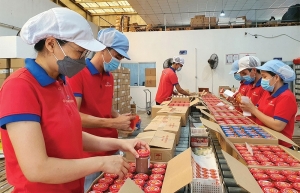
 | Cooperatives receive support to adopt e-commerce E-commerce is widely considered an effective and sustainable solution to help cooperatives improve their competitiveness, and boost production and exports, but the number of cooperatives that have gone online remains modest, prompting the Vietnam Cooperative Alliance (VCA) to support them in this regard. |
 | NA deputies bemoan slow lending plans The slow deployment of a pro-business monetary policy is making it hard to provide timely assistance for enterprises, cooperatives, and household businesses. |
 | Forum focuses on collective economy On February 2, 2024, the Forum on Collective Economy and Cooperatives with the theme "Completing the State's supporting policies according to Resolution No.20-NQ/TW - A motivation to promote collective economy and cooperatives in the new period" took place under the chairing of Prime Minister Pham Minh Chinh. |
 | Ireland supports Vietnam to develop capabilities in agricultural cooperatives Seminars on “Cooperative economy development through innovation and quality improvement” were held in Hanoi on July 30 and in Can Tho on August 1, supported by the Embassy of Ireland in Vietnam. |
 | Hanoi seeks Farmers Association role in developing collective economy Hanoi People's Committee has implemented a plan for members of the Vietnam Farmers' Association to develop a collective economy in the agricultural sector. |
What the stars mean:
★ Poor ★ ★ Promising ★★★ Good ★★★★ Very good ★★★★★ Exceptional
 Tag:
Tag:Themes: Digital Transformation
- Amazon Kuiper licensed for private satellite telecommunications network in Vietnam
- AWS ramps up security tools amid growing AI risks
- Machine vision and 3D: How logistics and warehousing are catching up with manufacturing
- Nvidia proposes areas of strategic cooperation with Vietnam
- Draft legal amendments target red tape and decentralisation
Related Contents









Latest News





More News
- MTA Hanoi 2026 powers next phase of northern manufacturing (September 21, 2026 | 12:00)
- AWS ramps up security tools amid growing AI risks (September 21, 2026 | 09:00)
- Honda Vietnam launches EURO 4-compliant SH Mode 2027 (September 19, 2026 | 17:04)
- Vietnam urged to deepen FDI linkages with domestic businesses (September 18, 2026 | 17:45)
- VPI and Technip Energies sign MoU on energy cooperation (September 18, 2026 | 10:25)
- Cambodia-Vietnam Customs Border Meeting agrees to strengthen cooperation (September 18, 2026 | 10:00)
- Vietnam infrastructure push drives demand for advanced technologies (September 17, 2026 | 16:00)
- Fortinet earns 'Leader' status in Gartner firewall report for second year (September 17, 2026 | 15:58)
- Vietnam Water Week 2026 focuses on digital transformation (September 17, 2026 | 15:41)
- Industrial firms tap into $38.5m procurement demand (September 17, 2026 | 08:00)









 Mobile Version