
Industrial segment shaped by M&As

 |
| Alex Crane, managing director of Knight Frank Vietnam |
Momentum in Vietnam’s real estate built through the back end of 2024, only to be curtailed by the US tariff situation earlier this year, which essentially put a halt on the markets for the best part of four months. Virtually no decisions seemed to be getting made by occupiers, investors or developers during this time, for obvious reasons.
Had Vietnam been as dependent on ‘grey area’ manufacturing or transhipment as the US may have been alluding to, it might have stopped for longer. What happened, however, is that from around September, sentiment swung back; occupiers were signing leases, investors were looking for opportunities, and developers were launching projects.
The takeaway is that Vietnam is more robust than most had thought, and that a panic circulating in the international press and from many commentators was overhyped.
Real estate, even more so in manufacturing and logistics, is slow-moving. It takes years to move supply chains and establish large-scale factories, and these plans do not derail or cancel overnight. This, alongside swift reaction from the Vietnamese government through fast diplomatic engagement and commitments on topics such as transhipment, meant Vietnam sent a strong signal of compliance and reliability. To investors and manufacturers, this is highly investible.
What resulted is a year-to-date transaction volume of $537 million across the real estate sector, up 9 per cent on the total of 2024, signalling investor confidence.
Industrial park (IP) land rent asking prices are up 4-5 per cent, not ‘big and beautiful’ but perfectly stable and sustainable. Occupancy held above 80 per cent and net absorption of IP land was up 30-40 per cent. Ready-built warehousing (RBW), as we have stated over the last few years, has remained the most occupier-favourable in terms of rent pricing and incentives.
After a long hiatus, which was a result of the pandemic rather than tariffs, logistics firms and e-commerce occupiers are active again, keeping occupancy (80-85 per cent) tracking along with new supply, making the submarket well-balanced, competitive and attractive for multinational corporations to enter.
Ready-built factories (RBF) have outperformed RBW as expected, more than double the absorption while commanding higher rents, averaging $5 per square metre per month versus $4.5 per sq.m for warehousing.
Steady flows
Driving factors for investment in Vietnam were led by familiar sources being South Korea, Singapore, and Japan, and indicate that supporting manufacturers forming part of the regional production and supply chain offer continued demand, even if a few ‘queen bee’ manufacturers are on hold for a short while.
Foreign direct investment flowed steadily into manufacturing and processing at $16 billion, approximately 62 per cent of all such funding. This was reflected in the purchasing managers index Purchasing Managers’ Index, which remained over the 50 point threshold since July, albeit marginally, which reflects growth expectations and the realisation through quarters two and three that the tariffs would not cut as deeply as some had feared.
Looking at merger and acquisition activity for 2026, the above data sets the playbook and indicates the market’s direction. Investors are keen on new IPs and RBF, less on RBW. Alongside more queen bee manufacturers choosing Vietnam, we anticipate that supporting manufacturing industries will continue to be attracted to our market and will thus drive investor interest into core industrial hubs around Ho Chi Minh City, Hanoi, Binh Duong (now part of Ho Chi Minh City) and Haiphong, where occupancy has consistently been 90 per cent for IP land and RBFs.
Land and RBFs will remain the safest bets, with reasonably good speed to market in terms of permitting and construction. Capital for warehousing, cold-chain logistics will exist but remain a smaller proportion of the allocations.
Other drivers for manufacturing follow longstanding themes of cost of labour and great infrastructure improvements, lowering export costs.
What we also learned this year is that those improvements are also supporting local distribution and consumption, which has proven to be robust during the tariff disruption.
Supply chain and production diversification to include Vietnam has continued. Interestingly, at the height of the tariff fear, some firms had planned capacity for more production in Vietnam, only to review that as tariffs settled, particularly as tariffs in China were pulled back as relations with the US improved.
This shows Vietnam is not alone in the impacts earlier this year, but is also not immune to that production capacity flowing both ways with the tariff tide either, although on balance, Vietnam remains a net-winner. I will acknowledge here, my April prediction of Chinese firms slowing down was wrong, it did, for the briefest while, but demand from manufacturers seems to have rebounded very strongly indeed.
The road ahead
There are a few items to work through in 2026. Limited land is a constraint, which we hope will be supported by another key topic for the coming 12 months, and a key for investor confidence, which is the merging and streamlining of administrative units, which should allow for more large-scale sites being approved.
This is, of course, a double-edged sword for developers; more supply equals more rent competition. Broadly, this should go some way to keeping land and rent prices competitive to attract more foreign multinationals. However, investors and developers will be balancing the competitive rent income with valuations and construction expenses.
On top of this, the new land law, largely welcomed by the industry for promoting market-based land price tables and a move to more transparency, brings with it a higher entry cost for developers on land and compensation expenses. An indirect result of the land law may exacerbate a theme we have been putting to market for a while: consolidation among smaller industrial development platforms or speculators, most likely through acquisition by larger peers or operators.
Land and construction costs continue to rise, and smaller operators that do not have a national scale, solid development pipeline in place or strong balance sheets may call for capital or a quiet exit.
New to market, well-capitalised international developers are expected to continue to enter Vietnam, via a merger/indirect route may make sense in some cases, but again, asking prices will need to be offered with some real motivation. Nonetheless, industrial development in Vietnam requires a larger balance sheet than ever before, and some existing participants may step aside.
To attract the best occupiers and investors, it will be imperative that there is legal clarity on land and payment of land fees, now non-negotiable under the new land law. Land use rights terms are now a top-line question for investors, and these diminishing periods must be factored into valuations and development strategy.
Environmental, social, and governance criteria will continue to play a part in investment decisions for multinational occupiers, be it acquisition or leasing RBF or RBW. As with office rents over the last 12 years, a modest but valuable green premium is emerging in rents for factories and logistics properties.
Our list of potential capital partners looking to work with local groups becomes more flexible with each year. Solid financial underwriting and valuations will underpin any big moves from foreign investors, and the clock is ticking for some larger deal activity; demand exists.
The market moves into 2026 much as it did at the end of 2024, with a measured confidence in manufacturer and occupier demand and local developer and investor capability providing the platform for Vietnam’s continued rise up the value chain.
Much of what is required to be a strong regional market is in place: trade agreements, infrastructure spending, and legal reforms. A period of relative calm may be all that is required from this point onwards to support Vietnam’s industrial real estate continuing its rise as one of Asia’s most attractive destinations for manufacturers.
What the stars mean:
★ Poor ★ ★ Promising ★★★ Good ★★★★ Very good ★★★★★ Exceptional
 Tag:
Tag:Related Contents
Latest News

More News
- MIK Group launches House of MIK in Ho Chi Minh City (October 03, 2026 | 17:00)
- Vietnam hospitality shifts towards integrated mixed-use developments (October 03, 2026 | 10:00)
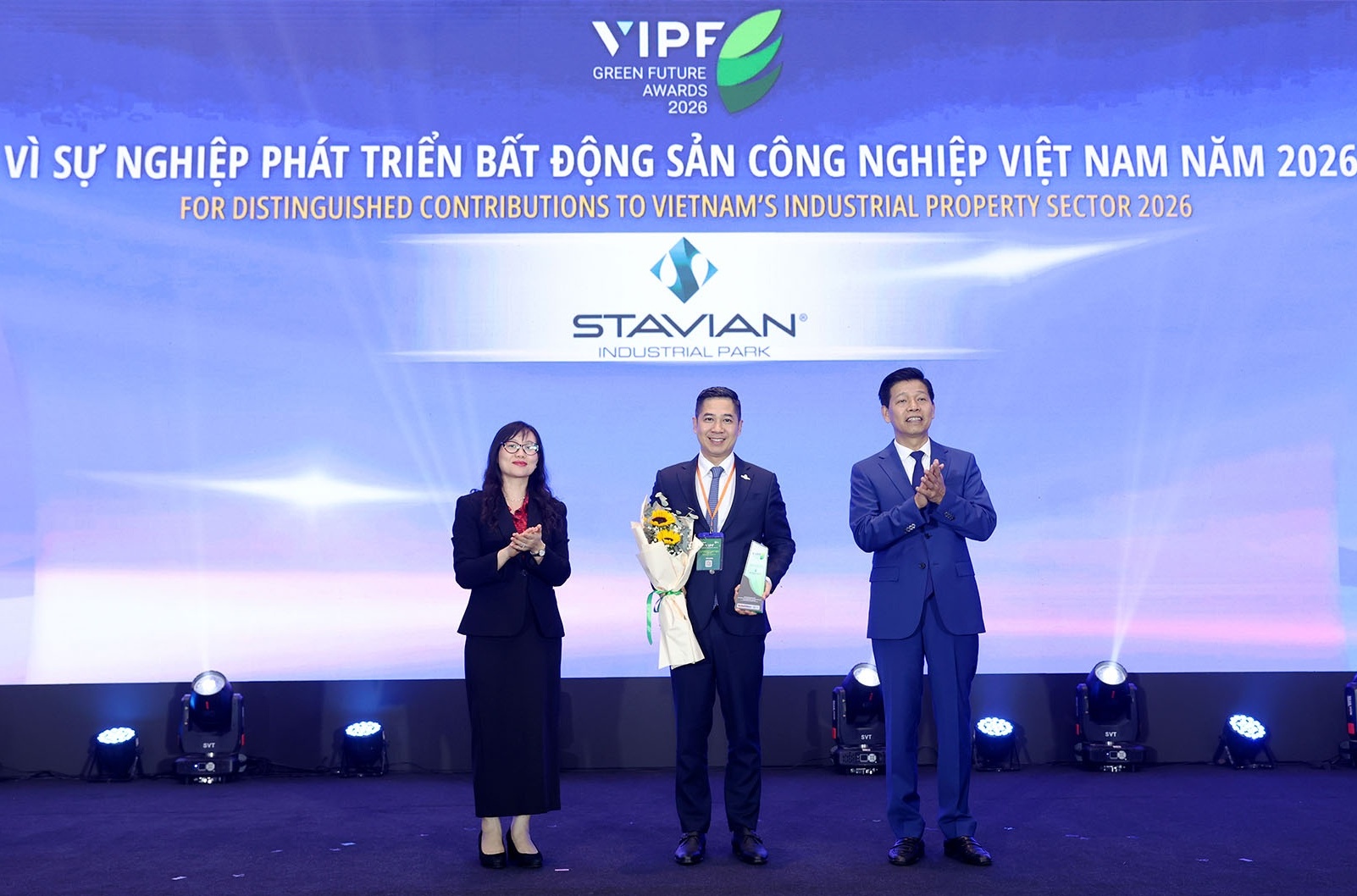
- Stavian IP accelerates its modern expansion (October 02, 2026 | 14:00)
- ESG for future-ready industrial success (October 02, 2026 | 09:00)
- Green Future Awards honour five leading industrial park developers (October 01, 2026 | 22:20)
- Green transition leaders honoured at Green Future Awards 2026 (October 01, 2026 | 22:10)
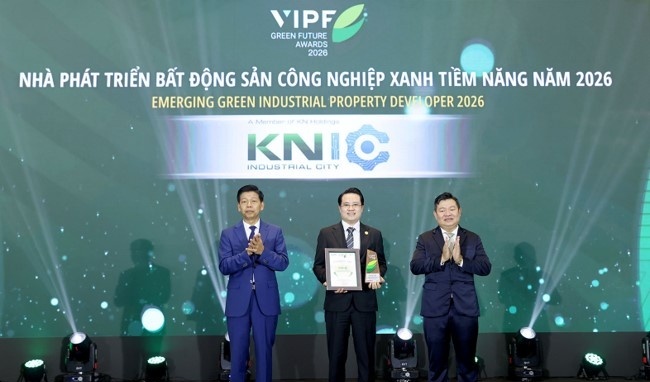
- Six developers honoured as Emerging Green Industrial Property Developers (October 01, 2026 | 22:00)
- Why logistics will define the next phase of growth (October 01, 2026 | 09:00)
- Urban Development Law takes effect on October 1 (September 30, 2026 | 17:49)
- Phu My Hung to demolish Lawrence S. Ting Building for new development (September 30, 2026 | 17:43)



Latest News





 Mobile Version