

ASEAN+3 policymakers assess energy and supply chain disruptions

 |
| ASEAN+3 Policy Dialogue reviews economic risks from Middle East tensions |
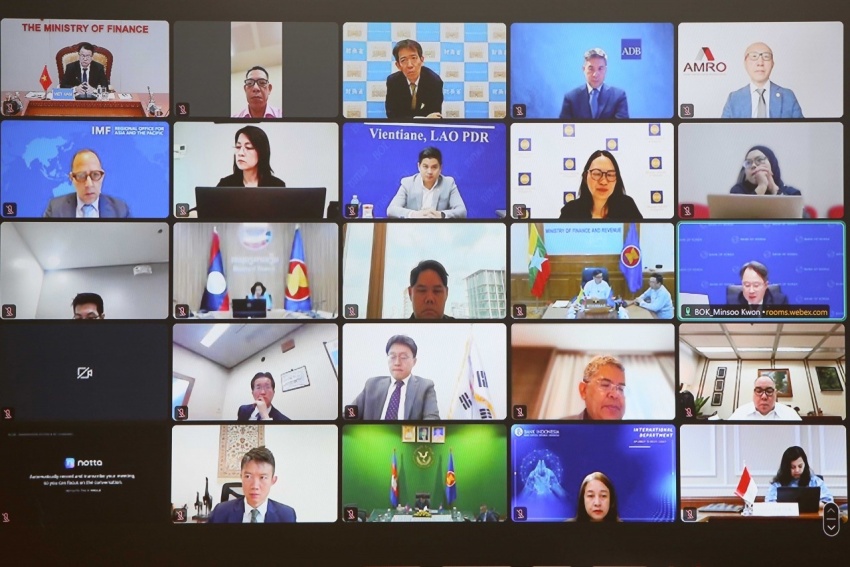
The dialogue brought together senior officials from finance ministries and central banks across ASEAN+3, comprising the 10 ASEAN member states alongside China, Japan, and South Korea, to review macroeconomic developments and assess the spillover effects of escalating tensions in the Middle East. The session also served as a preparatory platform ahead of the ASEAN+3 Finance Ministers’ and Central Bank Governors’ Meeting scheduled for May 3.
Recent geopolitical developments have intensified concerns over global energy security and supply disruptions. According to assessments by international organisations, the primary transmission channels to Asian economies include surging energy prices, disruptions to logistics and supply chains, and tightening global financial conditions.
Analysis by the ASEAN+3 Macroeconomic Research Office identifies a four-stage impact chain: rising energy costs, followed by increases in intermediate industrial inputs, downstream production pressures, and ultimately higher prices for services and food. These combined effects are expected to weigh on growth while fuelling inflationary pressures.
Global forecasts reflect these risks. The Organisation for Economic Co-operation and Development projects global growth to slow to 2.9 per cent in 2026, while inflation across G20 economies could reach 4 per cent.
Meanwhile, the Asian Development Bank warns that in a scenario where oil prices exceed $155 per barrel, ASEAN+3 growth could decline by as much as 1.3 per cent, with inflation rising by 3.2 per cent, with Southeast Asia among the most vulnerable.
Financial markets have also reacted sharply. Heightened risk aversion has triggered capital outflows and tighter financial conditions across the region. In the early weeks of the conflict, Asian equity markets declined by more than 4 per cent, government bond yields rose by over 20 basis points, and approximately $17 billion in investment capital flowed out of the region, accompanied by widespread currency depreciation against the US dollar.
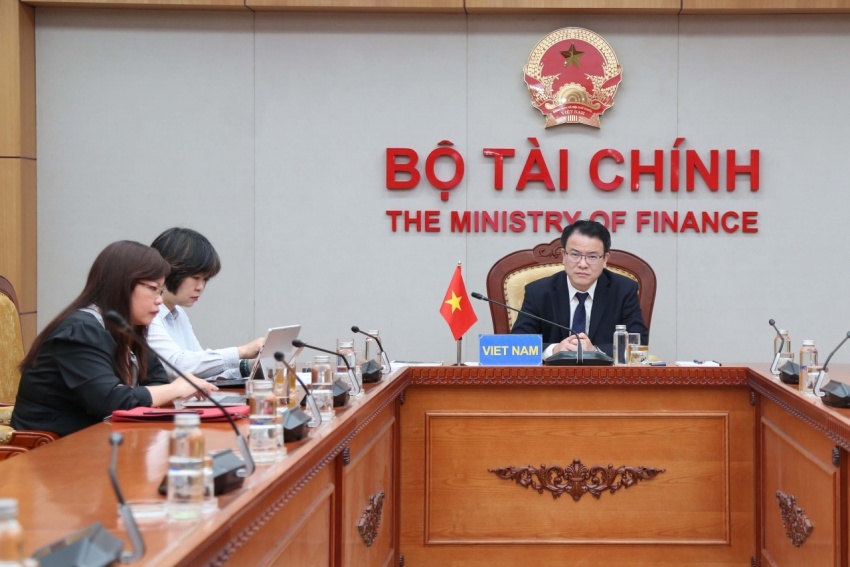 |
| Deputy Minister of Finance Tran Quoc Phuong |
Deputy Minister Tran Quoc Phuong underscored the importance of coordinated regional responses. He commended the co-chairs for their timely initiative, noting that “the organisation of this policy dialogue reflects proactive and effective coordination in reviewing and shaping regional cooperation to mitigate the impacts of Middle East tensions.”
He also reiterated Vietnam’s concerns regarding escalating risks to economic and financial stability, stating that “prolonged geopolitical tensions continue to pose significant threats to growth prospects and macroeconomic stability across the region.”
For Vietnam, ensuring energy security remains central to safeguarding macroeconomic stability. The government has deployed a range of flexible policy tools to manage external shocks and ease cost pressures. These include extending tax and fee reductions on fuel products to zero until the end of June 2026, as well as accelerating preparations for a national crude oil reserve project in Nghi Son.
“These measures aim to stabilise domestic prices, control inflation, and reduce input costs for businesses, thereby enhancing overall economic resilience,” he said.
Looking ahead, Vietnam has set an ambitious target of achieving GDP growth of 10 per cent or higher in 2026, while maintaining macroeconomic stability and advancing structural reforms. According to the deputy minister, “with a double-digit growth target, the need for a stable, flexible, and sustainable energy system has become increasingly urgent.”
In parallel, Vietnam is refining its legal and institutional framework to support the development of international financial centres and free trade zones, while seeking to attract global green capital to finance renewable energy projects and develop carbon markets. These efforts are aligned with the country’s broader commitments to net-zero emissions and long-term economic resilience.
At the regional level, Vietnam called for strengthened financial cooperation among ASEAN+3 members, including the enhancement of regional financial safety nets such as rapid financing facilities. The country also emphasised the need for each economy to maintain adequate policy space to respond effectively to external shocks.
In addition, Vietnam highlighted the critical role of the Asian Development Bank (ADB), urging the institution to expand financial support, scale up technical assistance, and streamline procedures to improve access to funding. Such efforts, he noted, would not only reinforce ADB’s role as a key development partner but also contribute to the region’s long-term sustainable growth.


What the stars mean:
★ Poor ★ ★ Promising ★★★ Good ★★★★ Very good ★★★★★ Exceptional
 Tag:
Tag:Related Contents






Latest News


More News
- MoF minister outlines priorities for international integration to support growth (August 03, 2026 | 23:24)
- AI adoption reshapes marketing across Southeast Asia (July 16, 2026 | 16:37)
- Vietnam leads region in using AI in academia (July 15, 2026 | 15:51)
- ADB maintains Vietnam's growth outlook amid Southeast Asia downgrades (July 10, 2026 | 14:48)
- ASEAN steps up digital push for agriculture MSMEs to boost competitiveness (July 08, 2026 | 12:00)
- Slovak Embassy directs applicants to VFS after alternate provider suspension (July 06, 2026 | 16:22)
- CPHI South East Asia 2026 to drive pharma partnerships across ASEAN (July 05, 2026 | 18:22)
- Vietnam, Singapore aim to shape ASEAN's future through AI and green growth (June 26, 2026 | 16:26)
- Skellefteå: A magnet for global talent (June 25, 2026 | 15:35)
- SunAsia Energy, VinEnergo launch Solar on Water portfolio in the Philippines (June 24, 2026 | 08:37)


Latest News




 Mobile Version