
Citi report finds global trade transformed by tariffs and AI

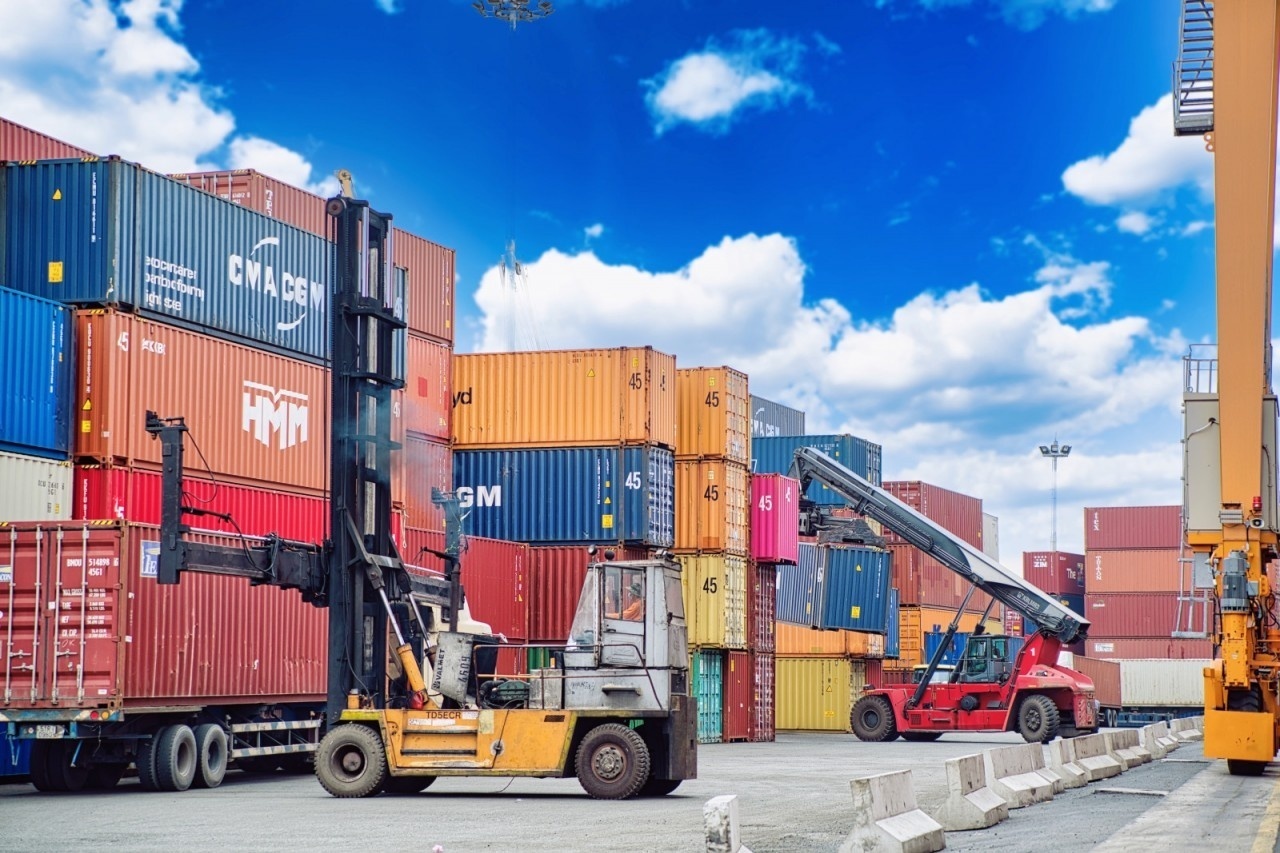
On February 20, the bank launched the report titled 'Supply Chain Financing – Durable Global Trade in the Age of AI'. Its key findings indicate that global trade is undergoing a fundamental transformation driven by tariff volatility, AI adoption, and the move towards multipolar, regionalised supply chains.
Despite the significant headwinds however, businesses have demonstrated remarkable resilience, adapting rapidly to policy shifts while maintaining a strategic focus on diversification and working capital optimisation.
"Technology is fundamentally reengineering how trade finance operates," said Adoniro Cestari, global head of Trade and Working Capital at Citi. "AI-powered intelligent document processing enables exceptionally high accuracy rates and reducing processing to just minutes. Through a pilot of blockchain-based conditional trade payments, we have seen the potential for an evolution from standard paper-based guarantees to near 24/7 digital execution and automated settlement.”
The report draws on Citi's proprietary Global Supply Chain Pressure Index, payment flows from over $5 trillion processed daily through its services business, and survey responses from multinational corporations and small- and medium-sized enterprises.
While US tariffs increased to approximately 16.8 per cent from 2.4 per cent following the change in US Administration, the Index shows supply chain pressures remained subdued and near pre-pandemic levels. Companies successfully navigated initial tariff shocks through strategic inventory management, supplier diversification, and accelerated nearshoring.
Analysis of goods reveals a complex reorganisation of global trade. South Asia and ASEAN emerged as major winners, with a 44 per cent increase in shipments from North and East Asia. Latin America has become deeply integrated into both Asian and North American supply chains, with exports to South Asia and ASEAN surging 82 per cent – the single largest increase globally.
The US has diversified its import base, with shipments from South Asia and ASEAN up 50 per cent and from Latin America up 43 per cent, both exceeding the 32 per cent growth from North and East Asia.
The report examines how AI is creating a once-in-a-generation capital expenditure supercycle in data centres, with Citi Research estimating $7.75 trillion in global AI-related capex by 2030. Trade finance is playing an increasingly critical role in this ecosystem, with solutions ranging from supply chain finance to structured receivables programmes supporting the complex, capital-intensive nature of AI data centre development. AI adoption in trade finance accelerated dramatically, with 36 per cent of large corporates now using AI tools, an 18 per cent increase from the previous year.
“These types of innovations, combined with structuring expertise, helps companies unlock trapped liquidity and optimise working capital while supporting more efficient supply chains and the massive AI infrastructure buildout underway globally," Cestari said.
Working capital management has become a C-suite imperative, with 64 per cent of companies citing increasing input costs as their primary concern. On average, 6.3 per cent of working capital is now tied up in funding tariff costs. In response, companies are deploying inventory finance, structured receivables programmes, and dynamic discounting to release trapped liquidity.
Citi's survey of 710 large corporations revealed that 65 per cent are actively diversifying supply chains away from one or more countries, with Vietnam, Thailand, India, and Mexico emerging as preferred destinations.

Citi sharpens its focus on institutional banking Citi boasts strength in cross-border payments and supply chain finance. Minh Ngo, newly appointed Citi country officer and banking head for Vietnam, discussed the bank’s strategic priorities in this country with VIR’s Thien Huong.
Citi economists project robust Vietnam economic growth in 2026 Vietnam’s economy looks to maintain strong growth momentum in 2026, with robust domestic demand playing a central role in offsetting cyclical export headwinds, according to the latest Vietnam Economics Outlook report by Citi Research on February 12.
Citi Foundation backs flood relief efforts across Southeast Asia Citi Foundation has pledged new funding to support humanitarian relief for communities affected by severe flooding across several Southeast Asian countries.
What the stars mean:
★ Poor ★ ★ Promising ★★★ Good ★★★★ Very good ★★★★★ Exceptional
 Tag:
Tag:Related Contents

Latest News



More News
- MoF minister outlines priorities for international integration to support growth (August 03, 2026 | 23:24)
- AI adoption reshapes marketing across Southeast Asia (July 16, 2026 | 16:37)
- Vietnam leads region in using AI in academia (July 15, 2026 | 15:51)
- ADB maintains Vietnam's growth outlook amid Southeast Asia downgrades (July 10, 2026 | 14:48)
- ASEAN steps up digital push for agriculture MSMEs to boost competitiveness (July 08, 2026 | 12:00)
- Slovak Embassy directs applicants to VFS after alternate provider suspension (July 06, 2026 | 16:22)
- CPHI South East Asia 2026 to drive pharma partnerships across ASEAN (July 05, 2026 | 18:22)
- Vietnam, Singapore aim to shape ASEAN's future through AI and green growth (June 26, 2026 | 16:26)
- Skellefteå: A magnet for global talent (June 25, 2026 | 15:35)
- SunAsia Energy, VinEnergo launch Solar on Water portfolio in the Philippines (June 24, 2026 | 08:37)


Latest News




 Mobile Version