
ASEAN countries exposed by Middle East oil dependence

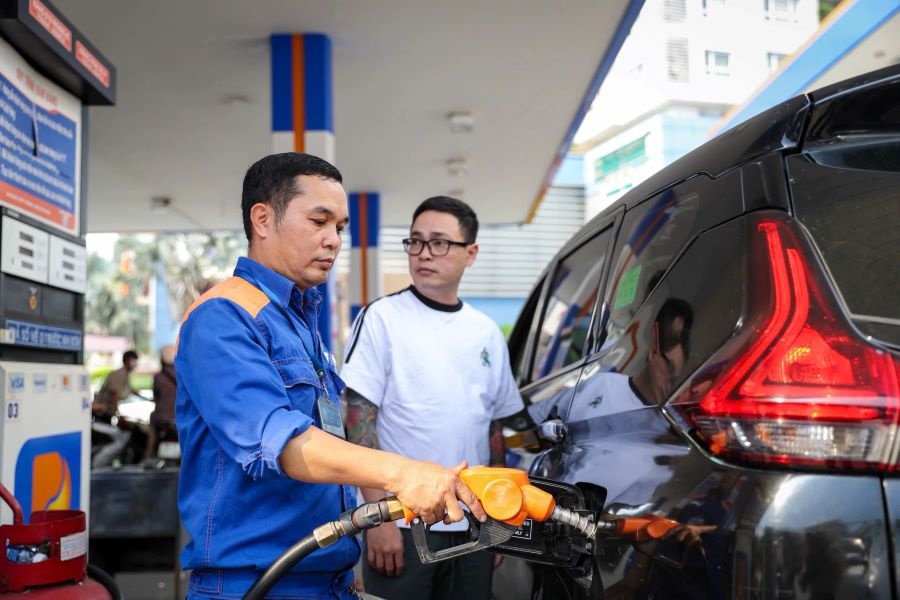 |
According to Maybank Investment Bank, the Philippines is the most vulnerable, with 95 per cent of its crude oil imports sourced from Persian Gulf countries. The country’s oil import dependency is at nearly 100 per cent. Persian Gulf oil imports account for some 88 per cent of Vietnam’s crude oil imports, 69 per cent of Malaysia’s, 59 per cent of Thailand’s and 52 per cent of Singapore’s. Indonesia’s crude oil imports are more diversified, with 20 per cent coming from Gulf countries.
Diesel import dependencies are the highest for Singapore (16 per cent from the Gulf), Indonesia (8.4 per cent), and Thailand (6.8 per cent).
Dependencies on Persian Gulf gas are sizeable. Vietnam is the most dependent, with some 49 per cent sourced from Gulf countries. Most of this reflects LPG, with around 70 per cent of imported LPG originating from the Middle East.
The Gulf accounts for 37 per cent of Indonesia’s gas imports, with Gulf-produced LPG accounting for 30 per cent of total imports. Thailand imports 28 per cent of its gas from the Gulf. Singapore imports about 17 per cent of its gas from the Gulf. Specifically for natural gas, nearly a quarter of imports came from Qatar. Singapore relies on natural gas for 95 per cent of its power generation needs.
Thailand is heavily reliant on nitrogen fertilisers from the Gulf, with Saudi Arabia being its biggest supplier. 67 per cent of Thailand’s nitrogen fertiliser imports were sourced from the Gulf as of 2024. An even larger 74 per cent of urea fertiliser came from the Gulf countries. Other ASEAN countries are less dependent on Middle Eastern nitrogen fertilisers, with Philippines (10 per cent) and Malaysia (7 per cent) coming next.
Maybank Investment Bank said that ASEAN countries have modest oil and liquefied natural gas (LNG) reserves as the first line of defence, leaving them vulnerable to a long-drawn supply shock. Oil reserves are low in Indonesia and Vietnam.
Thailand has the longest buffer at about 95 days. Philippines has 50–60 days of petrol, diesel and fuel oil supply. Vietnam’s reserves cover just 30–45 days of domestic demand.
Indonesia’s fuel reserves are sufficient for only around 23 days of consumption. Singapore has “months” worth of LNG and diesel stockpiles, according to Energy and Technology Minister-in charge Tan See Leng, although the exact number is not disclosed.
Countries are scrambling to secure alternative supplies of LNG from the US and Australia, competing with Europe. The US is the world’s largest producer and exporter of LNG, accounting for a third of global exports.
Industries could fall back on coal as an energy source if they are priced out by high LNG prices from alternative markets, which could benefit the region’s dominant producers, Indonesia and Australia.
In Vietnam, policy responses have included tax cuts, usage of the Fuel Price Stabilisation Fund to smooth price hikes, and fuel rationing (encouraging work-from-home, public transport usage, potential flight cuts).
The government has secured 4 million barrels of oil from partners (10 days of petroleum consumption) while seeking help from Japan and Korea with crude oil supply.
In the medium term, Vietnam will seek to boost oil exploration by offering incentives for offshore field investment. It wants to raise the recoverable reserves by 13 million to 17 million tonnes of crude oil equivalent a year from 2026-2030.
 | Middle East conflict disrupts supply chains, pressures logistics firms The ongoing conflict in the Middle East is placing significant pressure on logistics companies in Vietnam, disrupting supply chains and international transportation activities. |
 | Domestic fundamentals hold firm as markets reprice global risk Domestic fundamentals remain solid as markets reassess global risk, with Middle East tensions causing volatility. |
 | Middle East conflict sends ripple effects across Vietnam's economy Escalation across the Middle East has tightened energy markets and disrupted key sea‑lanes, with spillover impacts across many sectors in Vietnam. |
What the stars mean:
★ Poor ★ ★ Promising ★★★ Good ★★★★ Very good ★★★★★ Exceptional
 Tag:
Tag:Related Contents



Latest News



More News
- Regional cooperation crucial as Southeast Asia’s AI boom accelerates (August 13, 2026 | 17:50)
- Vietnam wins first-ever Super Gold Award at World Youth Economic Forum (August 04, 2026 | 17:12)
- MoF minister outlines priorities for international integration to support growth (August 03, 2026 | 23:24)
- AI adoption reshapes marketing across Southeast Asia (July 16, 2026 | 16:37)
- Vietnam leads region in using AI in academia (July 15, 2026 | 15:51)
- ADB maintains Vietnam's growth outlook amid Southeast Asia downgrades (July 10, 2026 | 14:48)
- ASEAN steps up digital push for agriculture MSMEs to boost competitiveness (July 08, 2026 | 12:00)
- Slovak Embassy directs applicants to VFS after alternate provider suspension (July 06, 2026 | 16:22)
- CPHI South East Asia 2026 to drive pharma partnerships across ASEAN (July 05, 2026 | 18:22)
- Vietnam, Singapore aim to shape ASEAN's future through AI and green growth (June 26, 2026 | 16:26)








 Mobile Version