
ASEAN could scale up sustainable aviation fuel by 2050

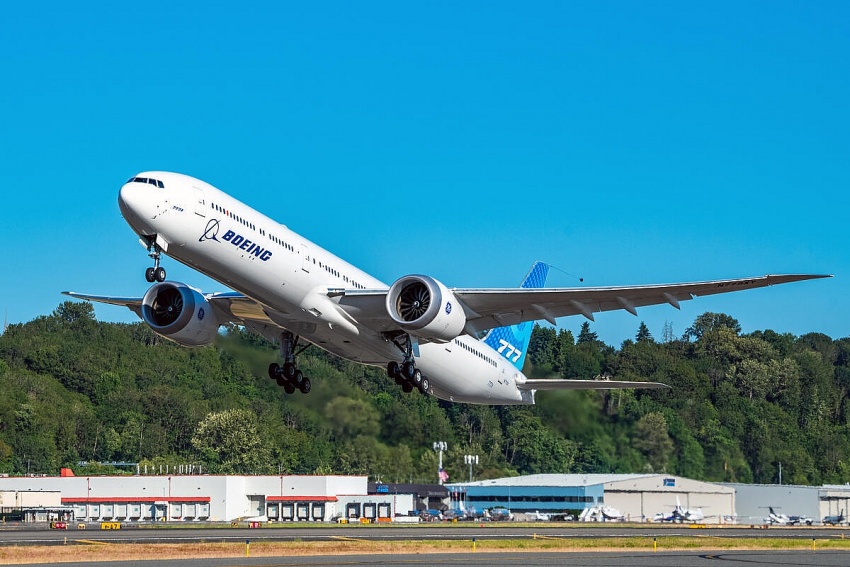 |
ASEAN economies could generate up to 8.5 million barrels per day of sustainable aviation fuel (SAF) by 2050, according to the ASEAN SAF 2050 Outlook report released on January 23. The report assesses regional supply chains and demand scenarios for 2030, 2040, and 2050 across Cambodia, Indonesia, Laos, Malaysia, the Philippines, Thailand, and Vietnam, as well as key import markets including Japan, Singapore, and South Korea.
The report was developed by GHD Group, a global professional services company specialising in water, energy, environment, property, and transport, with financial support from Global Affairs Canada through the Canadian Trade and Investment Facility for Development, implemented by Cowater International, with Boeing as the knowledge partner and support from the ASEAN Secretariat.
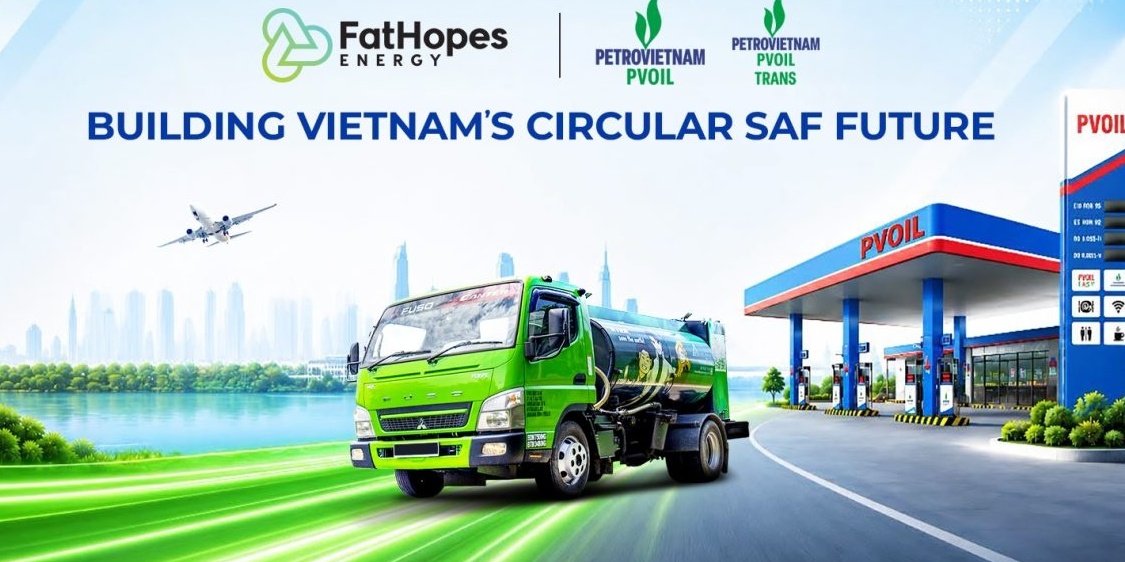
SAF is a renewable or waste-derived aviation fuel that meets sustainability criteria, reduces greenhouse gas emissions, and is compatible with existing aircraft and infrastructure. ASEAN’s key SAF feedstocks include used cooking oil, rice waste, cassava waste, and forestry residues.
The countries examined within the report could potentially have capacity to position themselves as net SAF exporters. Vietnam, Indonesia, Malaysia, the Philippines, and Thailand have the most abundant feedstock to support SAF production, while Indonesia, Malaysia, and the Philippines, may have the most cost-efficient distribution for markets in Japan, Singapore, and South Korea.
In addition to exporting SAF, ASEAN is predicted to become a significant market for SAF in its own right. The report projects that SAF demand in ASEAN will grow sharply from 15,000 barrels per day in 2030 to over 700,000 barrels per day by 2050. The largest SAF demands are expected to come from Indonesia, Malaysia, Singapore, and Thailand, as well as other Asian economies such as Japan and South Korea.
The report also examined different ways of producing SAF. Hydroprocessed esters and fatty acids (HEFA) is the most prevalent technology for producing SAF today, costing about twice as much as jet fuel, with the largest cost contributor being feedstock. Alternative methods could be between four and seven times more expensive, but this gap is expected to reduce as technologies mature and scale up.
Satvinder Singh, Deputy Secretary-General for the ASEAN Economic Community, said the outlook confirms ASEAN’s strong supply-side advantage, particularly in sustainable bio-feedstocks, alongside rising regional and global demand for sustainable aviation fuel.
“To fully capitalise on these dynamics, ASEAN member states should work together to scale up production capacity, deploy cost-effective technologies, and establish robust regional trade and market frameworks,” he said, adding that this would help position ASEAN as a competitive and reliable supplier supporting aviation decarbonisation across the Asia-Pacific.
Sharmine Tan, Boeing’s regional sustainability lead for Southeast Asia, said the region’s aviation industry is expanding rapidly and will need increased supplies of sustainable aviation fuel alongside more fuel-efficient aircraft. “The ASEAN 2050 SAF Outlook shows the region’s strong potential to increase SAF production with the right policies, partnerships, and investments,” she said.
Sachin Narang, GHD’s executive advisor for energy and infrastructure, said ASEAN’s abundance of agricultural and forestry waste could serve as low-cost feedstock for SAF, helping narrow the gap with conventional jet fuel. “Policy intervention, scaling, and innovation can further reduce costs for alternative SAF pathways over the medium to long term,” he said.
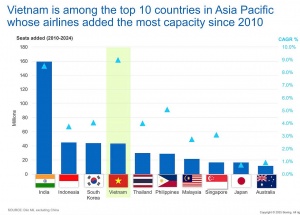 | Vietnam expected to double air traffic over next 10 years Boeing’s Commercial Market Outlook, released in Hanoi on April 24, forecasts significant growth in air traffic and fleet sizes across Southeast Asia through 2043. |
 | Vietjet takes delivery of first Boeing 737-8 in $32bn order Vietjet has celebrated the delivery of its first Boeing 737-8 aircraft, marking a milestone in the airline’s landmark $32 billion order with the US manufacturer. |
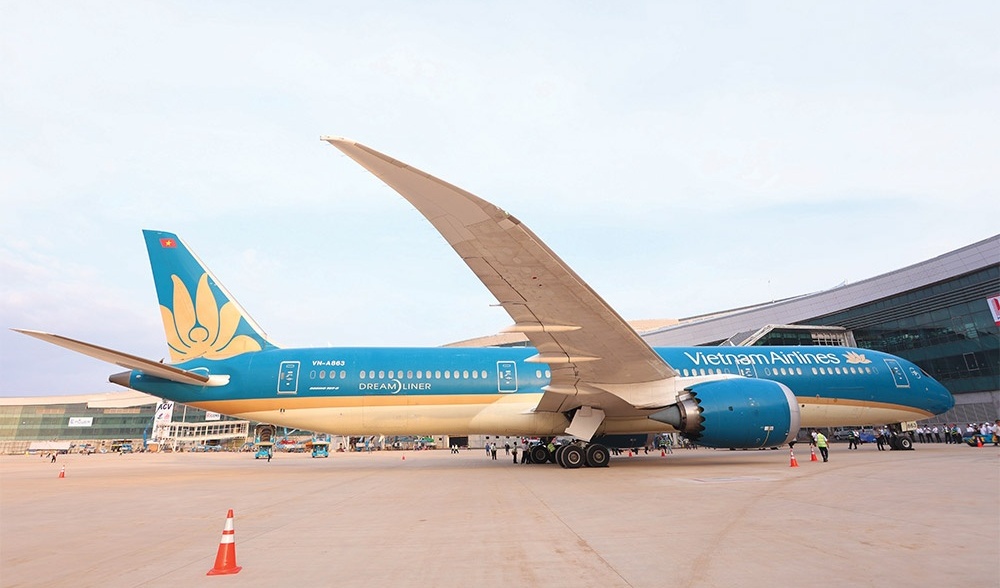
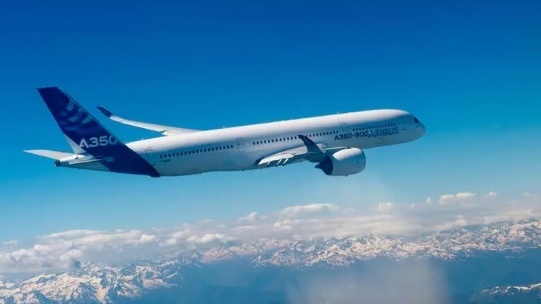
 | Vietnam Airlines Seeks Up to 30 Wide-body Aircraft for 2028-2032 Delivery Vietnam Airlines Joint Stock Company (Vietnam Airlines) is inviting indicative offers for up to 30 wide-body aircraft-Airbus A350-900 or Boeing 787-9-for delivery between 2028 and 2032. |
What the stars mean:
★ Poor ★ ★ Promising ★★★ Good ★★★★ Very good ★★★★★ Exceptional
 Tag:
Tag:Related Contents





Latest News



More News
- Tien Phong Plastics wins two awards at Green Future Awards 2026 (October 06, 2026 | 11:51)
- Energy transition task force meets to advance Vietnam's grid and storage (October 05, 2026 | 18:59)
- GreenYellow and Vina Paper partner on rooftop solar project (October 05, 2026 | 09:00)
- Consultation workshop refines Vietnam's clean hydrogen strategy (October 04, 2026 | 08:00)
- JBIC considers new financing options for Vietnam’s energy projects (October 03, 2026 | 08:00)
- Vestas to supply 16 turbines for two new Vietnam wind farms (October 01, 2026 | 07:00)
- Inter-sectoral cooperation on Montreal protocol (September 30, 2026 | 17:20)
- EV battery recycling rate proposed at 8 per cent from 2029 (September 29, 2026 | 16:00)
- Bankability remains hurdle for Vietnam's JETP projects (September 29, 2026 | 12:08)
- Binh Minh Plastics extends clean water project to border communities (September 29, 2026 | 10:57)







 Mobile Version