
Why child online safety is now a business imperative

 |
| Silvia Danailov, UNICEF Representative in Vietnam |
As I regularly meet children, parents and educators across Vietnam, I have seen both the opportunities and risks that digital technologies bring to children’s lives. The online world is not only helping a generation learn, connect and create, but also exposing them to challenges that no single institution can address alone.
For years, child online safety was viewed primarily as the responsibility of parents, schools and government. Businesses, particularly technology companies, were expected to comply with regulations, and respond when problems emerge.
Today, that approach is no longer sufficient. As AI, digital platforms and data-driven technologies become embedded in everyday life, businesses are increasingly shaping the environments where children spend their time.
Decisions about platform design, privacy settings, algorithms, content moderation and user engagement can influence children's online experiences as well as their safety, wellbeing and development.
Child online safety - a business issue
The risks are real. Children face not only cyberbullying and harmful content, but also online abuse and exploitation, manipulative platform design, misuse of personal data, discriminatory or opaque AI systems, and new AI-enabled harm that can undermine their safety, wellbeing and trust.
These harms are more than external risks that platforms must react to. They can be shaped by design and business decisions, including how platforms recommend content, collect and use children’s data, structure reporting channels, and optimise engagement.
In Vietnam, these concerns are becoming more urgent as children access technology at younger ages and spend more time online.
A survey conducted by the Department of Cybersecurity and High-Tech Crime Prevention under the Ministry of Public Security, in collaboration with the Vietnam Association for Protection of Child Rights, found that nearly half of surveyed children spend between one and three hours online each day, while almost one in five spend four to six hours daily in digital spaces.
Every child surveyed reported encountering at least one form of online risk - ranging from harmful or inappropriate content (53 per cent) to scams, insults, online threats (40 per cent) and access to dangerous products online. These trends should matter to business leaders.
Trust
Companies that fail to anticipate and address online safety risks face growing reputational, regulatory and commercial challenges.
Consumers increasingly expect companies to protect users. Investors are paying closer attention to digital governance and responsible AI. Regulators around the world are introducing stronger requirements around online safety, privacy, and platform accountability.
At the same time, companies that build safety into products and services can strengthen consumer trust, enhance brand value, and position themselves for long-term success.
Building trust requires moving beyond compliance. It means embedding child rights and safety considerations into the design, development and deployment of products from the outset.
It also means assessing potential impacts on children, strengthening governance systems, investing in safer user experiences, and ensuring effective reporting and response mechanisms when harm occurs.
For companies developing or deploying AI systems, the responsibility is even greater. AI offers enormous potential to improve education, accessibility, and innovation. Yet without appropriate safeguards, it can also amplify risks.
Child-centred approaches to AI should incorporate safety, privacy, fairness, transparency, and accountability throughout the technology lifecycle. Fortunately, businesses do not have to navigate this journey alone.
The path forward
UNICEF works with companies across sectors to help create safer digital environments through stronger digital literacy, responsible innovation, and child-centred policies. We have seen first-hand how private sector expertise, technology and innovation can help scale solutions that protect children while supporting business growth.
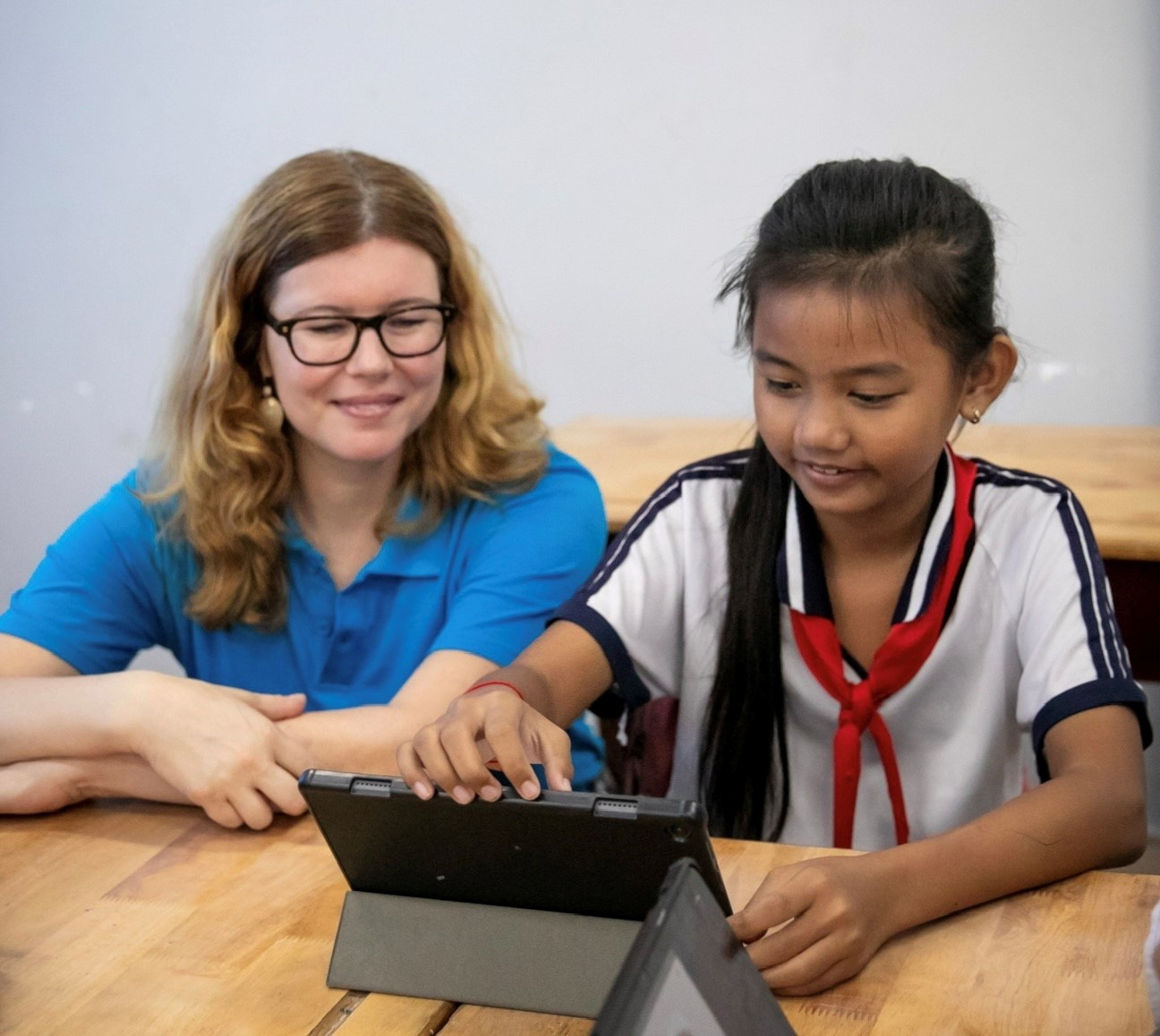 |
To support companies further, UNICEF recently relaunched the Child Safeguading Toolkit for Business (2026 edition). The toolkit provides practical guidance for identifying, assessing and addressing risks to children across operations, supply chains, partnerships, workplaces and digital environments.
It helps companies translate commitments into concrete action and strengthen accountability across their organisations.
Ultimately, this conversation is about more than risk management.
Whenever I meet children and young people, I am reminded that they are the future engineers, entrepreneurs, innovators and leaders of Vietnam. The digital environment we create today will help shape how they learn, work and participate in society tomorrow.
Business leaders have a unique opportunity and responsibility to help build that future.
The companies that earn the trust of children and families will not be those that move fastest at any cost. They will be those that innovate responsibly, place safety at the heart of design, and recognise that protecting children online is both the right thing to do and a smart investment in Vietnam’s future.
In the digital age, child online safety is no longer separate from business success but becoming one of its foundations.
 | Child Safety Toolkit training for parents in Hanoi launched AA (Automobile Association) Vietnam and AIP (Asia Injury Prevention) Foundation, in collaboration with the Hanoi Traffic Safety Committee, have launched a new child car seat initiative – Child Safety Toolkit – at South Tu Liem Primary School in Hanoi. |
 | Stakeholders mobilised before new child safety rules take effect Government bodies, civil society, and international partners seek to strengthen coordination and public readiness for the new child road safety regulations in Vietnam. |
 | Kimberly-Clark and UNICEF strengthen child and maternal healthcare Kimberly-Clark Vietnam and UNICEF renew partnership with a $2.05 million commitment to expand essential care for mothers, newborns, and girls nationwide. |
What the stars mean:
★ Poor ★ ★ Promising ★★★ Good ★★★★ Very good ★★★★★ Exceptional
 Tag:
Tag:Related Contents











Latest News




More News
- Financing options for shock-responsive social protection in Vietnam (July 30, 2026 | 14:59)
- HER2+ breast cancer carries $3.71 billion productivity burden in Vietnam (July 30, 2026 | 14:32)
- Party Resolution charts Vietnam’s development model through 2045 and beyond (July 30, 2026 | 12:29)
- STEM education evolves for AI era (July 21, 2026 | 09:38)
- Vietnam’s workforce ready for AI era (June 26, 2026 | 16:04)
- Hybrid work is reshaping Vietnam’s labour market (June 17, 2026 | 16:24)
- World's children exposed to at least three overlapping climate threats (June 17, 2026 | 15:54)
- Thai Nguyen event promotes safer food systems for World Food Safety Day (June 11, 2026 | 14:08)
- Vietnam emerges as rising hub for wealth creation (June 02, 2026 | 18:31)
- Danang launches DIFF 2026 with world-class performances (May 31, 2026 | 08:00)










 Mobile Version