
Hybrid work is reshaping Vietnam’s labour market

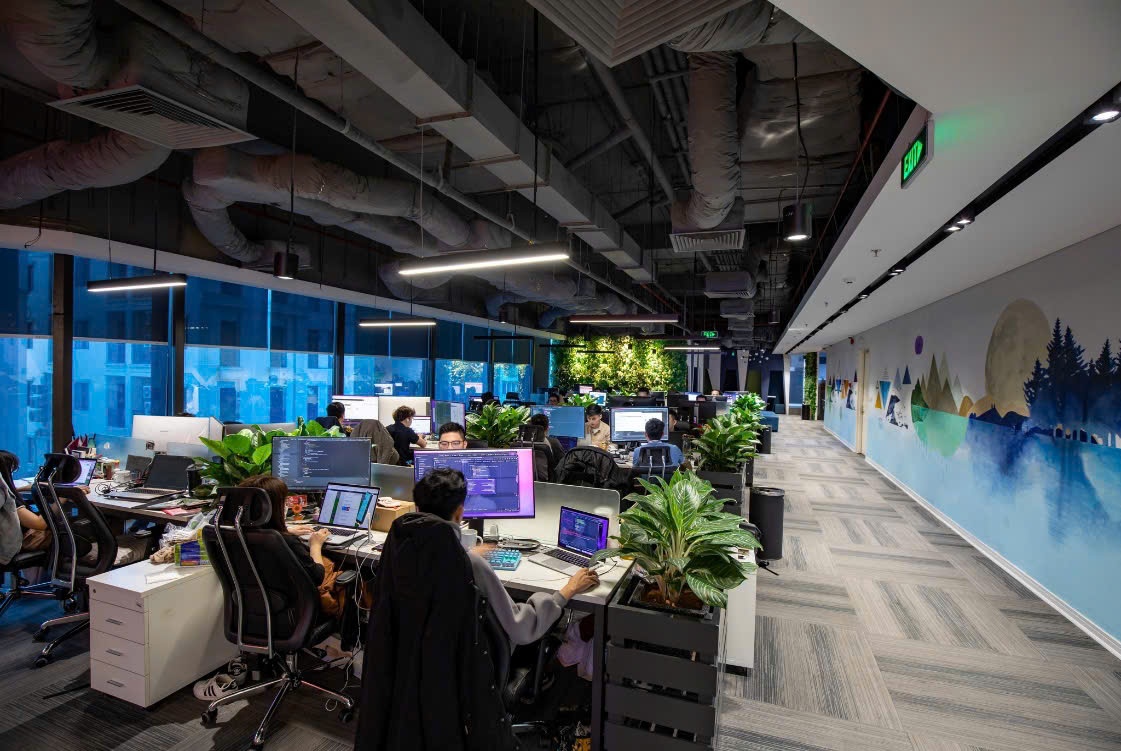 |
Vietnam’s labour market continues to show strong hiring momentum even as employers restructure workforce models under automation pressures.
This comes amid broader structural changes in the office market, according to the Hanoi and Ho Chi Minh City First Quarter (Q1) 2026 report published on May 18 by CBRE. Vietnam’s office markets continue to expand in scale but show increasing divergence in performance and location.
Hanoi’s total office stock reached approximately 6.75 million square metres, while Ho Chi Minh City stood at around 7.63 million sq.m, maintaining its position as the country’s largest office market.
In Hanoi, Grade A occupancy in central districts stood at 89 per cent, compared with 80.3 per cent in non-central areas. Grade B recorded occupancy of about 83 per cent.
Rental rates range from around $16 per sq.m per month in Grade B to $35 in central business district (CBD) Grade A assets. CBRE data also shows a large proportion of Grade A supply located in non-central districts.
In Ho Chi Minh City, Grade A vacancy fell to 16.5 per cent in Q1, while Grade B declined to 11.9 per cent, reflecting improving absorption. CBD rents rose 4.1 per cent on-year, while non-CBD rents increased 3.8 per cent.
The ManpowerGroup Employment Outlook Survey Q2 report published in March gathered insights from more than 41,700 employers across 42 countries and territories.
The survey recorded a Net Employment Outlook of over 47 per cent for Vietnam, ranking fourth globally and third in the Asia-Pacific and Middle East region. About 63 per cent of employers expect to increase hiring, while 21 per cent anticipate stable headcount and 16 per cent plan reductions.
ManpowerGroup noted that companies are simultaneously expanding hiring while reorganising roles to improve efficiency, supporting more flexible working arrangements, including hybrid models in selected sectors.
Nguyen Du Linh, operations manager at Hanoi-based coworking operator Cen X Space, said demand for flexible workspace had become more structured as hybrid working stabilises among both domestic and foreign firms.
She said usage was increasingly based on a 'pay-as-needed' model, where companies work remotely and only use physical office space for meetings or client-facing activities.
“Some foreign companies hire employees in Vietnam while operating remotely from overseas. Instead of leasing a traditional office, they choose coworking spaces because the model is more flexible and cost-efficient,” Linh said.
She said around half of customers are startups, while the rest are individuals or small working groups of up to five people. Foreign firms account for about 20 per cent of demand.
However, fully remote usage without any physical workspace remains limited, as most hybrid workers still require office access for coordination and meetings.
Linh added that competition among coworking operators has intensified over the past year, with pricing and workspace quality emerging as key differentiators. Shared seating areas typically cost about 40 per cent less than private offices, although clients are increasingly prioritising flexibility and workspace experience over price alone.
 |
| Dang Ngoc Thu Thao, director of Outsourcing & Staffing, Northern Region, Manpower Vietnam |
Hybrid work has brought significant benefits to both employers and employees. According to the Global Talent Barometer 2026 by ManpowerGroup, based on a survey of nearly 14,000 workers across 19 countries, hybrid employees report the highest levels of overall wellbeing and career confidence.
In addition, fully on-site roles take more than 23 per cent longer to fill compared to hybrid or remote positions, highlighting growing talent preferences for flexible work arrangements.
However, after rapid expansion post-pandemic, the trend has shown signs of stabilisation since 2025. Some companies are encouraging employees to return to the office to strengthen corporate culture, improve team cohesion and enhance productivity. Despite this shift, hybrid work remains a key component in talent attraction and retention strategies.
Sectors with the highest adoption of hybrid models include technology services, business support services, finance, media and entertainment. This variation reflects the nature of work, as knowledge-based, consulting and research roles are more adaptable to flexible arrangements than manufacturing or service jobs requiring physical presence.
In Vietnam, foreign-invested enterprises typically apply hybrid work selectively by role. Office-based functions such as human resources, IT, marketing and finance often operate on a two-to-three-day in-office schedule per week, while operational roles remain largely on-site.
At the same time, workforce localisation is becoming more pronounced, with Vietnamese employees prioritised for long-term roles, while expatriates are mainly assigned to strategic or technology transfer positions. Nonetheless, income disparities persist between local and expatriate workers, primarily driven by differences in total compensation packages, including salary, allowances and associated benefits.
In the long term, hybrid work presents several challenges, including the risk of widening inequality between workforce groups, intensifying cross-border talent competition, rising demands on management capabilities and digital infrastructure and the need for continuous upskilling to adapt to an increasingly globalised work environment.




What the stars mean:
★ Poor ★ ★ Promising ★★★ Good ★★★★ Very good ★★★★★ Exceptional
 Tag:
Tag:
Related Contents




Latest News



More News
- Financing options for shock-responsive social protection in Vietnam (July 30, 2026 | 14:59)
- HER2+ breast cancer carries $3.71 billion productivity burden in Vietnam (July 30, 2026 | 14:32)
- Party Resolution charts Vietnam’s development model through 2045 and beyond (July 30, 2026 | 12:29)
- STEM education evolves for AI era (July 21, 2026 | 09:38)
- Vietnam’s workforce ready for AI era (June 26, 2026 | 16:04)
- Why child online safety is now a business imperative (June 24, 2026 | 11:00)
- World's children exposed to at least three overlapping climate threats (June 17, 2026 | 15:54)
- Thai Nguyen event promotes safer food systems for World Food Safety Day (June 11, 2026 | 14:08)
- Vietnam emerges as rising hub for wealth creation (June 02, 2026 | 18:31)
- Danang launches DIFF 2026 with world-class performances (May 31, 2026 | 08:00)







 Mobile Version