
Energy efficiency in buildings tops organisations’ infrastructure priorities

In addition, a higher proportion of respondents say that onsite renewable energy production and the electrification of heating and cooling are now at mature or advanced stages, compared with previous findings in 2023.
 |
| Energy efficiency in facilities and buildings has emerged as the top infrastructure priority for organisations |
The study, Siemens Infrastructure Transition Monitor 2025, shows that over half (57 per cent) of survey respondents plan to increase investment in energy efficiency, smart building technologies (55 per cent), and building electrification (54 per cent) in the year ahead.
Despite many retrofits offering a strong return on investment (ROI), the top barriers to progressing with energy efficiency goals since 2023 have been cost-related, including lack of capital, rising energy prices, and the expense of new equipment and technologies.
To overcome these challenges, Siemens is offering energy-as-a-service models, leveraging the in-house financing capabilities of Siemens Financial Services. By aligning payment structures with guaranteed results, such as energy savings and reduced carbon emissions, large upfront capital expenditures can be replaced with outcome-based operational costs.
Digital technologies are also proving critical to accelerate this transformation. Over half (55 per cent) of respondents say digitalisation has a strong or transformational impact on energy efficiency, with 56 per cent expecting it to reduce costs, and 55 per cent stating it can improve workforce health and safety.
“Buildings are increasingly recognised as strategic assets in the infrastructure transition, with technologies such as AI, digital platforms, and autonomous systems acting as catalysts,” said Susanne Seitz, CEO Buildings at Siemens Smart Infrastructure.
“When it comes to autonomous systems, organisations clearly expect breakthroughs in energy efficiency, smarter anomaly detection, stronger physical security, and healthier, more comfortable spaces for occupants. This is exactly the path we're charting at Siemens; creating human-centric, autonomous buildings that serve people better,” she noted.
However, only half of organisations currently have the data they need to make informed decarbonisation decisions, emphasising the need to implement building technology.
Followed by a strong ROI, increasing transparency is seen as the second-biggest benefit of smart building technologies, helping organisations understand their energy and emissions profiles, plan refurbishments, and optimise maintenance.
The Siemens Infrastructure Transition Monitor 2025 explores the evolution of the infrastructure transition, highlights its urgent priorities, and lays the path ahead for business and government leaders.
The report is a biennial study commissioned by Siemens, surveying 1,400 senior executives and government representatives in 19 countries across energy, buildings, and industries. The buildings chapter explores the progress, priorities, and challenges involved in the decarbonisation of real estate.
 | Ensuring energy efficiency through power monitoring In just the past 10 years, energy prices in Europe have risen an average of 19 per cent. At the same time, a growing number of companies need to become greener – and also want to do so – in order to succeed. Add to this the fact that in the wake of the energy transition and the global climate protection agreement, government regulations are calling for ever-higher efficiency standards. |
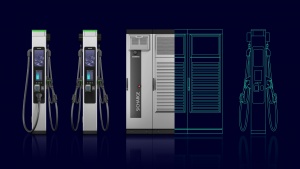 | Siemens unveils next-gen EV charging system for the megawatt era Global tech powerhouse Siemens on October 4 announced the launch of the SICHARGE FLEX product family, its next-generation electric vehicle (EV) distributed charging system, designed to be flexible, reliable, economical, and adaptable. |
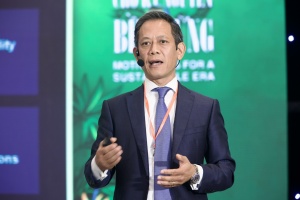 | Siemens leads technology transformation towards sustainability in Vietnam Siemens is harnessing advanced digital technologies and AI to drive global sustainability, enhancing efficiency, reducing emissions, and supporting Vietnam's transition towards a smarter, cleaner future. |
What the stars mean:
★ Poor ★ ★ Promising ★★★ Good ★★★★ Very good ★★★★★ Exceptional
 Tag:
Tag:
Related Contents








Latest News



More News
- Minitab launches campaign to combat illegal software use in Vietnam (October 08, 2026 | 15:54)
- Raising construction materials supply chain standards amid green transition (October 08, 2026 | 14:00)
- Samsung Vietnam to deepen cooperation with local manufacturers (October 08, 2026 | 12:00)
- Sojitz in Vietnam: 40 years from individual projects to a business cluster 'KATAMARI' (October 08, 2026 | 09:00)
- Coteccons targets 'Quality Growth' with 25 per cent dividend plan (October 07, 2026 | 13:00)
- Vietnam Education Forum opens UK Education Mission's Hanoi visit (October 07, 2026 | 12:27)
- Tax authorities deactivate TINs of nearly 180,000 businesses (October 07, 2026 | 12:08)
- World Bank raises Vietnam's 2026 GDP growth forecast to 7.4 per cent (October 07, 2026 | 11:41)
- Vietstock 2026 to spotlight livestock innovation and green transition (October 07, 2026 | 09:00)
- Vietnam’s GDP grows over 9 per cent in first nine months (October 05, 2026 | 18:45)








 Mobile Version