
Voluntary Sustainability Standards redefining the future of Vietnam’s green exports

In global trade, particularly in agriculture and food, VSS have become de facto entry requirements for participation in international supply chains. For Vietnam, one of the world’s major exporters of coffee, pepper, seafood, and tropical fruits, the question is no longer whether to adopt these standards, but how to do so effectively and sustainably.
VSS are defined as standards that set sustainability requirements across economic, environmental, and social dimensions. They often cover product quality, farming or production methods, labour conditions, and environmental management. Globally recognised labels such as GLOBALG.A.P., Fairtrade, USDA Organic, EU Organic, JAS Organic (Japan), and Rainforest Alliance all fall under the VSS umbrella.
According to the International Trade Centre’s Standards Map, there are now over 300 VSS worldwide, ranging from agriculture and forestry to textiles and aquaculture. Initially, they were conceived as voluntary guidelines developed by NGOs, industry consortia, or private initiatives. Over time, however, they have become entrenched in market expectations – especially in Europe and North America, where sustainability has become a consumer priority.
“While VSS are not mandated by law in most cases, the reality is that supermarkets, multinational buyers, and major importers treat them as prerequisites,” explained Nguyen Dang Tuan Minh, founder of KisStartup. “Vietnamese enterprises that do not comply will find it almost impossible to secure contracts with premium markets. Voluntariness has, in practice, turned into compulsion.”
The global and regional context
The roots of VSS trace back to the 1980s and 1990s, when movements such as Fairtrade emerged in Europe to guarantee both environmental and social accountability in consumer products. Since then, they have expanded to cover nearly every export sector. Today, European consumers expect “green” and “ethical” goods, and governments are increasingly embedding sustainability into public procurement, quality infrastructure, and technical regulations.
In Southeast Asia, countries like Indonesia and Malaysia institutionalised sustainability in their palm oil industries by introducing mandatory schemes (ISPO and MSPO) in the early 2010s. These examples show that VSS, while initially market-driven, can evolve into state-backed frameworks with legal force. Vietnam, heavily reliant on smallholder farming and fragmented supply chains, faces both urgency and difficulty in catching up.
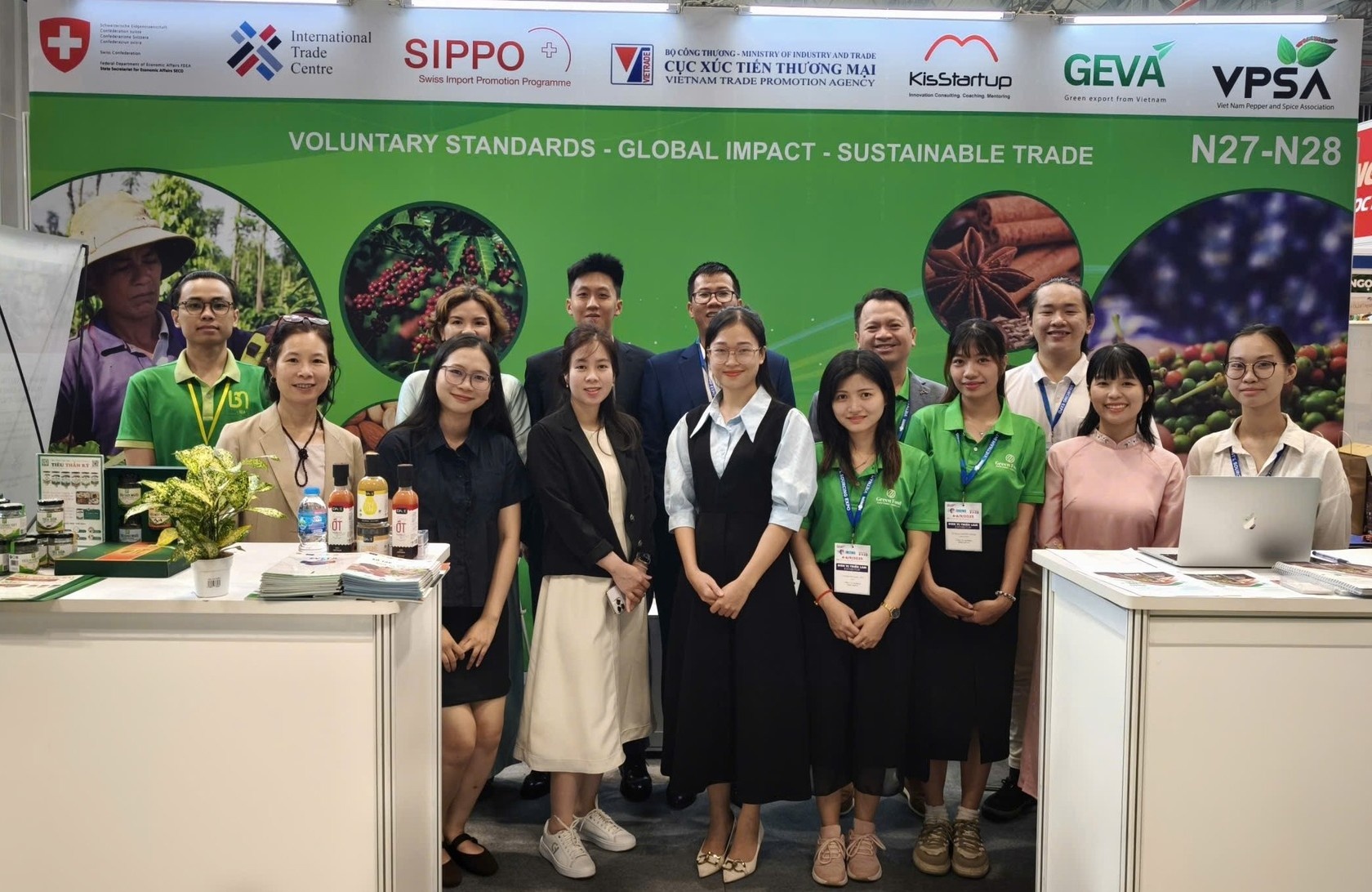 |
Vietnamese exporters, particularly small- and medium-sized enterprises (SMEs), still prioritise raw commodity exports with limited value addition. Many only pursue certifications when buyers explicitly demand them. However, the post-COVID-19 shift in consumer behaviour – towards “green eating, green drinking, and sustainable living”– is accelerating pressure on exporters to adapt.
The challenge is not simply cost. Compliance requires systemic changes in farming practices, processing, waste management, and even corporate governance. Without these shifts, certifications risk becoming superficial, adding expense without delivering resilience or competitiveness.
“Businesses should not approach VSS as mere paperwork to satisfy a buyer,” Minh emphasised. “The real task is to redesign their core models around sustainability, responsibility, and long-term competitiveness. Once this foundation is set, adapting to specific market standards becomes far easier and more strategic.”
Technology as the enabler
Sustainability cannot be achieved without innovation. Biotechnological solutions, digital platforms, and advanced analytics are now indispensable for meeting VSS. For instance:
- Soil regeneration: Enzymes and biochar can restore chemically degraded farmland in as little as one year – critical for organic certification.
- Traceability: Blockchain systems track entire value chains for coffee, pepper, and seafood, ensuring credibility for importers.
- Smart farming: IoT sensors monitor soil moisture, fertiliser use, and pesticide residues, reducing chemical footprints to meet food safety standards.
- Data and AI: Big data analytics help optimise crop cycles, while AI-enabled platforms generate compliance reports and predict export risks.
In Vietnam, success stories are emerging. Coffee cooperatives using blockchain traceability are securing premium contracts in Europe. In pepper production, IoT-enabled monitoring is helping farmers cut pesticide residues and meet GLOBALG.A.P. requirements. Aquaculture exporters deploying electronic traceability are reducing rejection rates in the EU.
Still, these remain isolated cases. For most SMEs, barriers of capital, technical expertise, and fragmented supply chains hinder widespread adoption. Current digital applications are often confined to marketing and sales, leaving the production core largely untouched.
Case in point: grapefruit farmers in Ben Tre
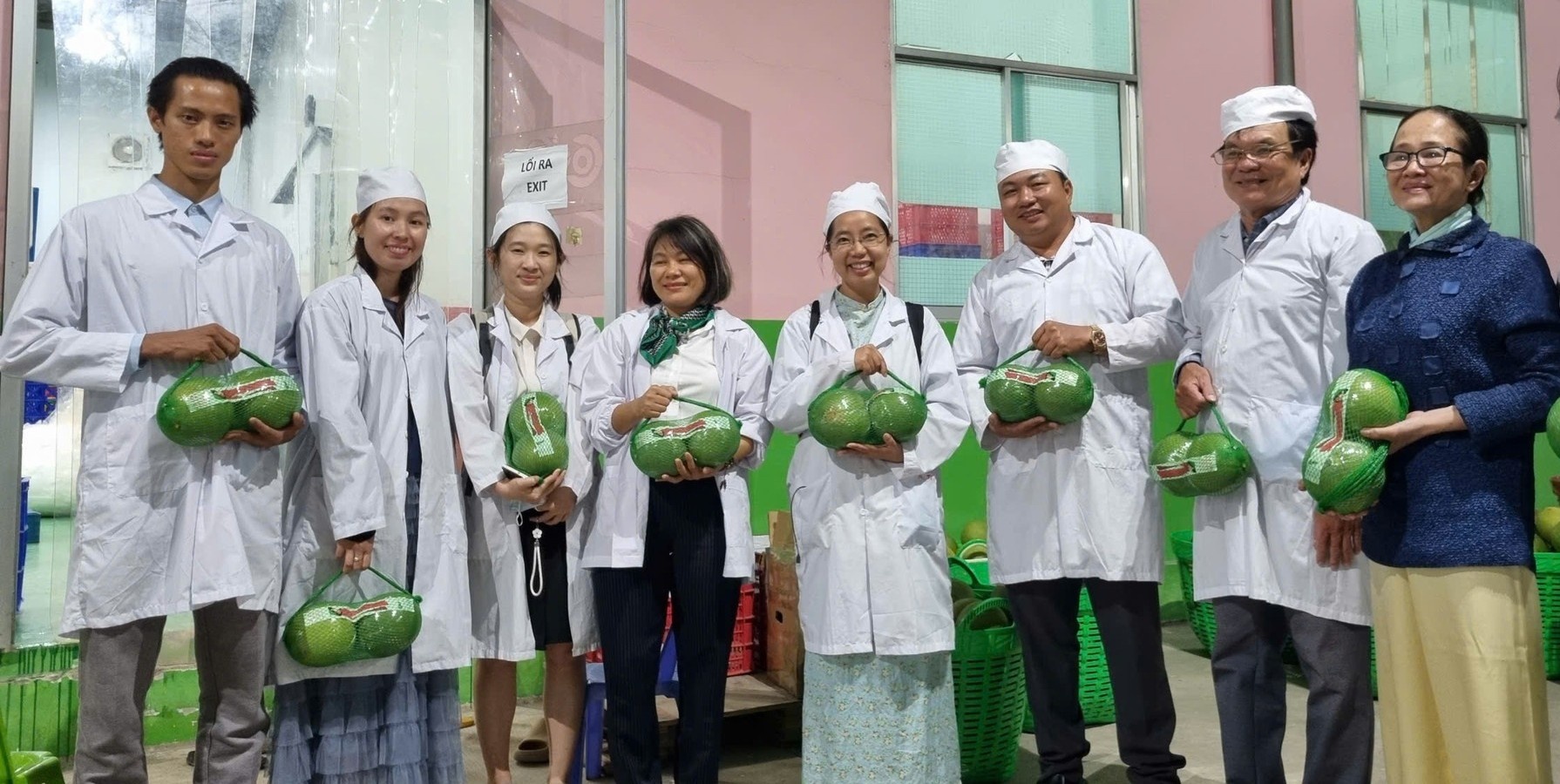
A cooperative in Ben Tre, Vinh Long Province producing green-skinned grapefruit for export illustrates the rigour of VSS. Though grown organically, the fruits must undergo meticulous post-harvest processing: wastewater treatment from cleaning operations, pest-free inspection, and strict hygiene protocols.
“Just one non-compliant fruit can result in the rejection of an entire shipment,” Minh recounted. “This shows that VSS is not confined to one production stage – it spans soil preparation, cultivation, harvest, processing, packaging, and logistics. Without systemic application of science and technology, meeting such requirements is virtually impossible.”
 |
The GEVA initiative
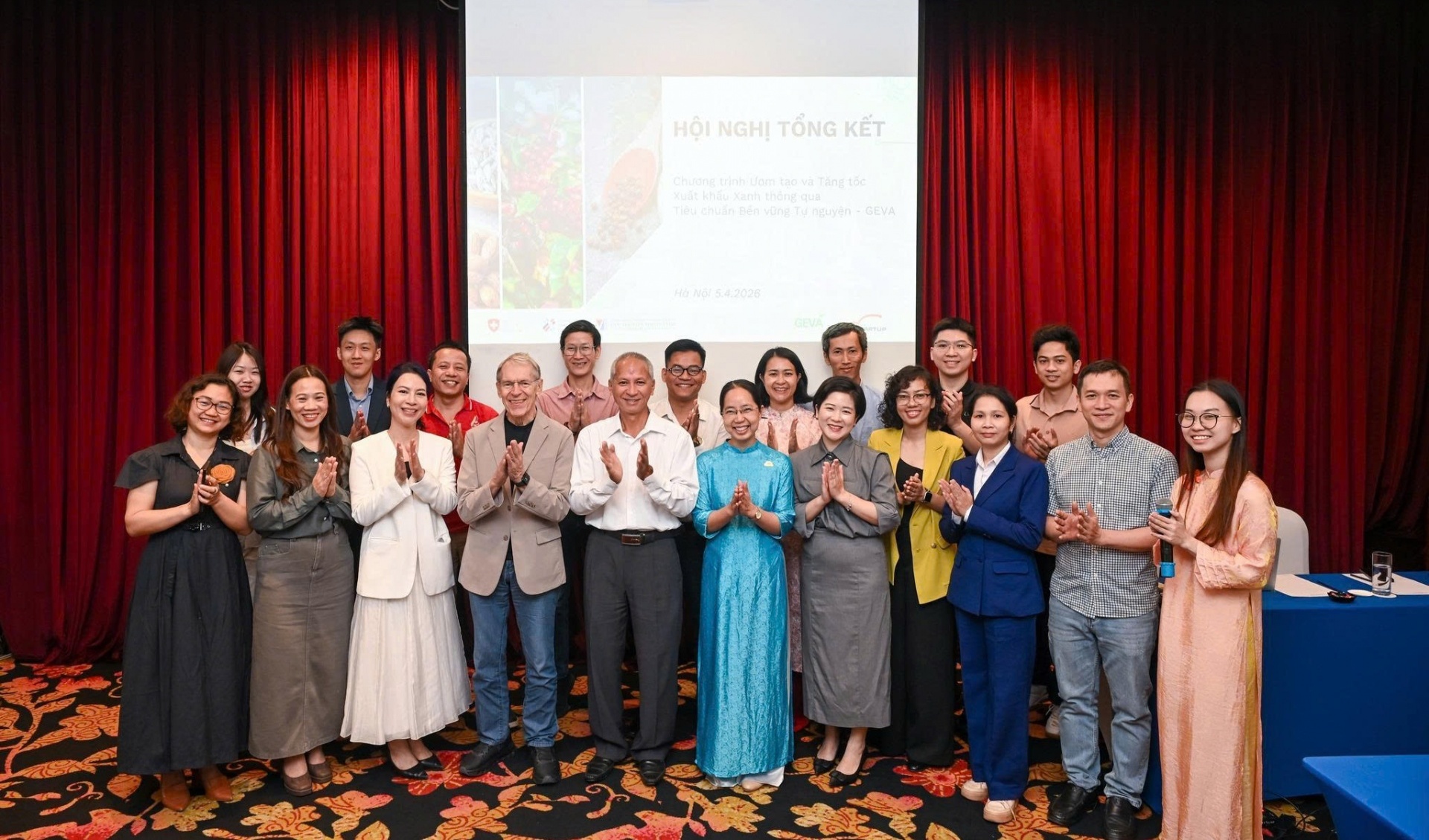
Recognising these challenges, KisStartup launched the GEVA project (Green Export Incubation and Acceleration through VSS) within the SwissTrade programme, supported by the Swiss government via SECO and implemented by ITC and Vietrade.
GEVA seeks to bridge the gap between awareness and execution by:
- Training SMEs on the fundamentals of VSS and sustainability.
- Piloting business models that embed sustainability at their core.
- Leveraging innovation and technology partnerships to reduce certification costs.
- Connecting Vietnamese exporters with global buyers prioritising sustainable sourcing.
Through this initiative, KisStartup aims to shift the narrative from reactive compliance to proactive competitiveness.
Towards long-term competitiveness
VSS are more than a technical barrier – they are a strategic filter shaping who can participate in tomorrow’s global economy. By aligning with VSS, Vietnamese exporters not only gain access to premium markets but also build resilience, reputation, and trust.
Yet, the road ahead is not simple. For SMEs, the most effective strategy lies in collective action – whether through cooperatives, industry associations, or partnerships with technology providers and accelerators like GEVA. Policy support, including subsidies for certification, integration of VSS into national quality frameworks, and incentives for digital transformation, will also be critical.
Ultimately, as Minh concluded, “The competitive edge of Vietnamese enterprises in global markets will not come from being the cheapest supplier, but from being the most responsible, innovative, and sustainable partner in the value chain.”
 |
Key takeaways and facts
- Global Reach: More than 300 VSS exist worldwide, spanning agriculture, forestry, textiles, and aquaculture.
- De Facto Requirement: In high-value markets, VSS compliance is now a non-negotiable condition for exporters.
- SME Reality: Vietnamese SMEs face cost and capability gaps in pursuing certifications.
- Tech as Game-Changer: Biotech, blockchain, IoT, and AI can make VSS compliance more accessible and efficient.
- GEVA Role: Provides incubation, acceleration, and international linkage to prepare Vietnamese exporters for green markets.
- Strategic Shift: Moving from compliance as “burden” to sustainability as competitive advantage is the key to long-term success.
 | ESG seen as key to Vietnam’s business credibility and capital attraction The future of environmental, social, and governance (ESG) practices in Vietnam looks promising, though challenges remain, according to Nguyen Hoang Nam, ESG Leader and Partner of Assurance Services at PwC Vietnam in an interview with VIR’s Hazy Tran. |
 | GEAPP mobilises $1.7bn to power Southeast Asia’s clean energy shift Amid global headwinds threatening climate and development goals, new funding is being mobilised to accelerate Southeast Asia’s clean energy shift. |
 | ACCA unveils first Vietnamese IFRS terminology for international standards The Association of Chartered Certified Accountants (ACCA Vietnam) has launched the Vietnamese International Financial Reporting Standards (IFRS) terminology for sustainability, a key framework governing the disclosure of information on sustainability and climate risks. |
What the stars mean:
★ Poor ★ ★ Promising ★★★ Good ★★★★ Very good ★★★★★ Exceptional
 Tag:
Tag:
Related Contents

Latest News



More News
- Tien Phong Plastics wins two awards at Green Future Awards 2026 (October 06, 2026 | 11:51)
- Energy transition task force meets to advance Vietnam's grid and storage (October 05, 2026 | 18:59)
- GreenYellow and Vina Paper partner on rooftop solar project (October 05, 2026 | 09:00)
- Consultation workshop refines Vietnam's clean hydrogen strategy (October 04, 2026 | 08:00)
- JBIC considers new financing options for Vietnam’s energy projects (October 03, 2026 | 08:00)
- Vestas to supply 16 turbines for two new Vietnam wind farms (October 01, 2026 | 07:00)
- Inter-sectoral cooperation on Montreal protocol (September 30, 2026 | 17:20)
- EV battery recycling rate proposed at 8 per cent from 2029 (September 29, 2026 | 16:00)
- Bankability remains hurdle for Vietnam's JETP projects (September 29, 2026 | 12:08)
- Binh Minh Plastics extends clean water project to border communities (September 29, 2026 | 10:57)






 Mobile Version