

CSI 2025 highlights rise of Vietnam’s green champions

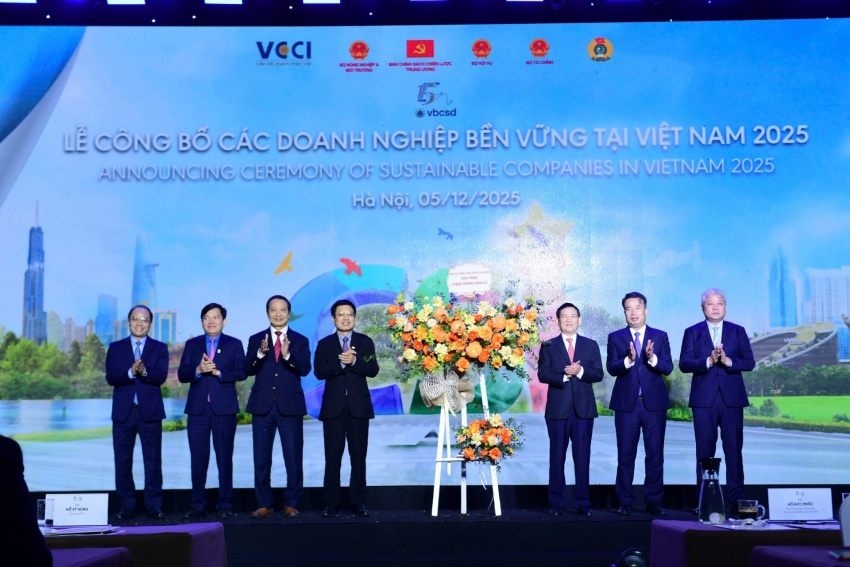 |
At an announcement ceremony held on December 5, the Vietnam Chamber of Commerce and Industry (VCCI) revealed that domestic companies made up 60 per cent of the Top 10 under the Corporate Sustainability Index (CSI) 2025, while foreign-invested enterprises accounted for the remaining 40 per cent. Marking the tenth edition of the CSI, the ranking honours companies demonstrating outstanding performance in environmental, social and governance practices.
In his opening remarks, VCCI chairman and head of the CSI 2025 Steering Committee Ho Sy Hung said development and corporate responsibility are now more closely aligned than ever. He noted the CSI is evolving beyond an assessment tool into a platform that accompanies, guides, and connects businesses, helping to build an ecosystem for sustainable transformation nationwide.
“Beyond recognising achievements, we aim to turn the CSI into a catalyst for value creation, where businesses are not just honoured but also help shape Vietnam’s green economy,” he said.
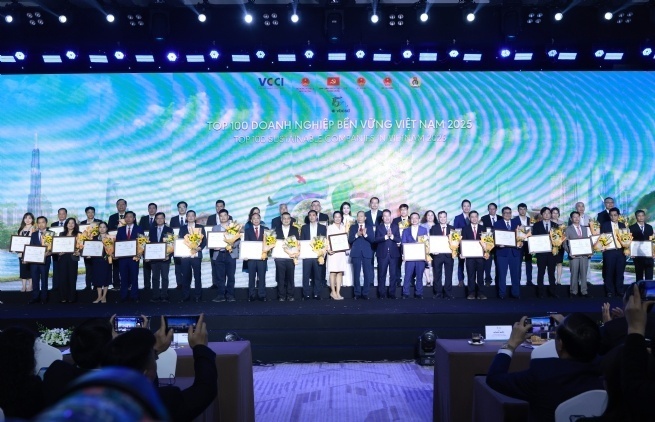 |
This year's CSI Programme attracted more than 500 businesses, over 20 per cent of which participated for the first time, while listed companies accounted for around 30 per cent. A total of 100 exemplary sustainable businesses were honoured across manufacturing and services–commerce. Within this group, the Top 10 sustainable enterprises comprised 60 per cent domestic companies and 40 per cent foreign-invested ones, indicating that local firms are rapidly strengthening their governance capabilities and competitiveness in sustainability, an arena once dominated by foreign-invested enterprises.
According to VCCI vice chairman and Vietnam Business Council for Sustainable Development chairman Nguyen Quang Vinh, "The CSI will remain a key instrument prioritised for broader adoption to reinforce the internal strength of Vietnamese enterprises and create greater added value for the domestic business community."
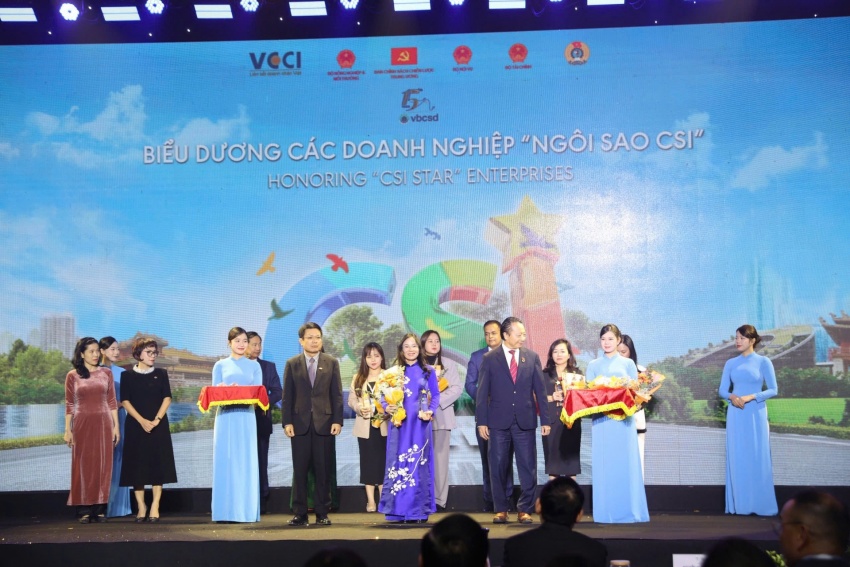 |
Among the Top 10 sustainable businesses recognised this year is Traphaco JSC. CEO Dao Thuy Ha acknowledged that investing in sustainability inevitably creates a tension between long-term strategic commitments and short-term profit expectations. "But businesses must remain steadfast. Shareholders will increasingly recognise it as an investment in future development, not just immediate returns," said Ha.
With more than five decades of establishment and growth, Traphaco has committed itself to a sustainable development strategy centred on economic efficiency while maintaining harmonious relationships with key stakeholders, including shareholders, employees and the wider community. Its approach is built on three core pillars: economic effectiveness, social responsibility and environmental protection. "This long-term commitment has shaped every decision we make," said Ha. "It drives continuous innovation and the development of high-value products, and supports Traphaco’s transformation from a state-owned enterprise in the process of equitisation into a publicly listed company,"
"We believe sustainability is not merely a trend but a long-term discipline. It requires patience, investment, and constant innovation, but it ultimately creates resilience and lasting value – for the business, for our partners, and for society," added Ha.
What the stars mean:
★ Poor ★ ★ Promising ★★★ Good ★★★★ Very good ★★★★★ Exceptional
Latest News


More News
- 11 innovations showcased plastic waste management solutions in Vietnam (August 30, 2026 | 10:36)
- Vietnam urged to turn sustainability plans into action (August 28, 2026 | 15:03)
- Workshop advances low-carbon innovation in Vietnam’s cement sector (August 28, 2026 | 14:30)
- Legal amendments on agriculture and environment to take effect on January 1 (August 26, 2026 | 08:00)
- Vietnam Petroleum Institute and TÜV SÜD Vietnam to co-develop energy transition solutions (August 25, 2026 | 18:26)
- Petrovietnam and AFD advance cooperation on energy transition projects (August 21, 2026 | 17:20)
- 92 organisations and businesses register for carbon exchange system (August 21, 2026 | 09:24)
- Trinasolar powers 10 MWh solar and storage project in Phu Quoc (August 20, 2026 | 09:46)
- Using circular economy to reduce food loss and waste (August 20, 2026 | 09:40)
- SABECO turns green commitments into measurable gains (August 13, 2026 | 14:11)







 Mobile Version