
Vietnam’s forest carbon credits draw global interest

 |
At a consultation workshop in Hanoi on December 4, South Pole reported that 73 per cent of 15 international organisations surveyed expressed 'healthy interest' in Vietnam’s carbon credits, although projects must meet buyer requirements and undergo further checks and due diligence before contracting.
“Buyers generally prefer transaction volumes of 100,000–500,000 tonnes and a price range of $5–15 per credit, although many choose not to disclose expectations. The most preferred standards are internationally recognised and familiar to the market,” said Roxanne Tan, senior managing consultant at South Pole Ltd.
“Market awareness of a carbon standard is reflected in factors such as benchmark pricing, credit ratings, transaction volumes, and issuance and retirement levels,” she said.
The survey indicates that buyers generally prefer projects that complete carbon certification and secure an Article 6 Letter of Authorisation, which allows the international use of carbon credits to meet emission targets, before finalising any purchase agreement. Buyers’ preferences reflect efforts to reduce regulatory and project-specific risks, prioritising compliance and project maturity. Ideally, sellers should also obtain authorisation, achieve successful credit issuance, and secure local stakeholder support. These requirements may be treated as conditions precedent before a contract becomes enforceable.
As an emerging carbon market, Vietnam has an opportunity to integrate buyer preferences into its carbon market and Article 6 frameworks. With policy and regulatory systems still under development, it will be crucial to engage both local and international market players, who can help highlight the potential of Vietnam’s forest carbon sector.
At the workshop, speakers provided updates on the implementation of the North Central Region Emission Reductions Payment Agreement (ERPA) and on the development of regulations and roadmaps for the domestic carbon market and international carbon trading. Participants also discussed initial assessments of transaction pathways for excess emission reductions from the ERPA scheme and future forest carbon projects, while identifying potential buyers for these credits.
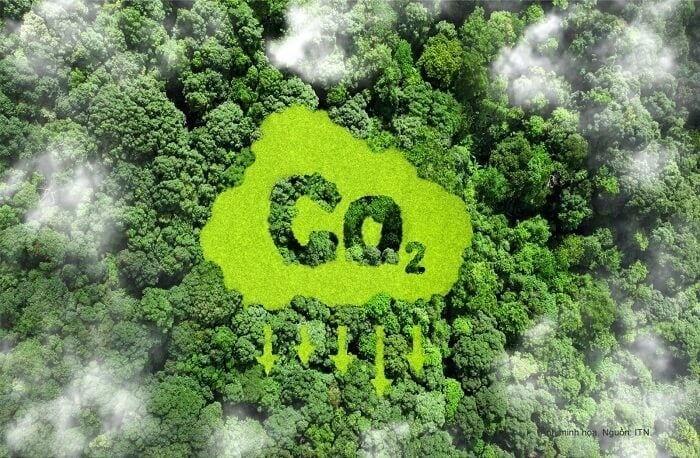
Forest carbon credits are becoming a key financial tool for supporting forest protection, restoration, and sustainable management, while also boosting biodiversity and improving local livelihoods. Under ERPA, Vietnam generated 16.2 million tonnes of carbon dioxide equivalent (tCO₂e) of emission reductions in 2018–2019, independently verified by Aster Global Environmental Solutions. Of this, 10.3 million tCO₂e have been traded, and one million tCO₂e were recently authorised by the government for additional transfer under Resolution 261/NQ-CP dated August 2025, leaving about 4.9 million tCO₂e available for potential use.
Meanwhile, Vietnam is finalising the legal framework and infrastructure for its domestic carbon market, expected to operate fully by 2029. This includes draft decrees on the international transfer of greenhouse gas mitigation outcomes and carbon credits, on forest carbon sequestration and storage services, and draft national standards on forest carbon credits, aiming to create a synchronised legal corridor for trading under both domestic standards and Article 6 of the Paris Agreement.
| On November 10, the Vietnam Forest Protection and Development Fund (VNFF) issued Official Letter No.413/VNFF-BDH regarding the survey to assess gaps and capacity building needs for the commercialisation of surplus GHG emission reductions from the ERPA programme and future forest carbon credits, which was sent to the local VNFF of five north central region provinces participating in the ERPA Programme, including Thanh Hoa, Nghe An, Ha Tinh, Quang Tri, and Thua Thien Hue. • As of November 17, all provinces had submitted their survey responses Local expectations for the surplus emissions reduction from ERPA:
|
 | How to build and operate sustainable carbon credits Participating in the carbon credit market means Vietnamese businesses will have to keep up with the requirements of green production models in domestic and international markets. Nguyen Dinh Tho, general director of the Institute of Strategy and Policy on Natural Resources and Environment, explained more to VIR’s Tra My. |
 | Carbon credits pave way for a green financial future When observing the global picture, it is clear that carbon credits are gradually evolving into a form of currency, a unique financial derivative that intersects four seemingly unrelated domains: nature, finance, national assets, and knowledge. This intersection creates a market that is both unique and highly challenging. |
 | The potential ahead for forest carbon credits in Vietnam Vietnam is considered to have potential to exploit carbon credits from forestry. Carina van Weelden, implementation manager at the German Development Agency, known as GIZ, which is scaling up sustainable forest management and certification in Vietnam, offered VIR’s Kim Oanh in-depth information about the issue. |
 | Carbon market governance tightened to support global climate action The government is stepping up efforts to regulate international carbon trading and greenhouse gas reduction exchanges, aiming to strengthen the country’s role in global climate action. |
 | Vietnam to transfer additional one million carbon credits to World Bank The Vietnamese government has approved the transfer of one million tonnes of CO₂ emission reductions generated from plantation forests in the north-central region to the International Bank for Reconstruction and Development (IBRD), a member of the World Bank Group. |
What the stars mean:
★ Poor ★ ★ Promising ★★★ Good ★★★★ Very good ★★★★★ Exceptional
 Tag:
Tag:Related Contents





Latest News


More News
- GreenYellow and Vina Paper partner on rooftop solar project (October 05, 2026 | 09:00)
- Consultation workshop refines Vietnam's clean hydrogen strategy (October 04, 2026 | 08:00)
- JBIC considers new financing options for Vietnam’s energy projects (October 03, 2026 | 08:00)
- Vestas to supply 16 turbines for two new Vietnam wind farms (October 01, 2026 | 07:00)
- Inter-sectoral cooperation on Montreal protocol (September 30, 2026 | 17:20)
- EV battery recycling rate proposed at 8 per cent from 2029 (September 29, 2026 | 16:00)
- Bankability remains hurdle for Vietnam's JETP projects (September 29, 2026 | 12:08)
- Binh Minh Plastics extends clean water project to border communities (September 29, 2026 | 10:57)
- Coca-Cola Vietnam expands packaging collection programme (September 25, 2026 | 08:15)
- Pacifico Energy secures sea survey licence for offshore wind project in Lam Dong (September 24, 2026 | 18:02)










 Mobile Version