
Vietnam’s sports economy eyes billion-dollar breakthrough

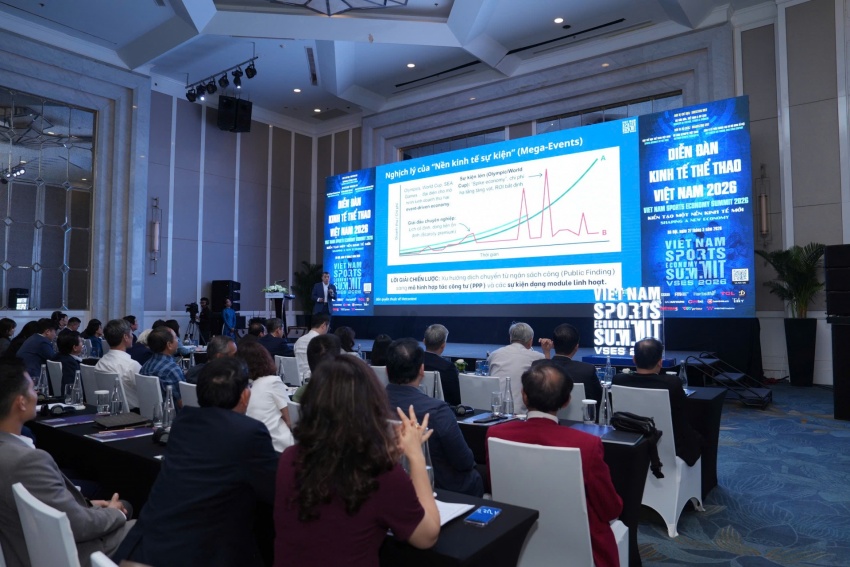 |
| Vietnam Sports Economy Summit (VSES) 2026 |
The Vietnam Sports Economy Summit (VSES) 2026, held on March 27 in Hanoi, was organised under the direction of the Ministry of Culture, Sports and Tourism, with participation from the Vietnam Sports Administration, the Vietnam Olympic Committee and Vietcontent Company.
In recent years, Vietnam’s sports sector has grown alongside economic expansion and the rise of the middle class. With a population of nearly 100 million and GDP exceeding $400 billion, Vietnam is considered one of the most promising markets in Southeast Asia, a region of nearly 700 million people with strong growth momentum.
According to the report on Vietnam sports economy by Vietcontent, sports in Vietnam are gradually shifting from grassroots and elite competition towards a consumption- and service-driven sector with real economic value.
The core components of a sports economy, such as event organisation, club operations, coaching services, equipment businesses, and the participation of media and enterprises, have begun to emerge. However, these elements remain fragmented and lack systemic connectivity.
“A tournament is not just a sporting event; it drives demand for accommodation, dining, entertainment, and shopping. This is how sport generates spillover economic value,” Truong Tri Vinh, researcher of the report, said. “The concept of the ‘sports consumer’ is also becoming increasingly important. They do not just watch or play sports, they spend and create value within the ecosystem, potentially becoming a new growth driver.”
Today’s sports consumers are willing to pay for premium equipment, coaching services, event tickets and sports tourism. Beyond physical activity, they seek entertainment, social interaction and self-expression. This evolving behaviour forms the foundation of a broader sports economy ecosystem.
A distinctive feature of the region is the SEA Games, described as a “sports festival” that fosters both competition and cooperation among Southeast Asian nations. Unlike other regions, the SEA Games create a shared ecosystem that promotes both athletic development and economic integration.
The dual-incentive mechanism of the SEA Games includes continuous intra-regional competition, driven by performance pressure that compels countries to invest in athletes, infrastructure and training systems, and the formation of a shared sports space through rotating hosting cycles, connecting countries into a unified “sports community.”
Over time, this regional system contributes to the development of elite sports, standardises training and professional competition, stimulates commercial markets such as broadcasting rights and sponsorship, and attracts cross-border investment in sports infrastructure and services.
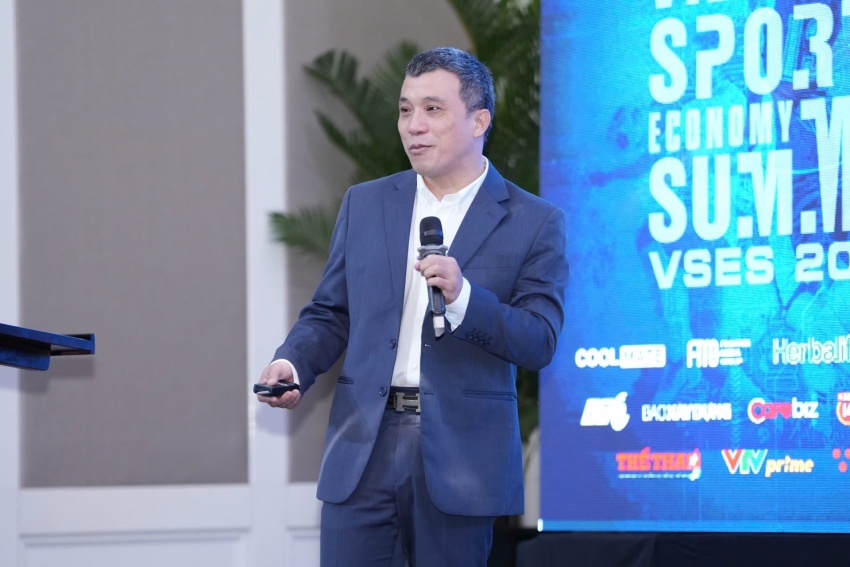 |
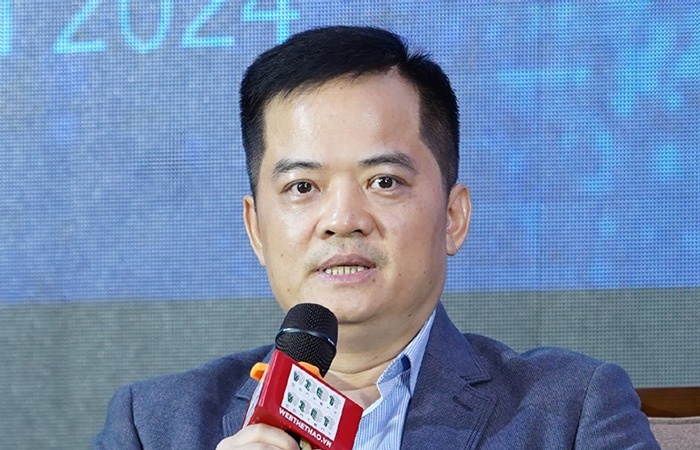
| Truong Tri Vinh, resercher of the report |
Globally, the sports economy is already massive, estimated at $400-500 billion for core activities (media rights, sponsorship and ticketing), around $1 trillion when including related industries, and up to $2.3 trillion across the full ecosystem.
“Sport is fundamentally an ‘emotion business’. Unlike other forms of entertainment, its value lies in immediacy, audiences cannot delay the experience. This creates a direct conversion from attention to revenue,” Vinh said.
A modern sports economy operates on a multi-asset model, including professional leagues, media and broadcasting rights, commercial sponsorship, technology and data, and infrastructure and real estate. Adjacent sectors such as sports tourism, urban development, and AI-driven technologies also play a critical role.
Notably, technology is transforming sport from a traditional “industry” into a “platform economy,” driven by data and user engagement.
In Vietnam, however, the sports market remains “spontaneous but fragmented.” While foundational elements have developed organically, the lack of integration has prevented the emergence of a large-scale economic sector.
Three key pillars are identified as critical to unlocking a billion-dollar sports economy: competition infrastructure (standardised venues and facilities), capital infrastructure (investment flows, public-private partnership (PPP) models and financing mechanisms), and a robust policy and legal framework.
Currently, Vietnam’s sports economy accounts for around 0.3 per cent of GDP, equivalent to roughly $1-1.5 billion, still a modest level.
Looking ahead, growth scenarios suggest significant upside. Within the next decade, if the sector reaches 0.8-1.2 per cent of GDP, its size could expand to around $60 billion. With stronger reforms, it could exceed 1.5 per cent.
Over a 30-year horizon, following an “S-curve” growth model, from foundation building to acceleration and global integration, the sector could reach 2-3 per cent of GDP, equivalent to $30-60 billion, becoming a key pillar of the economy.
“Vietnam is facing a rare opportunity, the chance to build a new economic sector from a near-ground-zero foundation. This is not just about sport; it is about long-term development, economic transformation and global integration,” Vinh said. “Sport, with its emotional power and unique connectivity, can become an industry delivering sustainable value for the country. The journey will not be short, but it is certainly worth starting, today.”
 | Vingroup launches 11 major projects across Vietnam The conglomerate has initiated and inaugurated a diverse portfolio of key developments nationwide in a single event. |
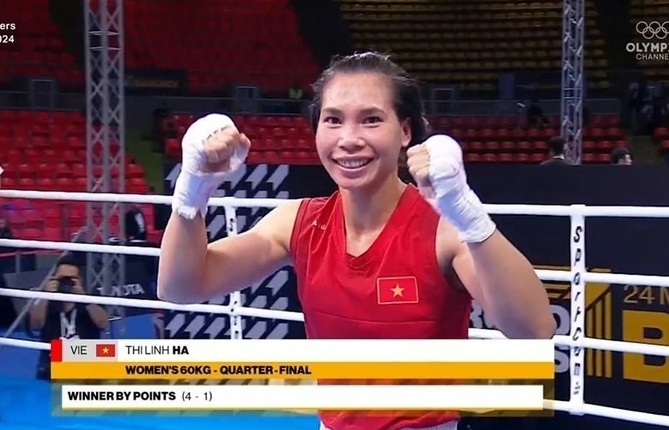
 | Vietnam secures 11th ticket to Paris 2024 Summer Olympics Vietnam won the 11th ticket to the Paris 2024 Olympics after boxer Ha Thi Linh has been chosen as a representative at the Games this summer. |
 | Herbalife and VFF host advanced sports nutrition training for coaches Herbalife Vietnam and the Vietnam Football Federation (VFF) have held an advanced training session on sports nutrition to enhance player performance and recovery. |
What the stars mean:
★ Poor ★ ★ Promising ★★★ Good ★★★★ Very good ★★★★★ Exceptional
 Tag:
Tag:Related Contents



Latest News




More News
- Standard Chartered Hanoi Marathon - Heritage Race 2026 launches (July 22, 2026 | 14:39)
- Vietnam reinforces position in global mobile gaming landscape (July 17, 2026 | 16:14)
- Esports creates new opportunities for tourism (July 01, 2026 | 16:04)
- Carlsberg Vietnam joins Danang cycling event to mark 55 years of Denmark ties (June 22, 2026 | 16:10)
- Vietnam ranks second globally in mobile game downloads (April 24, 2026 | 14:56)
- Carlsberg Vietnam backs Hue marathon for fifth year through Huda brand (April 21, 2026 | 14:32)
- Nestlé Milo continues National U11 Football Championship 2026 (April 06, 2026 | 17:04)
- Japfa Vietnam hosts race to foster unity (April 06, 2026 | 12:54)
- Nestlé MILO backs Vietnam's oldest marathon in Nha Trang (March 30, 2026 | 13:35)
- Nestlé accompanies Ho Chi Minh City's student sports event (January 21, 2026 | 10:06)









 Mobile Version