
Vietnam's growing role in Nestlé's global supply chain

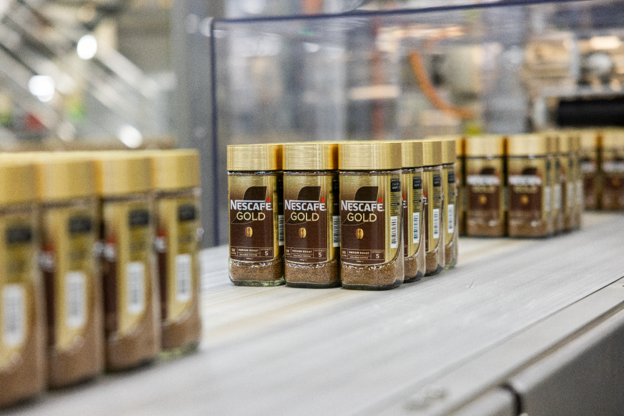
Inaugurated on August 21, the glass jar production line is capable of flexibly producing Nescafé Gold and Nescafé Classic products with various packaging specifications tailored to the requirements of each market.
The representative of the company stated that the launch of the glass jar production line marks the latest step in Nestlé’s ongoing efforts to invest in and expand its coffee production network in Vietnam.
Over the past three decades, Nestlé has progressively built a comprehensive coffee value chain, spanning raw material sourcing and farming support to processing and export. Meanwhile, the Nestlé Tri An factory has accumulated the technology, workforce, and operational experience required to meet global standards. This solid foundation has enabled the facility to integrate advanced systems like the glass jar production line while expanding the role of the Vietnamese market within Nestlé’s global coffee production network.
 |
| Photo courtesy of Nestlé |
Vietnam is one of the world’s major coffee-producing countries, with robusta playing a particularly prominent role. However, to enhance the value of coffee beans and unlock the potential of strong raw material base, it is vital to adopt a comprehensive development, from coffee-growing regions and farming practices to processing and production capabilities, as well as compliance with international market standards.
At the same time, Nestlé considers Vietnam a key market in its long-term development strategy in Southeast Asia. In the coffee sector, the company has invested across the entire value chain, starting with supporting farmers in coffee-growing regions.
A notable example is the NESCAFÉ Plan, which Nestlé has implemented in Vietnam since 2011 to boost the sustainable development of the coffee industry. To date, the programme has engaged more than 21,000 farming households in key coffee-growing regions, providing training on sustainable farming practices, supporting the replanting of ageing coffee trees, and encouraging the efficient use of resources in production.
The programme promotes the adoption of regenerative agriculture and sustainable farming standards, helping to improve yield and quality of coffee beans while boosting farmers' incomes and production capacity. The efforts at the coffee-growing areas enable the company to ensure the quality of inputs before the raw materials reach the processing plant.
Alongside developing its raw material supply, Nestlé continues to expand its processing and production capabilities. On August 21, Nestlé Vietnam inaugurated a production line for packaging instant coffee in glass jars at its Tri An factory. As the line aims to serve multiple markets, it has placed high demands on production capacity, quality control, and flexibility in product specifications to meet the requirements of various international markets.
Serving multiple markets simultaneously, this line demands high production output, rigorous quality control, and flexible product specifications to meet the needs of various international markets.
To export Vietnamese coffee to a wide range of markets, factory production lines must meet requirements regarding technology, operational capacity, and production standards.
Truong Hoang Phuong, director of the Nestlé Tri An factory, said the glass jar production line is designed with a high level of automation and digitalisation, offering seamless operation from raw material intake to finished products. Its sensors, cameras, and real-time data management systems enable the factory to continuously monitor the production process and handle operational information.
Before the operation of the production line, Vietnamese engineers and employees participated in training programmes in the UK, Spain, and Australia, while also working directly with international experts during installation, commissioning, and process standardisation. To date, the team at the Nestlé Tri An factory has been able to operate and manage the line independently in accordance with Nestlé’s global standards. In doing so, the factory simultaneously accumulates knowledge, skills, and self-reliance, thereby laying the foundation for adopting more advanced technologies in the future.
In addition, the glass jar production line contributes to strengthening connectivity within the local industrial ecosystem. Domestic enterprises can participate in areas such as packaging, raw materials, logistics, equipment maintenance, and quality inspection.
Binu Jacob, CEO of Nestlé Vietnam, said, “When our Vietnamese suppliers progressively meet international standards, it creates value for the suppliers themselves and benefits Nestlé. By working with Nestlé, Vietnamese suppliers gain access to international standards regarding quality, safety, innovation, and risk management, thereby enhancing their capabilities and competitiveness within the supply chain.”
Liconin is a prime example of this spirit of cooperation and growth. The company was primarily engaged in electromechanical work and the construction of steel structures for factories. After four years of collaboration with Nestlé, the company has progressively expanded its capabilities and operations. As a result, Liconin not only effectively meets Nestlé’s needs but also possesses the capacity to collaborate with numerous other international enterprises.
Another example is Tuan Manh Logistics, which is founded by a group of alumni from the University of Transport and Communications. By partnering with a foreign enterprise with high standards like Nestlé, the firm can expand its client base and increase its truck fleet tenfold between 2013 and 2025. "In my view, foreign-invested enterprises support the growth of domestic businesses in a 'win-win' scenario," said Jacob.
It is evident that the launch of the glass jar production line demonstrates the important role of high-quality foreign investment in strengthening domestic production capacity, facilitating technology transfer, developing local supply chains, and creating further momentum for sustainable growth, both locally and across Vietnam’s coffee industry.
 | Nestlé Milo continues National U11 Football Championship 2026 On April 6, the Teenager and Children Newspaper, the Vietnam Football Federation, and Nestlé MILO, announced the sponsor for the National U11 Football Championship – Nestlé MILO Cup 2026. |
 | Regenerative agriculture helps Vietnamese coffee tackle green barriers In light of stricter requirements on sustainability, traceability, and carbon emissions, regenerative agriculture could enhance the competitiveness of Vietnam’s coffee industry while improving livelihoods. |
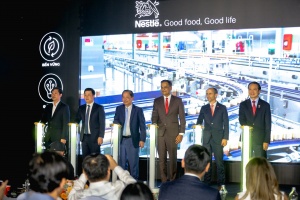 | Nestlé Vietnam beefs up production capacity for coffee exports On August 21, Nestlé Vietnam inaugurated a production line for packaging instant coffee in glass jars at its Tri An factory in Dong Nai city. |
What the stars mean:
★ Poor ★ ★ Promising ★★★ Good ★★★★ Very good ★★★★★ Exceptional
 Tag:
Tag:Related Contents

Latest News

More News
- Vietnam’s registered FDI surpasses $50 billion in nine months (October 07, 2026 | 10:30)
- Samsung Electro-Mechanics to add $1.85 billion semiconductor investment in Thai Nguyen (October 06, 2026 | 18:23)
- Electronics funding will be won via a capable ecosystem: SGS (October 06, 2026 | 09:00)
- LNG power plant projects risk falling behind schedule (October 03, 2026 | 09:00)
- Pandora opens world’s largest fine jewellery crafting facility (October 02, 2026 | 22:21)
- An Phat 5 Industrial Park positions for new wave of investment in northern Vietnam (October 02, 2026 | 09:00)
- Hanoi to launch portal to ease hurdles for tech businesses (October 01, 2026 | 09:00)
- Foreign investors to be widened for market access (September 30, 2026 | 17:54)
- Phu Quoc Airport planning adjusted to serve APEC 2027 (September 30, 2026 | 17:35)
- Nearly 200 foreign-invested enterprises in Vietnam to pay global minimum tax (September 30, 2026 | 17:26)








 Mobile Version