

Regional investment conference focuses on three value chains

Held in Ho Chi Minh City on September 17, the conference aimed to move from information exchange to concrete project implementation, focusing on high-tech industry, agriculture and fisheries, and clean energy.
According to the Investment and Trade Promotion Centre (ITPC), the three priority value chains are: high-tech industry linked to seaports, aviation, and logistics; agriculture and fisheries linked to deep processing, cold chains, branding, and exports; and clean energy, the circular economy, and climate change adaptation.
According to Pham Quang Nhat, director of Ho Chi Minh City ITPC, the key to regional connectivity is to turn the distinct strengths of each locality into a shared advantage across an integrated value chain.
“The Southeast has strengths in high-tech industry, digital technology and international logistics, while the Mekong Delta has advantages in modern agriculture, fisheries, the marine economy and renewable energy,” Nhat said.
“This approach places Ho Chi Minh City, the Southeast and the Mekong Delta within a complementary regional structure, rather than having them compete individually. Localities can take on production, raw materials and supply capacity, while Ho Chi Minh City leverages its strengths in consumption, exports, finance and international market connectivity,” he added.
When these links are embedded in specific projects, regional connectivity can create an integrated investment space with greater scale and competitiveness than if each locality were to pursue investment promotion independently.
Dang Hong Anh, vice chairman of Thanh Thanh Cong Group (TTC Group) and chairman of the Vietnam Young Entrepreneurs’ Association, said that within TTC Group's resource structure, Ho Chi Minh City serves as the centre for management, finance and research and development, while southern provinces form a strategic production belt, accounting for more than 70 per cent of total investment.
TTC Group currently exports processed agricultural products to more than 40 countries, operates a clean energy system with a total capacity of more than 600 MW, and has developed infrastructure for more than 1,300 hectares of industrial parks and clusters.
Amid the waves of digital transformation, green transformation, and AI, Anh has proposed three groups of innovative policy solutions to create fresh momentum for the private sector, including to establish an incentive mechanism to encourage investment in new technology infrastructure, including data centres, digital infrastructure, and green energy; accelerate the planning of clean land funds, ensure high-capacity power supplies, and introduce flexible policy sandbox mechanisms.
Second, adopt a new management approach and accelerate administrative reform, applying a 'green channel' or a truly effective 'one-stop' mechanism for large-scale green transformation projects to reduce time costs, while creating a secure legal environment to protect entrepreneurs who are willing to take initiative and act decisively.
Third, establish technology and green development support funds, provide long-term preferential credit packages, and introduce incentives for large corporations to serve as lead enterprises, supporting small and medium-sized enterprises in joining supply chains.
“The private sector is willing to work alongside the state economic sector and foreign-invested enterprises to form a strong 'three-legged stool' that strengthens national competitiveness. The young business community is committed to taking the lead in digital transformation and adopting environmental, social, and governance standards to strengthen corporate governance, while promoting substantive cooperation to contribute to the country’s prosperous development,” Anh said.
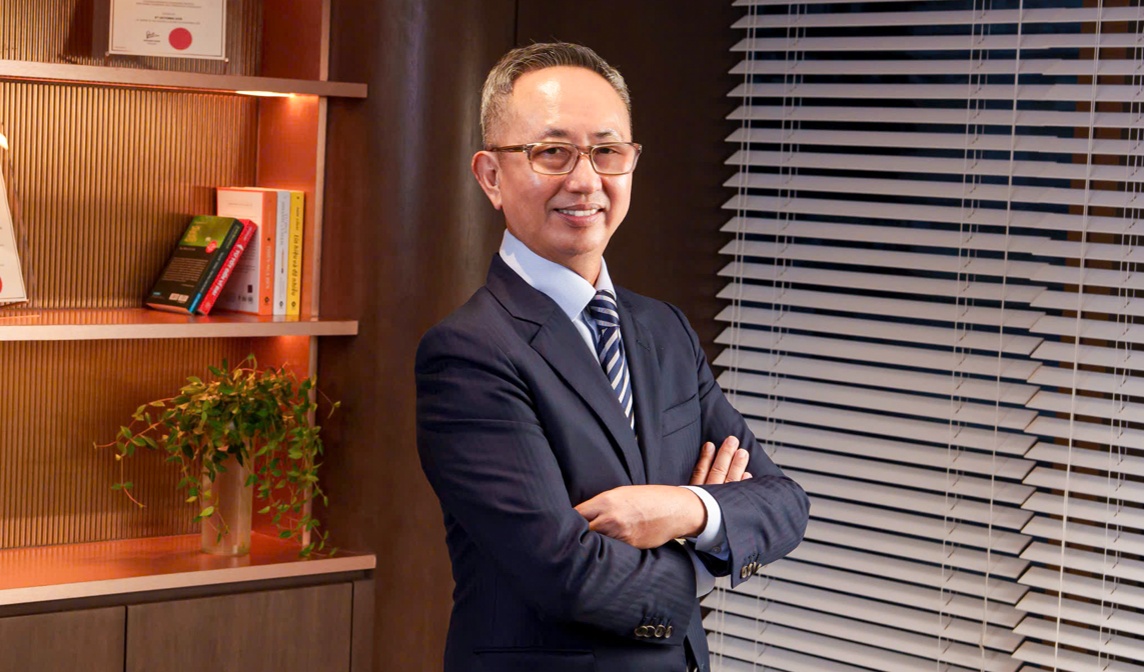
Dinh Hong Ky, representing the Ho Chi Minh City Union of Business Associations, said that businesses’ investment mindset is changing rapidly.
“In the past, when choosing an investment location, businesses tended to focus on land prices, labour costs, tax incentives, and proximity to markets. These factors remain important, but they are no longer enough. Businesses today must also consider logistics and energy infrastructure, human resources, supply chains, digital transformation capabilities, environmental requirements, sustainable development, and connectivity with both domestic and international markets,” Ky said.
The latest figures show that capital continues to flow to locations with sufficiently strong investment ecosystems.
In the first eight months alone, Ho Chi Minh City attracted more than $10 billion in foreign investment, up more than 167 per cent on-year and reaching over 91 per cent of the full-year target.
“New investors coming in show the city’s attractiveness. But existing investors continuing to inject fresh capital is an important signal of confidence. In the next phase of investment competition, it will not simply be a competition over incentives, but over the quality of the entire business ecosystem,” Ky said.
In addition, businesses need greater certainty and consistency rather than promises of incentives. What businesses fear most is not necessarily high costs, but uncertainty.
According to Ky, businesses need a truly accountable focal point.
“A common difficulty for businesses is that a project has to go through many different agencies. Each agency performs its functions properly, but ultimately businesses have to connect the entire system themselves, even though provinces and cities have long applied the ‘one-stop shop’ mechanism,” he said.
“This is something we can change. For important projects, local authorities should appoint a single focal point to oversee it from the time an investor first explores the opportunity until the factory or project becomes operational,” he added.
In addition, Ho Chi Minh City and the seven localities need to be more closely integrated.
According to VCCI, around 70 per cent of goods exported from the Mekong Delta still have to be transshipped through ports in Ho Chi Minh City and the Southeast region. The region’s logistics costs account for around 20–25 per cent of product costs.
“I believe this is both a hindrance and a clear indication of a reality: the economy became regionally interconnected before we started talking about regional connectivity,” Ky said.
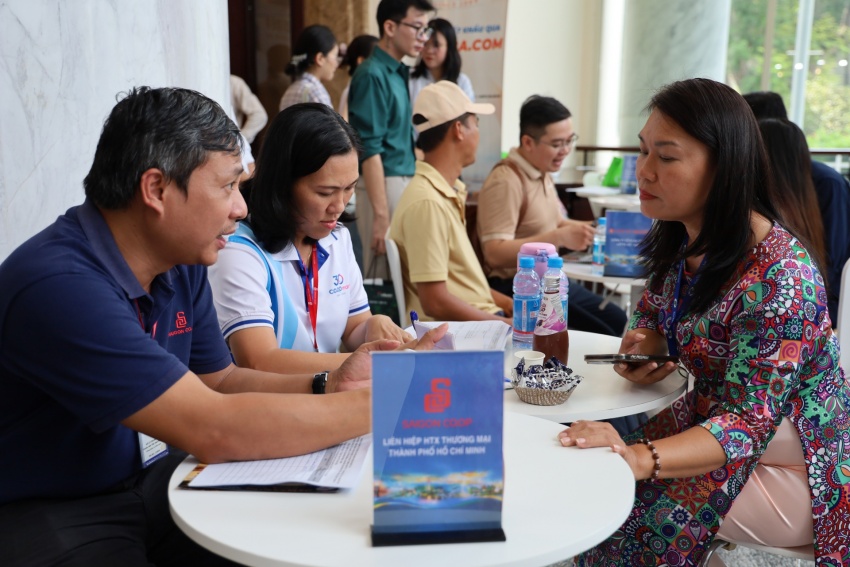 |
| Photo: ITPC |
 | Ho Chi Minh City proposes wider access to direct power trading Ho Chi Minh City is proposing to expand direct power trading to businesses in industrial parks, high-tech parks, and other designated economic zones, widening access to direct power purchase agreements (DPPAs) with electricity generators. |
 | Ho Chi Minh City's 50th celebrated through community stories A series of community activities led by One Central Saigon has drawn thousands of residents and visitors, alongside more than 1,000 entries for the 'Write a Story, A City' competition, honouring the identity of Ho Chi Minh City. |
What the stars mean:
★ Poor ★ ★ Promising ★★★ Good ★★★★ Very good ★★★★★ Exceptional
 Tag:
Tag:Related Contents


Latest News

More News
- LNG power plant projects risk falling behind schedule (October 03, 2026 | 09:00)
- Pandora opens world’s largest fine jewellery crafting facility (October 02, 2026 | 22:21)
- An Phat 5 Industrial Park positions for new wave of investment in northern Vietnam (October 02, 2026 | 09:00)
- Hanoi to launch portal to ease hurdles for tech businesses (October 01, 2026 | 09:00)
- Foreign investors to be widened for market access (September 30, 2026 | 17:54)
- Phu Quoc Airport planning adjusted to serve APEC 2027 (September 30, 2026 | 17:35)
- Nearly 200 foreign-invested enterprises in Vietnam to pay global minimum tax (September 30, 2026 | 17:26)
- Vietnam steps up expressway funding efforts (September 30, 2026 | 17:17)
- Industrial investors prioritise execution and infrastructure over cost (September 30, 2026 | 12:00)
- Nina Group secures investment from Beacon Fund through Australian government-backed initiative (September 30, 2026 | 10:29)






 Mobile Version