
Vietnamese businesses eye growth through public investment

On November 7, Military Bank (MB) held the eleventh annual MB Economic Insights Forum in Hanoi, reaffirming its strategic role as a trusted partner to the business community. The event offered in-depth perspectives on economic trends and investment opportunities amid global uncertainty.
In addition to export-related topics, this year's forum placed a strong emphasis on public investment as a key driver of economic growth in 2025, highlighting new opportunities for private enterprises to engage in national infrastructure projects.
Through the forum, MB strengthens its role as a financial partner in public investment. Pham Nhu Anh, CEO of MB, stated that the bank has implemented various flexible solutions to accompany businesses during this period of accelerated infrastructure development.
According to Anh, public investment is one of Vietnam's key growth drivers, accounting for roughly 34 per cent of GDP.
“The government is now pushing ahead with numerous large-scale projects, from the North-South Expressway to major energy centres and digital infrastructure,” said Anh. "In the past, a $400 million project was considered huge, but today we are talking about projects worth several billion USD. In this context, MB views financial support for enterprises participating in the public investment chain as a strategic priority."
Anh shared that MB is offering preferential credit packages for construction and infrastructure companies, those particularly involved in building data centres and high-tech projects.
“In addition, the bank has developed the SCF multi-tier model, connecting all parties in a project chain, from investors and general contractors to suppliers, to allocate capital efficiently, optimise cash flow, and enhance competitiveness across the entire value chain,” he added.
 |
| Pham Nhu Anh, CEO of MB |
For exporters and importers providing materials, machinery, and technology, MB applies notably lower lending rates.
“Clients with annual transaction volumes exceeding $3 million are entitled to an immediate 10 per cent reduction in financing costs, along with enhanced support in international transactions and payment guarantees,” said Anh.
“MB is also expanding its MB BIZ platform, a comprehensive digital ecosystem for corporate clients. The upcoming MB BIZ 2.0 version, set to launch later this year, will integrate key functions such as letter of credit issuance, international payments, online disbursement, and account management. This will help enterprises manage finances more efficiently and access funding faster,” he added.
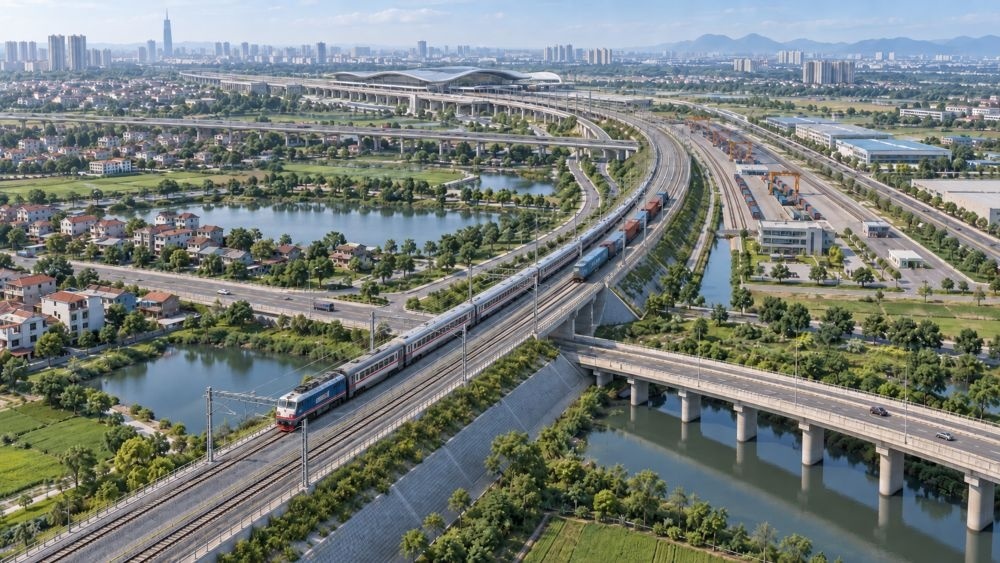
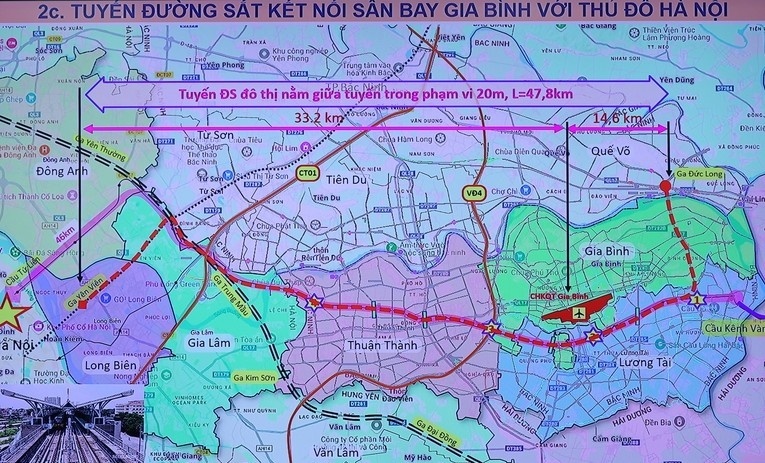
While Vietnam accelerates public investment disbursement, several industries are expected to benefit from the rollout of large-scale infrastructure projects. According to Dr. Nguyen Tu Anh, director of macroeconomics policy research at VinUniversity, the country is focusing resources on several strategic projects, including the North–South high-speed railway, the Lao Cai-Ha Noi-Hai Phong railway, large-scale energy developments, and major investments in digital infrastructure.
Dr. Tu Anh highlighted that a notable shift in public investment policy is the expansion of public procurement mechanisms that encourages private sector participation, creating a new market for domestic enterprises.
"In the past, most public procurement was handled by state-owned enterprises. Now, policy directions are evolving to allow private firms to supply goods and services for government-funded projects," he said. “This mechanism has been institutionalised under Resolution 68-NQ/TW and Resolution 108/NQ-CP 2025, opening significant opportunities for private firms to participate more deeply in public investment value chains.”
 |
| Dr. Nguyen Tu Anh, director of macroeconomics policy research at VinUniversity |
He advised businesses to closely follow new policy developments and the progress of public inititatives, as this sector has transformed from a state-dominated domain into a collaborative space where the private sector can thrive.
“The three critical directions for Vietnamese enterprises are digital transformation and modernization of governance, financial transparency and professional documentation, and scaling up while managing effectively risks, especially in sensitive areas such as exchange rates and interest rates,” added Tu Anh.
From another perspective, Nguyen Xuan Thanh, lecturer at the Fulbright School of Public Policy and Management, emphasised that large-scale, high-risk yet high-impact projects such as urban metro systems in Hanoi and Ho Chi Minh City represent the social and economic backbone of Vietnam's infrastructure agenda.
“If metro projects are implemented efficiently, their spillover effects on the real estate market will be substantial, especially in urban areas along metro lines,” he said. “However, these projects are complex and require advanced risk management capabilities, especially among contractors and suppliers, given past issues of cost overruns and delays.”
Commenting on the public-private (PPP) partnership model, Thanh noted that while Vietnam once placed high expectations on this mechanism, results have fallen short due to an imbalanced risk-sharing framework between the public and private sectors.
“When problems arise, risks often shift towards private investors, leading to disputes and delays,” stated Thanh.
 |
| Nguyen Xuan Thanh, tutor at the Fulbright School of Public Policy and Management |
Nevertheless, Thanh observed that these disadvantages have been recognised, and parties are now pursuing a more pragmatic approach.
“Although the official stance still maintains the PPP framework, the emerging trend in infrastructure development is greater flexibility, allowing either 100 per cent state-funded projects or entirely private-funded initiatives, depending on project characteristics,” he explained.
Thanh cited examples of recent expressway projects financed entirely by the state, while others, particularly those tied to urban and real estate development, are being carried out independently by private investors.
“This will likely become a defining trend in the coming years, with major private corporations taking on a leading role in infrastructure development, provided they are well-prepared in risk management and financial governance,” stated Thanh.
 | Public investment makes an impact The Ministry of Finance has shown optimism about the country's progress in public investment, which is helping the economy achieve its desired growth and control inflation. |
 | Infrastructure boom paves the way for Hung Yen's transformation Major arterial roads being launched and upgraded are creating new space and momentum for Hung Yen province's rapid, sustainable development. |
 | Accelerating disbursement of foreign capital key to driving growth this year The disbursement of public investment capital, including capital from foreign funds, has been identified as a key task for 2025, directly contributing to the government's goal of achieving economic growth of over 8 per cent. |
What the stars mean:
★ Poor ★ ★ Promising ★★★ Good ★★★★ Very good ★★★★★ Exceptional
 Tag:
Tag:
Related Contents




Latest News






More News
- Vietnam-Australia forum boosts AI and digital technology cooperation (October 13, 2026 | 11:30)
- Digital transformation shifts focus to added value (October 09, 2026 | 18:00)
- Melatec Dental Clinic - accompanying international clients on their smile care journey (October 09, 2026 | 17:25)
- 12 localities achieve double-digit growth in first nine months (October 09, 2026 | 17:00)
- CYE 2026 announces top 5 finalists (October 09, 2026 | 16:55)
- Robotics inspires Vietnam’s next generation of engineers (October 08, 2026 | 15:18)
- Vietnam among fastest AI adopters, Pearson-AWS study finds (October 07, 2026 | 12:26)
- Ho Chi Minh City Oncology Hospital signs MoU with Novartis Vietnam (October 07, 2026 | 10:36)
- Expanding education partnerships to drive mutual growth (October 06, 2026 | 16:04)
- VTG 2026 to showcase textile and footwear innovation in Ho Chi Minh City (October 06, 2026 | 16:00)








 Mobile Version