
Vietnam key to Nestlé’s vision and strategy

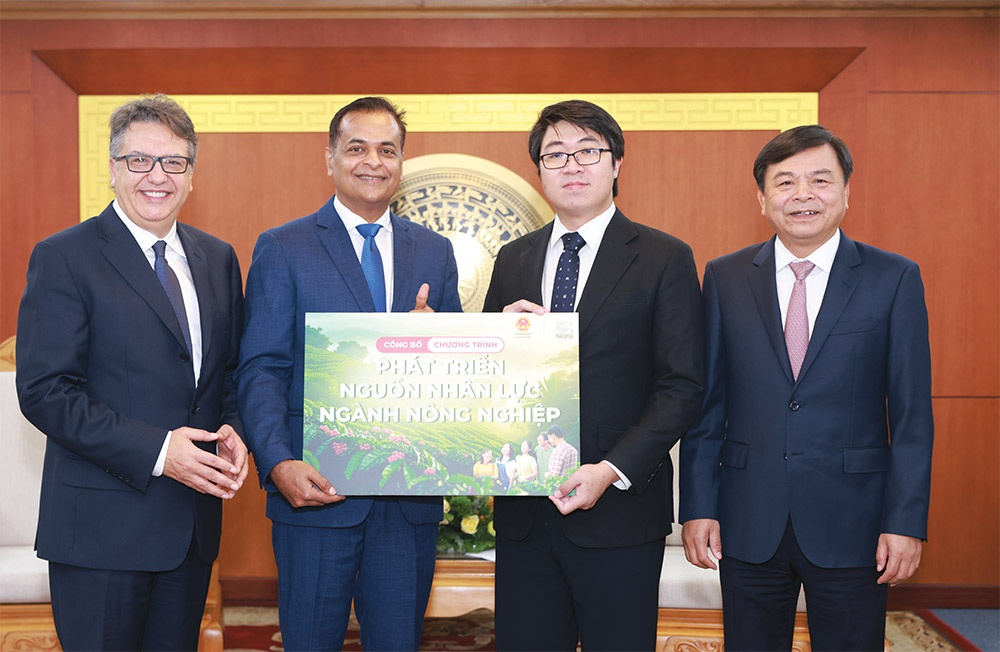
Following the signing of Nestlé’s MoU with the Ministry of Agriculture and Environment on November 27, Remy Ejel, CEO of Nestlé Zone AOA, spoke with VIR’s Oanh Linh about the company’s long-term vision for Vietnam and how its close collaboration with farmers and local communities continues to anchor its operations in the country.
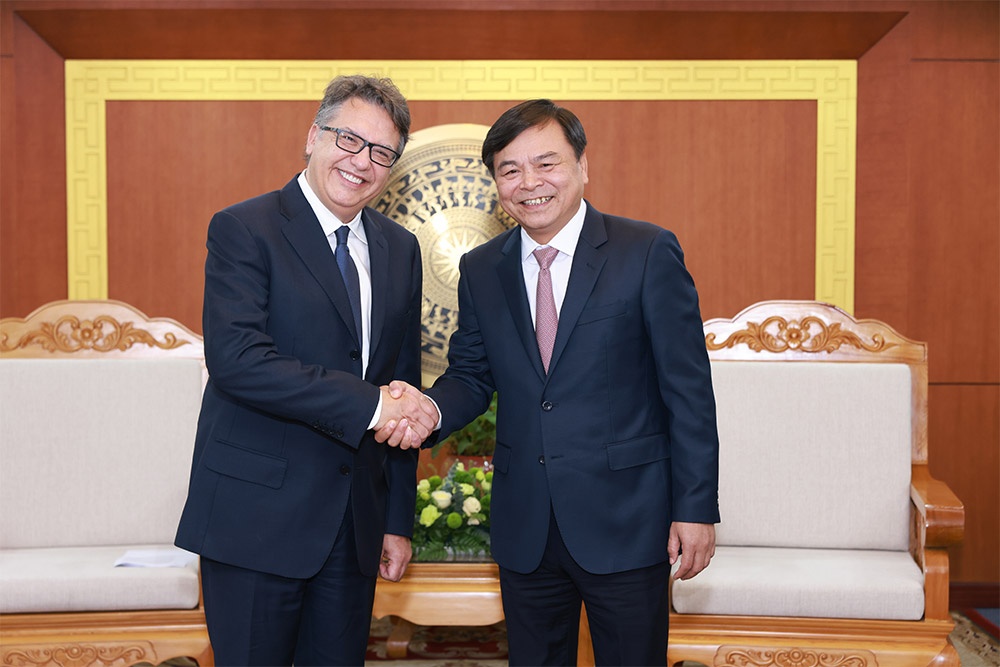 |
| Nestlé Vietnam and the Ministry of Agriculture and Environment have formalised a strategic partnership to support Vietnam’s transition towards a low-carbon, circular economy |
How do you assess the company’s current performance and development in the Vietnamese market?
We are truly proud to be part of Vietnam’s growth story. Our business here continues to expand at a strong pace, supported by rising consumer demand and significant opportunities to deepen our investments.
Vietnam plays a dual role for Nestlé. Domestically, it is a vital market. At the same time, both within ASEAN and globally, the country is becoming an increasingly competitive export hub. And when I speak of exports, I refer not only to finished products, but also to the growing contribution of skilled Vietnamese professionals who support Nestlé operations worldwide.
Across Zone AOA and within the global Nestlé network, Vietnam’s role is fully recognised and highly valued. We are pleased to continue accompanying the country on this journey of growth and transformation.
Nestlé has committed to achieving net-zero emissions by 2050. Could you share more about the company’s progress towards this goal?
On our net-zero commitments, Nestlé globally is fully aligned with the 2050 target, and Nestlé Vietnam’s efforts will contribute to achieving this goal. This ambition also resonates strongly with Vietnam’s national priorities, and we are proud to be contributing to the country’s broader sustainability efforts.
Agriculture is a major source of global emissions, which is why it sits at the centre of our approach. Innovations in science and modern farming practices are enabling us to help farmers meaningfully reduce environmental impact. Our net-zero roadmap is divided into clear phases and, while ambitious, is supported by measurable milestones. We publish our progress annually, and I am pleased to note that we are ahead of schedule.
Research and innovation are fundamental to this progress. Nestlé operates one of the world’s most extensive food research and development networks, in which environmental research is a key focus area. Alongside this, we are investing heavily in agricultural best practices, particularly regenerative agriculture. By sharing these techniques with farmers and supporting them through implementation, we have been able to deliver more substantial and lasting environmental improvements.
This is the path we are committed to, and we are encouraged by the progress achieved so far.
 |
Why has Nestlé chosen Vietnam as a key investment destination for its global coffee operations?
There are several decisive factors. First is Vietnam’s strategic geographical position, which makes it an ideal hub for both regional and global supply chains.
Second is the strength of Vietnam’s workforce. The talent pool, from farmers to factory workers to technical specialists, is highly skilled, dynamic, and eager to adopt new knowledge. There is a clear sense of drive, adaptability, and competitiveness. These qualities are essential for an industry as complex as coffee, which requires excellence not only in sourcing but also in processing.
Often the conversation around coffee focuses only on green beans, but processing is also equally important. Vietnam plays a pivotal role in both areas within Nestlé’s global ecosystem.
Just as important is our commitment to creating shared value. Through the NESCAFÉ Plan, we work closely with government agencies, universities, and farming communities. Together, we support farmers in raising productivity, improving livelihoods, and applying agricultural methods that have a positive impact on the environment.
For all these reasons, Vietnam sits at the heart of Nestlé’s global coffee strategy.
Why has Nestlé also selected Vietnam as a production and export hub?
It ties directly to the fundamentals that attract and sustain investment. At Nestlé, we invest where there is a strong blend of skilled talent, a committed workforce, policy consistency, and a supportive business environment. Vietnam brings all of these strengths together. Our close cooperation with government partners, local communities, and industry stakeholders continues to reinforce our confidence in the market.
Over the past decades, Nestlé has channelled more than $900 million into Vietnam. In coffee alone, given the focus of our discussion, we purchase close to $700 million worth of Vietnamese coffee each year.
From rising consumer demand to robust production capacity and a stable regulatory framework, Vietnam offers a highly favourable ecosystem for long-term growth. This is why we remain committed to contributing to the country’s development and growing alongside Vietnam’s continued progress.
Given the current global economic and political uncertainties, could these challenges hinder the expansion of Nestlé in Vietnam?
Volatility is a concern shared across industries, and it is a topic that surfaces frequently. However, Nestlé’s model is built for long-term resilience. With a history spanning nearly 160 years, the company has weathered numerous periods of global tension, crisis, and economic fluctuation. Throughout these shifts, Nestlé’s strategic decisions have remained anchored in long-term vision rather than short-term disruption.
I am very proud of our longstanding journey in Vietnam and of contributing to the country’s development through products that have become part of daily life. Whether it is Nescafé, KitKat, or Maggi, these brands are present in millions of Vietnamese households. Our ongoing priority is to ensure that nutrition, health, and wellness continue to advance in ways that truly enhance consumers’ quality of life.
Vietnam’s role within ASEAN is also expanding. Nestlé Vietnam has become one of the group’s key growth engines in the region, and we are committed to being active members of the communities where we operate. Coffee illustrates this well. It is a sector in which Vietnam brings exceptional value, and one where Nestlé is deeply involved.
Today, we work closely with more than 20,000 farmers. Our investments extend far beyond purchasing coffee, they include research and development, farmer training, and support for regenerative agricultural practices that improve yields and reduce environmental impact. It is encouraging to see the substantial progress these partnerships continue to deliver.
Vietnam’s vibrant market, supportive policy environment, and strong network of partners reinforce our confidence in the country. By supporting farmers, improving productivity, and ensuring our factories remain efficient and competitive, we can contribute to long-term growth that endures well beyond short-term volatility.
For all these reasons, Vietnam continues to hold a central and secure place in Nestlé’s long-term strategic roadmap.
 | Nestlé and Vietnam strengthen cooperation to advance net zero goals Nestlé Vietnam and the Department of International Cooperation under the Ministry of Agriculture and Environment (MAE) signed an MoU on November 27 to support Vietnam's transition towards a circular and low-emission economy. |
 | Ho Chi Minh City students shine in record-setting martial arts showcase A Vovinam martial arts music performance in Ho Chi Minh City set new national and world records, showcasing the city’s largest coordinated student participation. |
 | Nestlé Vietnam pioneers sustainable development and promotes business connections As Vietnam pursues its green growth agenda and sustainable development goals, Nestlé Vietnam is affirming its role in responsible business practices and fostering stronger connections within the business community. |
What the stars mean:
★ Poor ★ ★ Promising ★★★ Good ★★★★ Very good ★★★★★ Exceptional
 Tag:
Tag:Related Contents




Latest News


More News
- Vietnam’s growth ambitions hinge on effective policy reforms (October 12, 2026 | 09:00)
- 100 entrepreneurs honoured with Thanh Giong Cup 2026 (October 12, 2026 | 08:00)
- French experts share AI and digital governance insights in Hanoi (October 11, 2026 | 08:00)
- Digital government push focuses on data connectivity and AI (October 10, 2026 | 08:00)
- Ho Chi Minh City holds dialogue with businesses to address operational hurdles (October 09, 2026 | 17:27)
- AI beginning to reshape recruitment criteria (October 09, 2026 | 16:49)
- Electronics firms boost raw material reserves sevenfold amid supply concerns (October 09, 2026 | 08:00)
- NSRP navigates global energy supply volatility (October 08, 2026 | 16:59)
- Minitab launches campaign to combat illegal software use in Vietnam (October 08, 2026 | 15:54)
- Raising construction materials supply chain standards amid green transition (October 08, 2026 | 14:00)







 Mobile Version