
How to unlock ESG value through green innovation

Until recently, environmental, social, and governance (ESG) implementation has often been viewed through the lens of tedious compliance, imposing financial burdens – particularly on small and medium-sized enterprises.
 |
| Nguyen Thi Lan Huong, CEO of SIB Network and founder of ESGTech Platform |
To overcome this challenging period, Vietnamese businesses must reframe their understanding: ESG should be approached through the lens of green innovation.
The concept of green innovation, originally referred to as eco-innovation, took shape in the 1990s and early 2000s. This process was heavily influenced by global demands to address climate change, environmental regulations such as the Kyoto Protocol of 1997, and growing stakeholder pressure. At its core, green innovation stems from the integration of technological advancement, mindset of respecting the environment and community, and social responsibility.
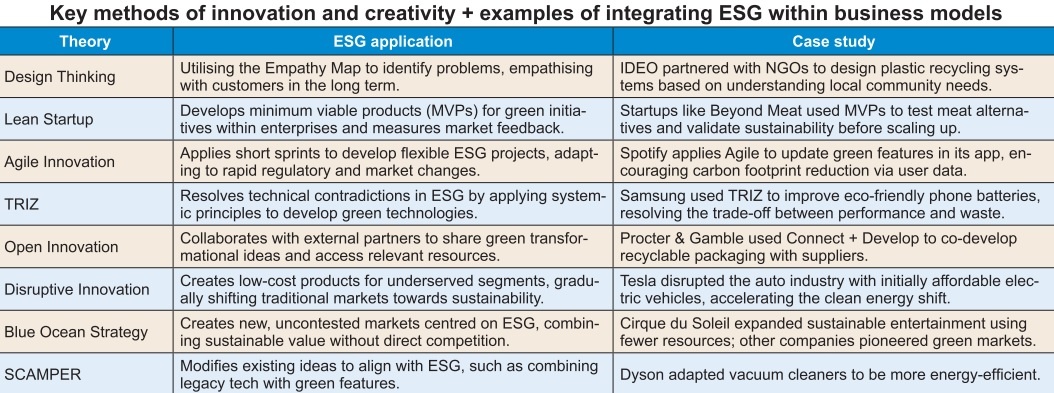
By the 2020s, green innovation had been fully integrated into ESG as a core strategy. It is now regarded as a specialised application of modern innovation theories – including Blue Ocean Strategy, Disruptive Innovation, Open Innovation, and Design Thinking – designed to bring ESG practices into meaningful action. Rather than an independent model, green innovation functions as a targeted application of these theories, and has been instrumental to improvement in overall ESG performance by 20–30 per cent through the implementation of focused ESG initiatives.
Strategic choices
The biggest internal barrier remains mindset transformation. Vietnam’s current state of innovation shows that both the public and private sectors have become increasingly aware of the importance of this transition and have begun engaging in the necessary transformation process.
To build a green organisation, one must first cultivate green individuals. Developing green individuals requires more than just changes in behaviour, processes, or knowledge – it demands a fundamental shift in mindset. A green individual is not only someone who holds the right attitudes towards environmental and social issues, but is also intrinsically motivated to pursue continuous improvement in governance, personal growth, and the effectiveness of their broader impact.
From practical experience working with businesses, we believe that the mindset of leadership is both the most challenging and the most critical pillar. When leaders adopt a green mindset, the process of innovation and green transformation gains momentum, enabling the design of coherent systems. Only a synchronised system – with aligned teams that foster, monitor, and support the development of green individuals – can deliver optimal performance.
With the right support for green partner development and management systems, there is no resource that an enterprise – truly committed to value creation, innovation, and ESG practice – cannot access.
Green innovation relies on data-driven decision-making. ESG indicators require accurate and transparent data to be genuinely useful for stakeholder engagement, strategic pivots, and public disclosures when needed.
More than anyone, businesses understand this necessity. However, not all companies know how to efficiently collect fragmented, unstructured data and manage it in a cost-effective, secure, and user-friendly manner.
To address these challenges, businesses need an ESG tech platform that can help transform both their workforce and organisational structure, facilitate collaboration with external partners, and build a green ecosystem that effectively nurtures the seeds of sustainability from within. That is also the reason why our ESG Tech was born to promote the green transformation process of enterprises in a substantive and resource-saving manner.
PwC’s 2025 ESG Progress Tracker in Vietnam reveals promising outcomes in the nation’s green transition and ESG implementation journey.
The report indicates that enterprises are beginning to reach higher levels of ESG maturity, with increased commitment and initial steps towards implementing ESG strategies. Gaining the right formula and tools to effectively govern their green transformation represents the greatest opportunity – enabling businesses to innovate sustainably, increase revenue, reduce costs, and ultimately realise expected profits.
Choosing a green innovation ESG strategy can be even more effective when businesses select the right model and committed partners to guide the journey.
Applying innovation and change management theories offers an accessible approach to implementing ESG strategies through the lens of green innovation.
Models and values
From practical experience in ESG strategy implementation, the following models have been validated to improve business performance, increase revenue, and expand market share.
The Green Blue Ocean Strategy model is a novel conceptual framework that extends the traditional Blue Ocean Strategy by integrating sustainability principles. While the latter focuses on creating uncontested market space – the so-called Blue Ocean – the former simultaneously addresses both economic and environmental concerns, enabling companies to achieve innovation with cost efficiency.
For instance, Denmark’s Too Good To Go startup has built a profitable green business model by reducing carbon emissions while generating community value. By partnering with restaurants to redistribute surplus food, it provides a ‘magic bag’ of meals that might otherwise go to waste. It is estimated that each magic bag reduces carbon dioxide emissions equivalent to almost 450 phone charges.
Meanwhile, the Open Innovation × ESG Integrated Green Innovation Model positions ESG as a core driver to promote collaboration and connection with green partners. Effective practices help overcome financial barriers and raise managerial awareness, thereby fostering green product and process innovation based on partnerships with compatible projects and clear ESG missions.
Strong ESG performance is increasingly regarded as a reputation-enhancing investment. It reduces transaction costs and perceived investor risk, facilitating access to essential resources for research and development innovation. Moreover, collaboration allows parties to leverage relationships and surplus resources more effectively.
For example, in the Pay-from-Savings Model, customers only pay when the executed solution actually entails resource savings. It powerfully incentivises suppliers to innovate in ESG technology.
Siemens applies this model through its Energy Performance Contracting services, which reduce financial risk for customers while generating sustainable revenue for the company amid volatility. When green credit packages are involved, the model becomes a collaborative mechanism among clients, green solution providers, and banks.
To elevate ESG from a compliance framework to a green innovation driver, businesses should adopt several strategic actions. Senior leadership must demonstrate a strong commitment and actively engage employees in sustainability efforts. ESG should be seen as an opportunity for long-term sustainable development and economic value creation – not merely a compliance requirement. ESG-oriented companies are better positioned than their competitors to generate both tangible and intangible long-term results.
Next, they must focus on creating new markets and delivering cost-effective, environmentally friendly solutions. In particular, applying Open Innovation and the Blue Ocean Strategy allows enterprises to optimise local resource use and minimise waste in resource-constrained environments.
Businesses should experiment with advanced tech to optimise processes and manage resources more efficiently. For example, the Internet of Things can be used for real-time monitoring of energy consumption, while AI can support deep data analytics and ESG trend forecasting.
Next, they should strengthen internal capabilities through training programmes focused on ESG reporting, data analysis, and risk management. Encourage the active participation of young professionals and emerging leaders in ESG initiatives to foster a culture of sustainability and innovation across the organisation.
Finally, companies must remain aware of the impact of public scrutiny. The goal is to maintain transparency and genuine commitment to ESG through substantive innovation, rather than over-focusing on environmental publicity without meaningful action. Excessive emphasis on appearances can lead to greenwashing, which damages corporate reputation.
 |
 | Vietnam eyes top Asia logistics hub with digital, green transformation Vietnam has the potential to become a top logistics hub in Asia, driven by digital transformation, green development, and strategic partnerships, experts say. |
 | Vietnam steps up green transformation with strong policies and rising investment demand Vietnam now has both the policy framework and strategic directions to accelerate sustainable development and accelerate the green energy transition, yet the scale of financing required will challenge both the public and private sectors. |
What the stars mean:
★ Poor ★ ★ Promising ★★★ Good ★★★★ Very good ★★★★★ Exceptional
 Tag:
Tag:Related Contents



Latest News




More News
- Brookland Group makes first investment in Vietnam's Miza Corporation (October 21, 2026 | 12:18)
- Petronas, Petrovietnam to expand energy cooperation (October 21, 2026 | 12:13)
- AI in customer experience: Finding the right level of automation (October 21, 2026 | 09:03)
- Fresh graduates fall short on soft skills, employers say (October 19, 2026 | 13:14)
- Ford innovations continue towards sustainable growth (October 19, 2026 | 09:40)
- Preparing professionals for a new business environment (October 19, 2026 | 09:13)
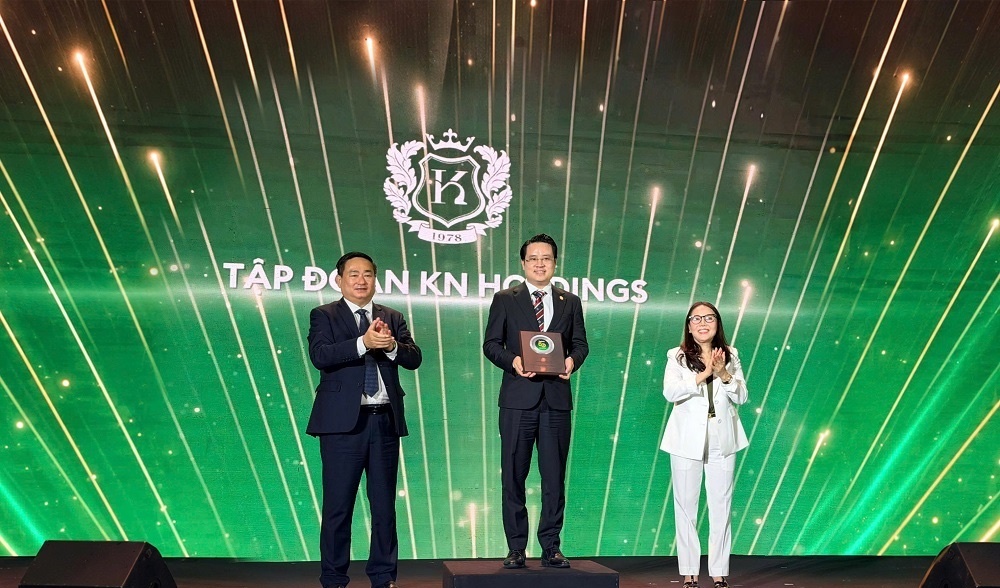
- KN Holdings honoured for ESG efforts in Vietnam (October 18, 2026 | 11:00)
- APEA 2026 Vietnam honours 65 outstanding leaders and enterprises (October 17, 2026 | 10:00)
- MEXC highlights AI-driven trading and broader market access at TOKEN2049 (October 17, 2026 | 09:00)
- EuroCham confidence index holds at 78.3 despite operational hurdles (October 16, 2026 | 17:27)




Latest News






 Mobile Version