
Vietnam bucks regional trend with quality-first consumer shift

 |
| Hugo Texier, partner at Roland Berger |
What is driving the quality-over-price shift in Vietnam, and how durable is it?
The shift from price to quality in Vietnam appears structural rather than cyclical, driven by rising incomes, growing consumer confidence, and a maturing middle class. With GDP growth at 6 per cent and only 6 per cent of consumers expecting lower incomes, confidence remains strong, supporting long-term quality-seeking behaviour. Urban, educated, and younger consumers increasingly view quality as a practical way to secure durability, safety, and long-term value.
At the same time, low status-driven consumption suggests this preference is based more on intrinsic product value than short-term trends, making it likely to persist over the coming years.
How will Vietnam’s sustainability leadership shape business strategies?
Vietnam’s 58 per cent sustainability-conscious consumer base, the highest in Asia, is a meaningful strategic signal rather than a niche preference.
Product development. Brands should focus on verifiable product attributes rather than broad sustainability claims. Urban Millennials and Gen Z are particularly attentive and will closely assess credibility.
Demand for eco-packaging and reduced plastic is strengthening. Packaging redesign, recyclable, biodegradable, or minimal formats, functions as a visible trust signal, not only a compliance issue.
Consumers show strong appreciation for ethical sourcing and local craftsmanship. Transparent communication (including credible proof points and traceability) matters, including for premium segments, as half of Vietnamese luxury consumers are sustainability-minded.
Given Vietnam’s low status-signalling profile, sustainability messaging is most effective when anchored in genuine environmental and social impact, integrated into product quality and sourcing narratives rather than treated as a marketing overlay.
Which consumer segments and spending categories offer the strongest growth potential?
Three segments and three categories stand out clearly from the data.
High-growth consumer segments: with urban millennials and Gen Z: The primary engine of premiumisation in Vietnam. These consumers are digital-first, quality-driven, and sustainability-conscious, and they are actively seeking brands that deliver both superior quality and meaningful differentiation. They represent the leading edge of Vietnam's consumption upgrade.
Tradition Keepers (34 per cent of the population): Vietnam's largest persona group values order, continuity, and trusted institutions. As their incomes rise, they will seek quality products from brands with proven heritage and consistent performance, a significant addressable market for established international players.
The emerging premium middle class: With only 6 per cent expecting income decline and 70 per cent optimistic about the future, a broad mid-market consumer base is actively trading up across everyday categories, not just in luxury.
High-growth spending categories including groceries and food: 63 per cent planning to increase spend, clothing and footwear: 51 per cent, and personal care with 50 per cent.
Groceries and food represent the immediate growth floor, the only category growing in every Asian market, with Vietnam among the strongest intent scores in the region.
Personal care is particularly notable, with 73 per cent prioritising quality and brand reputation, premium skincare, beauty, and wellness products are well-positioned for growth, especially among urban younger consumers.
Clothing and footwear, both international brands and high-quality domestic offerings, will benefit from the broader consumption upgrade trend.
How should international premium brands position themselves differently in Vietnam?
Vietnam calls for a different positioning approach along four dimensions.
Firstly, leading with substance, not status. In markets like South Korea (26 per cent Status Builders) or China (Self-Expressors at 29 per cent), social signalling and peer validation are powerful purchase levers. In Vietnam, with only 4 per cent Status Builders and 10 per cent peer influence in luxury, the lowest in Asia, this playbook fails. Premium brands must anchor their positioning in craftsmanship, quality credentials, and authentic brand heritage, not aspiration, exclusivity theatre, or logo visibility.
Secondly, embedding sustainability as a core brand value. With 58 per cent of consumers sustainability-conscious and 50 per cent of luxury buyers sustainability-minded, Vietnam is the only Asian market where sustainability is a genuine premium differentiator rather than a softening trend.
Unlike Japan, South Korea, or Indonesia, where sustainability as a purchase driver fell 10 percentage points since 2024, Vietnam bucked the regional trend. Brands that treat sustainability as a cosmetic add-on will be exposed; those that embed it credibly into product design, sourcing, and storytelling will earn disproportionate trust.
Thirdly, respect tradition and cultural heritage in storytelling. 34 per cent of Vietnamese consumers are tradition keepers, valuing order, continuity, and established norms.
International brands should integrate local cultural references, artisan partnerships, and heritage narratives into their communications. Luxury brands in particular should avoid overt status signalling or flashy branding, Vietnamese luxury buyers are discerning and culturally grounded, not status-seeking.
Finally, price is not the battleground, quality proof is. Unlike mature markets such as Singapore (35 per cent price-driven) or Japan (37 per cent price-driven), Vietnamese consumers lead Asia on quality focus at 55 per cent, citing quality as the primary driver, the highest in the region.
International premium brands do not need to compete on price or justify a premium through discounting. They must instead demonstrate quality superiority through product performance, transparent sourcing, and consistent brand experience. The premium is justified by proof, not positioning.
 | Key growth drivers assessed in fast-moving consumer goods The intensifying competition facing fast-moving consumer goods manufacturers and brands in Vietnam brings a multifaceted mix of challenges and opportunities, driven by several key factors. |
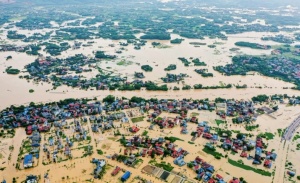 | Vietnamese consumers express concern about climate change 96 per cent of Vietnamese consumers are concerned about climate change, the highest in the Asia-Pacific region, according to the Voice of the Consumer Survey 2025 released by PwC Vietnam on October 10. |
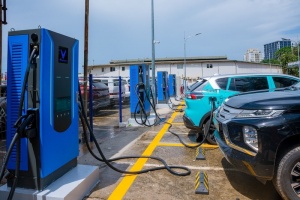 | Vietnamese consumers prefer battery electric vehicles over hybrid electric vehicles Consumers in Vietnam have shown a strong preference for battery electric vehicles (BEVs), with 18 per cent planning to choose BEVs for their next purchase. |
What the stars mean:
★ Poor ★ ★ Promising ★★★ Good ★★★★ Very good ★★★★★ Exceptional
 Tag:
Tag:Related Contents




Latest News



More News
- Brookland Group makes first investment in Vietnam's Miza Corporation (October 21, 2026 | 12:18)
- Petronas, Petrovietnam to expand energy cooperation (October 21, 2026 | 12:13)
- AI in customer experience: Finding the right level of automation (October 21, 2026 | 09:03)
- Fresh graduates fall short on soft skills, employers say (October 19, 2026 | 13:14)
- Ford innovations continue towards sustainable growth (October 19, 2026 | 09:40)
- Preparing professionals for a new business environment (October 19, 2026 | 09:13)
- KN Holdings honoured for ESG efforts in Vietnam (October 18, 2026 | 11:00)
- APEA 2026 Vietnam honours 65 outstanding leaders and enterprises (October 17, 2026 | 10:00)
- MEXC highlights AI-driven trading and broader market access at TOKEN2049 (October 17, 2026 | 09:00)
- EuroCham confidence index holds at 78.3 despite operational hurdles (October 16, 2026 | 17:27)









 Mobile Version