

Two finishes, one kitchen: what the US cabinet market now expects from Southeast Asian manufacturers

The industry’s challenge is no longer simply expanding production capacity, but to move further up the value chain and building competitive advantages.
According to AkzoNobel, the Dutch multinational specialising in paints and coatings, the US kitchen cabinet market is shifting: Pigmented coloured cabinets still account for around half the market, but clear-coated natural wood grain has grown quickly, and for the first time in nearly a decade it has overtaken white as the leading look. Industry research published for 2026 found that design professionals identified wood grain as growing in popularity, with white oak the most requested species.
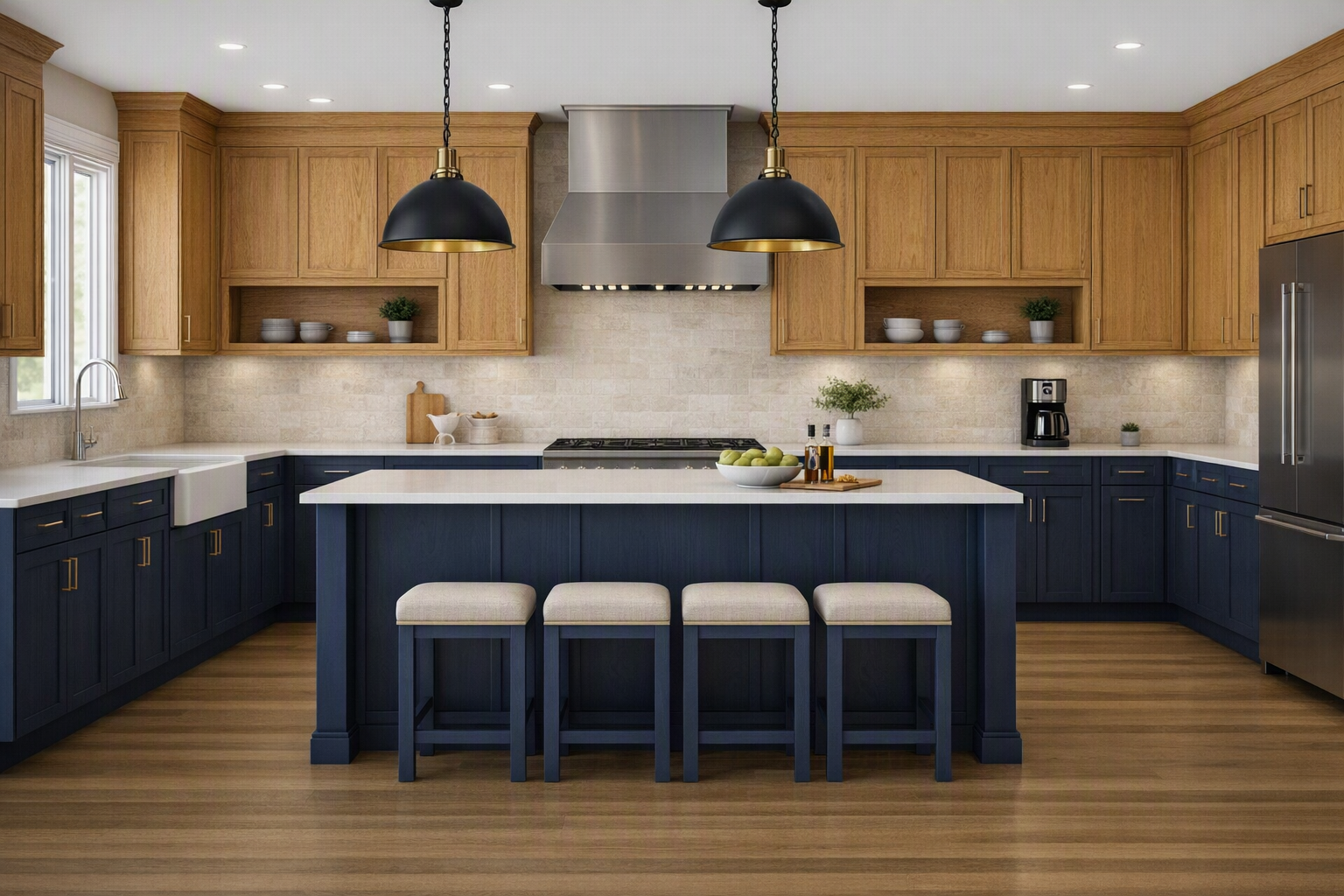 |
| Natural wood grain brings warmth and contrast to kitchens where painted finishes set the tone. Photo courtesy of AkzoNobel |
The result is not one finish replacing another, but two running side by side. The two-tone kitchen – a painted perimeter with a wood island or painted base cabinets beneath clear-coated uppers – has become the defining layout of 2026, according to AkzoNobel. For manufacturers, that means producing pigmented and clear-coated cabinets to the same order, in the same batch, and making them match.
Cabinetry colour trends are shifting from traditional white and grey to black, green and deeper saturated tones that require higher pigment loading for full opacity. Metallic finishes such as gold, silver and bronze are also gaining popularity. At the same time, growing demand for natural and lighter wood tones presents a technical challenge: achieving a consistent pale finish across boards with varying natural colours.
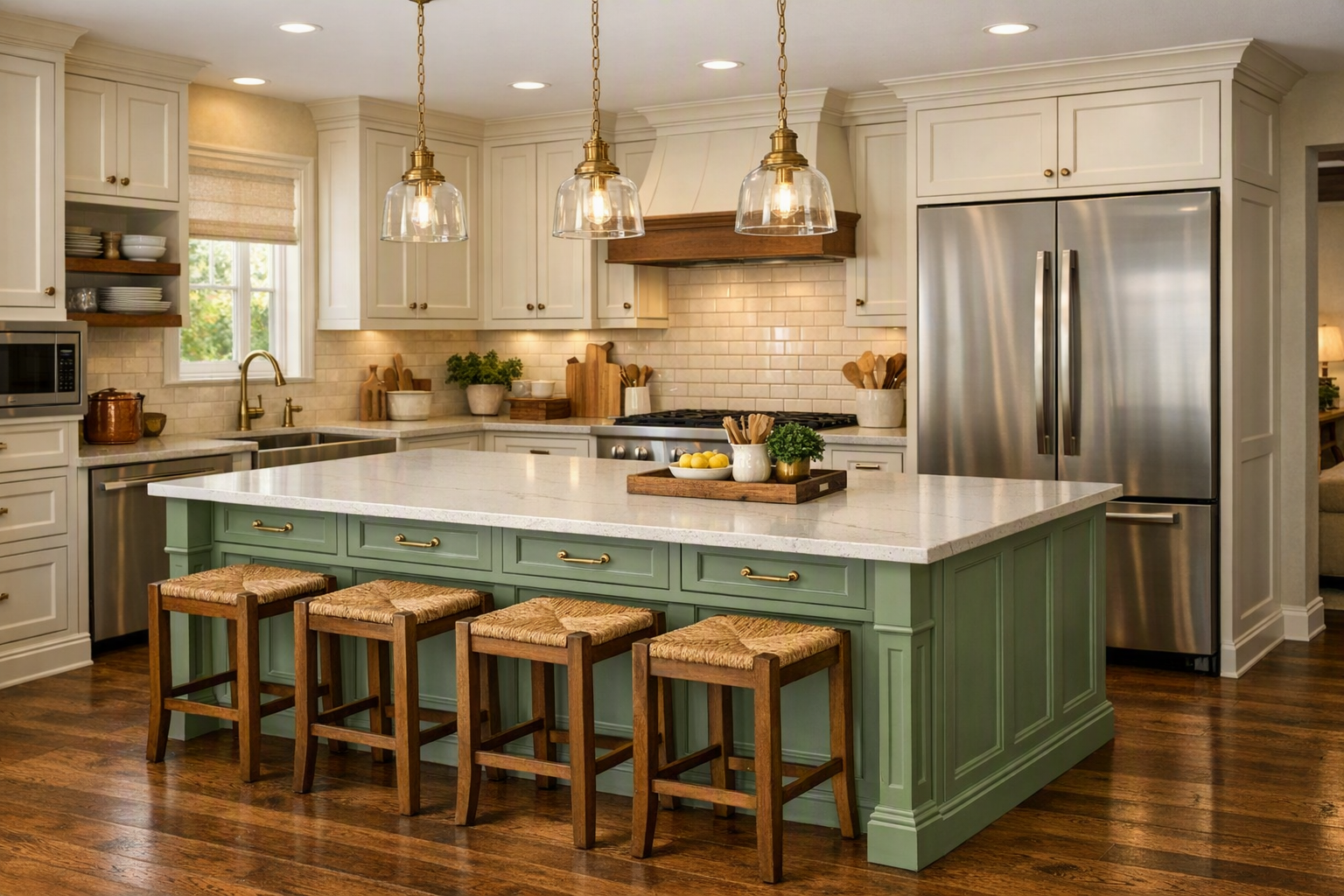 |
| Two-tone kitchens take the lead as muted tones replace stark white in the US market. Photo courtesy of AkzoNobel |
This is creating new opportunities for kitchen cabinet and furniture manufacturers in Southeast Asia, as the region continues to strengthen its position in the global wood and wood products supply chain. With strong manufacturing capabilities, increasingly well-developed supply ecosystems, and extensive experience in fulfilling international orders, businesses across the region are well positioned to respond to diverse demand from major markets, particularly the US – the largest kitchen cabinet market in the world, the company says.
Notably, this trend is not only creating room for higher production volumes but also opening up opportunities for Southeast Asian manufacturers to move further into higher-value segments. As consumers place greater emphasis on colour, design, surface quality and durability, the ability to deliver a diverse and consistent range of finishes that meet stringent technical requirements is becoming a key competitive advantage.
The global market landscape continues to evolve. Imported kitchen cabinets and vanities have been subject to a 25 per cent US tariff since October 2025, with a planned increase deferred until January 2027. At this level of duty, competing on price alone is no longer sustainable for regional manufacturers. Success increasingly depends on delivering value through high-quality finishes, accurate colour reproduction, consistent batch performance, lower reject rates and verified compliance with industry standards.
Vietnam’s strong position in the US market reflects the region’s potential to move into higher-value segments. The country remains the largest supplier of wooden furniture to the US market.
According to data from Vietnam Customs, exports of wood and wood products to the US reached $9.46 billion in 2025, up 4.4 per cent from 2024 and accounting for around 55 per cent of the sector’s total export turnover.
Scale alone is no longer translating into stronger returns. In the first half of 2026, wood exports from Vietnam rose by 4.4 per cent, but exports of deeply processed products declined by 2.7 per cent, with most growth concentrated in lower-value segments such as wood chips, pellets and industrial panels. The industry’s challenge is no longer expanding production capacity but advancing further up the value chain.
However, as competition increasingly shifts from cost advantages towards quality, design and the ability to meet stringent standards, the challenge for businesses is no longer simply about expanding production capacity.
For large-scale orders, maintaining consistent colour and surface quality across production batches can be a significant challenge, particularly where a single kitchen combines painted and wood-grain components, or where the same colour must be held across solid wood and engineered panel wood substrates. Manufacturers must also ensure productivity, delivery schedules, cost efficiency, and compliance with demanding technical requirements.
A competitive advantage
As the US kitchen cabinet market evolves, manufacturers are facing increasingly demanding expectations around colour, design, durability and consistency. For large-scale export programmes, these requirements go beyond the appearance of the finished cabinet, according to AkzoNobel.
Manufacturers need to reproduce colours accurately and consistently across products and production batches, while ensuring surfaces can withstand everyday demands such as scratches, abrasion and exposure to household cleaning chemicals, and meet and exceed the finish requirements as per Kitchen Cabinet Manufacturers Association (KCMA) standards, the performance standard for kitchen and vanity cabinets.
At the same time, manufacturers must balance finish quality with production efficiency and sustainability. The ability to maintain consistent surface performance while improving processing efficiency and responding to evolving environmental requirements is becoming increasingly important to export readiness and long-term competitiveness.
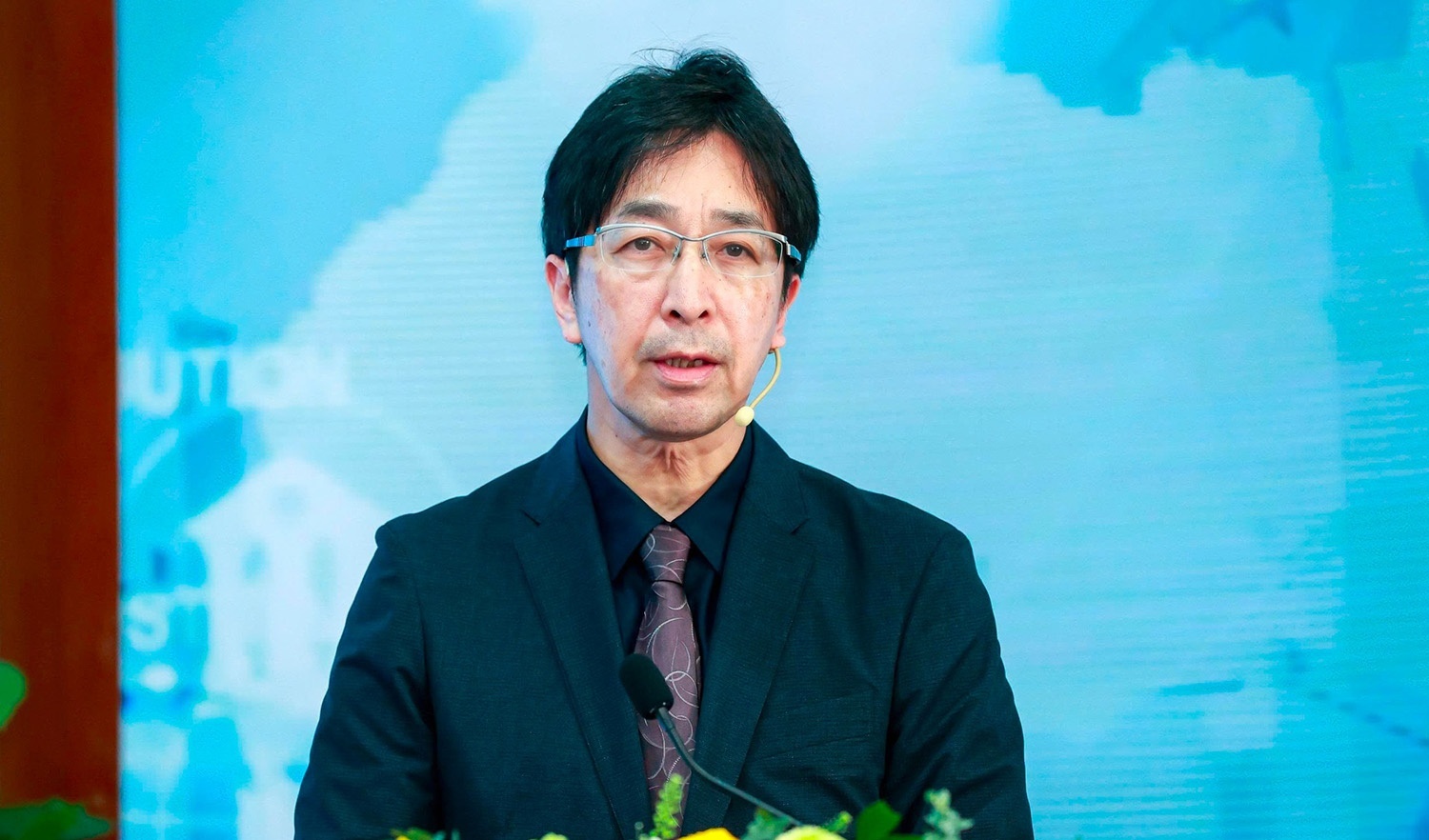
According to Janson Leong, regional commercial director of AkzoNobel Wood Finishes and Adhesives Asia, addressing these evolving market requirements requires a broader approach that goes beyond the coating itself.
"For Southeast Asian manufacturers, having the right coating solution is only part of the equation; they also need the technical expertise and local support to translate market expectations into consistent results on the production line," Leong said.
 |
| Janson Leong, regional commercial director of AkzoNobel Wood Finishes and Adhesives Asia. Photo courtesy of AkzoNobel |
AkzoNobel combines global expertise in coatings and colour with local manufacturing and technical support in Vietnam to work alongside customers from colour development and trials through to production and after-application support.
“Our goal is to build long-term partnerships that help manufacturers strengthen their capabilities and grow in the global kitchen cabinet supply chain,” he added.
In terms of production efficiency, UV-cured coatings offer fast curing and very low VOC levels, helping shorten processing times and improve productivity, in some cases allowing components to be stacked and packed almost immediately after cure.
AkzoNobel also offers finishing systems developed with reduced formaldehyde content, supporting manufacturers who are working to meet their customers' health and environmental expectations.
In Vietnam, AkzoNobel combines local manufacturing capabilities and technical services from its site in Amata Industrial Zone, Long Binh ward, Dong Nai city, with its global expertise in research and development, colour development and matching, product testing and coating technologies. Its technical teams can provide on-site support at factories throughout testing, colour development, surface preparation and coating applications.
Kitchen cabinets and furniture manufacturers can explore AkzoNobel’s coating solutions and connect with AkzoNobel’s team of experts to discuss their specific business needs, including production processes, colour development and matching, surface quality, product performance, and US market standards and export requirements.
 | AkzoNobel rolls out sustainability campaign “It All Adds Up” for the wood sector AkzoNobel has launched its 'It All Adds Up' campaign to highlight efforts to support sustainability in wood finishes across the South Asia–Pacific region. |
 | AkzoNobel and IUCN partner to boost marine conservation in Ly Son AkzoNobel has partnered with conservation groups to organise marine ecosystem training for local fishers and teachers on Ly Son Island, alongside a community renovation scheme under its 'Let's Colour' initiative. |
 | AkzoNobel executive on sustainability as a manufacturing growth driver As global buyers raise the bar on carbon reduction and transparency in environmental, social, and governance matters, sustainability is becoming a key business driver, Simon Timmins, regional commercial director of AkzoNobel Powder Coatings for South APAC, told VIR’s Hazy Tran |
What the stars mean:
★ Poor ★ ★ Promising ★★★ Good ★★★★ Very good ★★★★★ Exceptional
 Tag:
Tag:Related Contents




Latest News





More News
- Samsung Electro-Mechanics to add $1.85 billion semiconductor investment in Thai Nguyen (October 06, 2026 | 18:23)
- Electronics funding will be won via a capable ecosystem: SGS (October 06, 2026 | 09:00)
- LNG power plant projects risk falling behind schedule (October 03, 2026 | 09:00)
- Pandora opens world’s largest fine jewellery crafting facility (October 02, 2026 | 22:21)
- An Phat 5 Industrial Park positions for new wave of investment in northern Vietnam (October 02, 2026 | 09:00)
- Hanoi to launch portal to ease hurdles for tech businesses (October 01, 2026 | 09:00)
- Foreign investors to be widened for market access (September 30, 2026 | 17:54)
- Phu Quoc Airport planning adjusted to serve APEC 2027 (September 30, 2026 | 17:35)
- Nearly 200 foreign-invested enterprises in Vietnam to pay global minimum tax (September 30, 2026 | 17:26)
- Vietnam steps up expressway funding efforts (September 30, 2026 | 17:17)


Latest News







 Mobile Version